
The North Coast 500 route is Scotland’s answer to Route 66: a 516-mile loop from Inverness around the wild far North of the Highlands, and one of the greatest road trips on Earth. Known to most simply as the NC500, it strings together surf-pounded white beaches, towering sea cliffs, fairytale castles, single-track mountain passes, ancient distilleries and some of the finest seafood in Britain. This is the complete guide to driving the North Coast 500 route: every key stop, an interactive map, a downloadable GPX file for your sat nav, ready-made 3, 5 and 7-day itineraries, where to stay, where to eat, and exactly how to hire the right car for the journey.
The genius of the North Coast 500 route is its simplicity. It is a loop, so you cannot truly get lost, and you start and finish in the same place: Inverness, the Capital of the Highlands. The road carries you clockwise or anti-clockwise across six distinct regions, each with its own character, before delivering you home. Most travellers collect a hire car at Inverness Airport, where the route begins, and the only real decision is how long to give it. Five days is the practical minimum, a week is the sweet spot, and ten days or more lets you slow right down on the wild west coast.
Whatever pace you choose, the NC500 rewards planning. The far North is genuinely remote, with single-track roads, scarce fuel and patchy phone signal, so the more you prepare the more you can relax into the drive. This guide is built to be the only NC500 resource you need, so save it, download the route map, and start planning your Highland adventure.
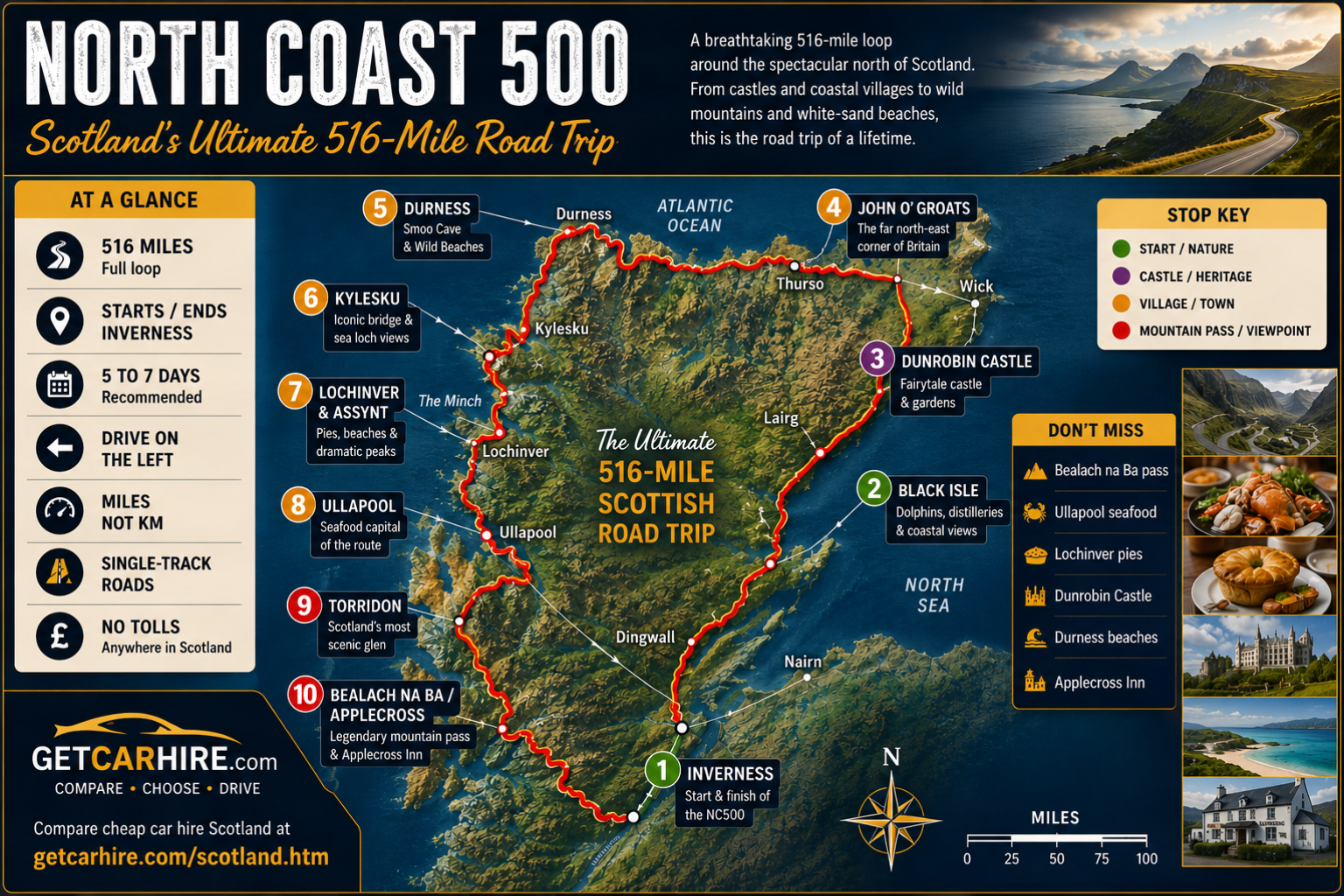
The North Coast 500 Route at a Glance
Before the detail, here is the essential shape of the North Coast 500 route, the headline facts every traveller should know before setting off on the NC500.
| Detail | The North Coast 500 |
|---|---|
| Distance | 516 miles (830 km) full loop |
| Start and finish | Inverness, the Capital of the Highlands |
| Time needed | 5 days minimum, 7 ideal, 10+ for the west coast |
| Regions crossed | Inverness-shire, Easter Ross, Sutherland, Caithness, Wester Ross, the Black Isle |
| Best for | Mountains, beaches, castles, seafood and whisky |
| Roads | A-roads plus single-track with passing places |
| Best months | May, June and September |
| Car hire base | Inverness Airport (route start and finish) |
What You Need to Know Before Driving the North Coast 500
A little preparation transforms the North Coast 500 route from daunting to delightful. The driving is part of the adventure, but it is unlike motorway driving, so it pays to understand what lies ahead before you turn the key.
Which direction to drive
You can drive the NC500 loop either way, and there is no wrong choice. Going clockwise takes you up the gentler east coast first, by way of the Black Isle and Dunrobin Castle, easing you into single-track driving before the dramatic west. Going anti-clockwise sends you straight to the Bealach na Ba and the wild west coast, the landscapes most people picture when they imagine the Highlands. Many drivers prefer clockwise so the most spectacular scenery comes near the end, building to a crescendo.
Single-track roads and passing places
Much of the North Coast 500 route, especially on the west and north coasts, is single-track: one lane with marked passing places. The etiquette is simple but important. Pull into a passing place on your left to let oncoming traffic through, or pull in to let faster vehicles behind you past. Never use a passing place as a parking spot, and give a friendly wave of thanks. A smaller car is a genuine advantage here, both for squeezing past and for the Bealach na Ba’s hairpins.
Fuel, supplies and signal
Petrol stations are sparse beyond Inverness and may close early or on Sundays. The golden rule of the NC500 is to fill up whenever you pass a station rather than waiting for the gauge to drop, as the next garage can be many miles away. Carry water and snacks, since between Durness and Ullapool you can drive a long way without a shop, and download the route map to your phone, because mobile signal vanishes for long stretches.
When to go
The North Coast 500 route is at its best from May to September. Many attractions, cafes and accommodation close from November to March, and the high passes can be blocked by snow in winter. July and August are warmest and busiest, when booking ahead is essential and the Highland midge is at its peak. For the finest balance of long days, settled weather and thinner crowds, aim for May, June or September.
The North Coast 500 Route, Stage by Stage
The clearest way to plan the drive is to break the North Coast 500 route into four stages, each a world-class road trip in itself. The interactive map below plots every stop, and you can download the full route as a GPX file for your sat nav. You can also find the official route on the North Coast 500 website. What follows is the complete stop-by-stop guide, travelling clockwise from Inverness.
Interactive North Coast 500 Route Map (31 Stops)
⬇ Download route (GPX for sat nav)⬇ Download the PDF guideTap any numbered marker for the stop details, what it is famous for, road numbers and drive time to the next stop. The red line follows the full North Coast 500 loop clockwise from Inverness.
Stage 1: Inverness, the Black Isle and Easter Ross
The North Coast 500 route begins in Inverness, a handsome city on the River Ness and the perfect place to collect your hire car. Just half an hour out, Rogie Falls is a worthwhile first stretch of the legs, a tumbling waterfall best after rain, where wild salmon leap upstream in late summer. Nearby, the Black Isle peninsula is home to Chanonry Point, one of Britain’s finest dolphin-spotting spots; time your visit for the rising tide, roughly an hour after low water, for the best chance of seeing bottlenose dolphins from the beach.
This is also whisky country. Glen Ord Distillery, home of the Singleton, sits on the edge of the Black Isle and makes a fine first dram, while Glenmorangie stands further north by the Dornoch Firth. The cathedral town of Dornoch, with its championship golf links, is a pleasant pause before the route presses on into Sutherland. The driving here is easy, on good A-roads, which makes Stage 1 the gentlest introduction to the NC500.
Stage 2: Sutherland, Caithness and the Far North
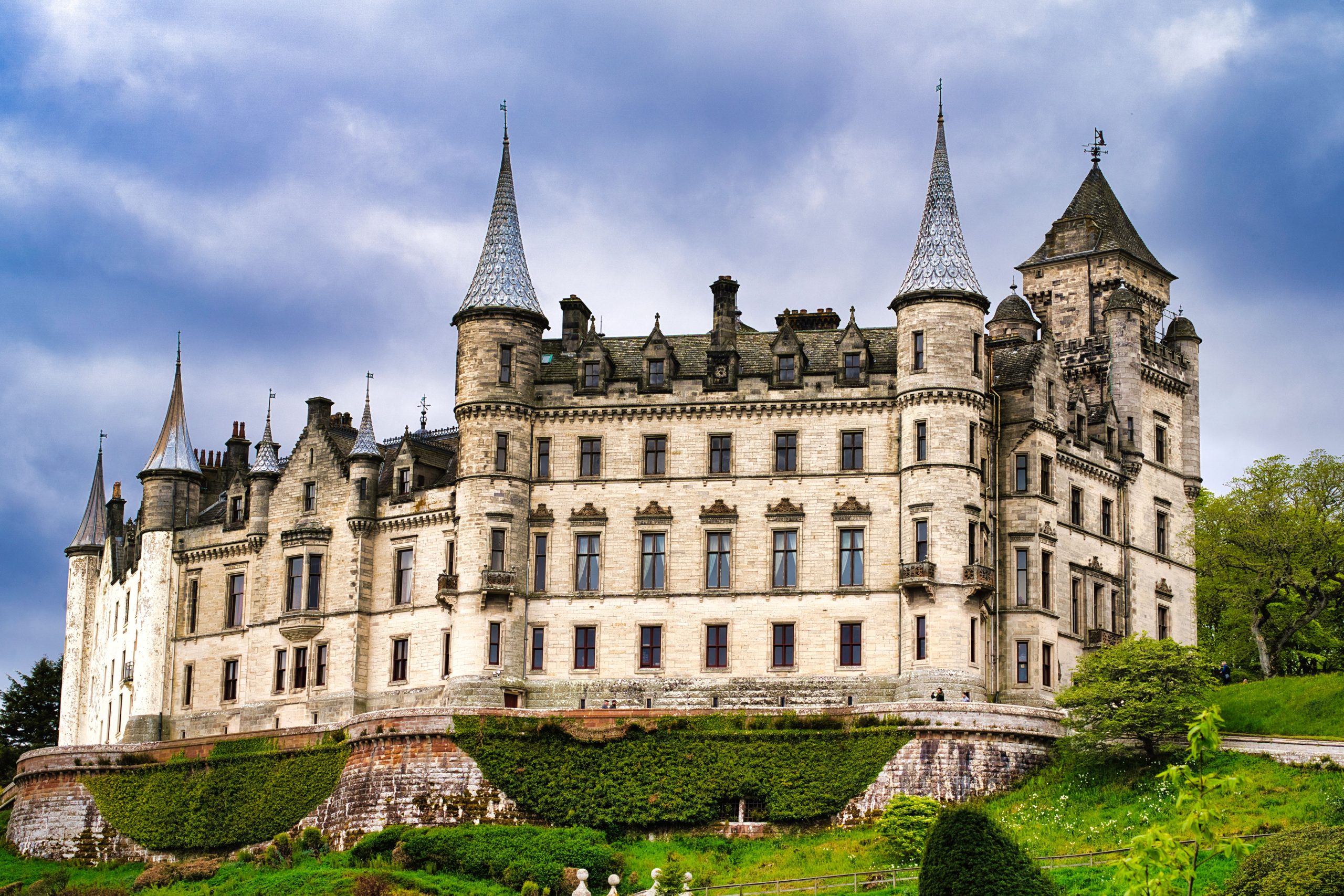
As the North Coast 500 route climbs into Sutherland, the scenery grows grander. Dunrobin Castle, the most northerly of Scotland’s great houses, rises like a French chateau with turrets, formal gardens and falconry displays, and is one of the highlights of the east coast. Further on, Wick is home to Ebenezer Place, recognised as the world’s shortest street, and the dramatic Whaligoe Steps, 365 stone steps descending to a hidden natural harbour.
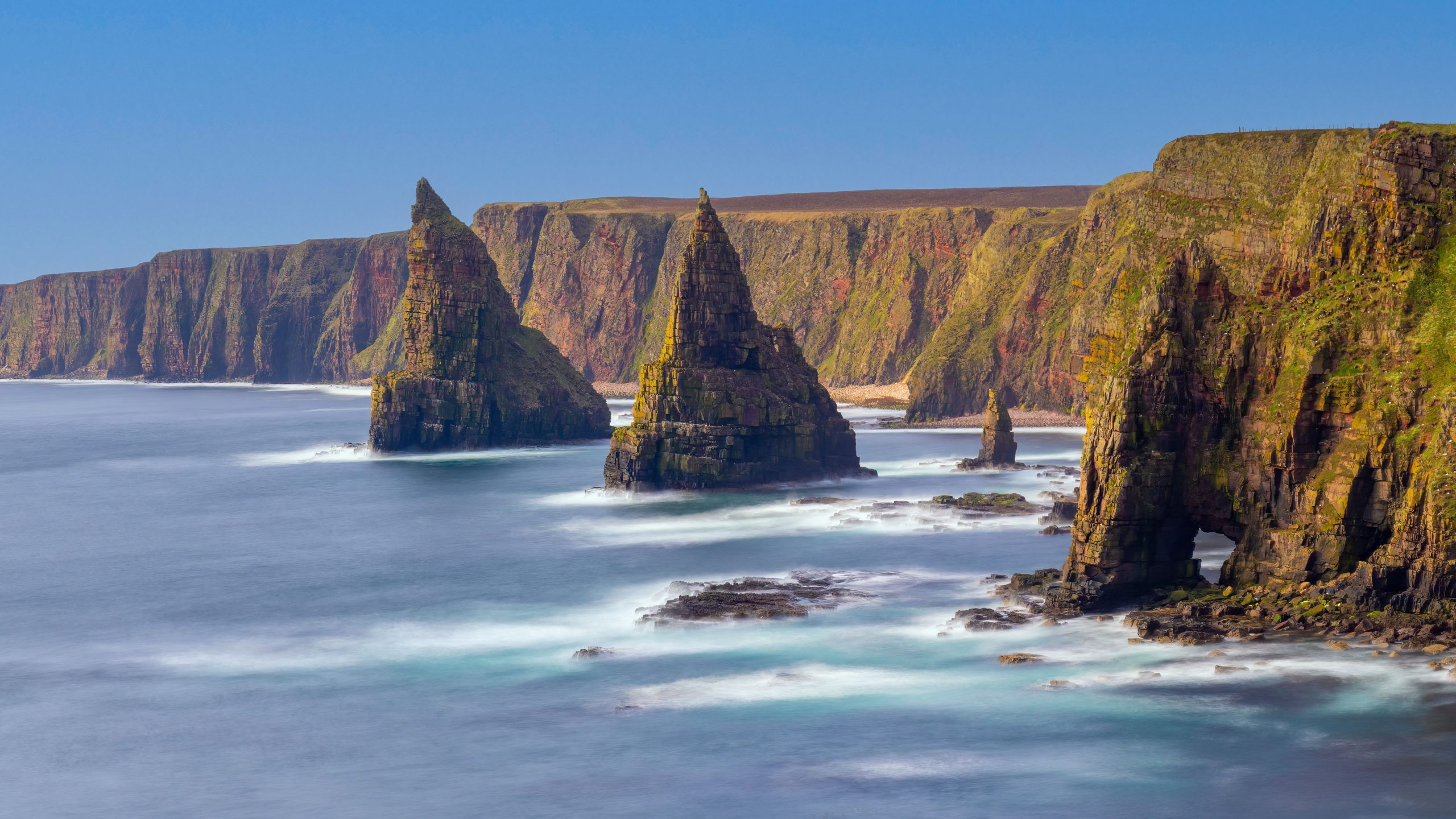
The route reaches its north-east corner at John o’ Groats, the famous end-of-the-road signpost, with the towering sea stacks of Duncansby Head a short drive beyond. Swing west and the road touches Dunnet Head, the true most northerly point of mainland Britain, before reaching Thurso and its ferry port of Scrabster, where the acclaimed Captain’s Galley serves some of the finest seafood in the North. From here the NC500 turns along Scotland’s wild, empty north coast.
Stage 3: Durness, Assynt and the Wild North-West
This is where the North Coast 500 route becomes truly wild. Durness is the gateway to Smoo Cave, a vast sea cave with a subterranean waterfall reached by a boardwalk, and to Balnakeil, with its white-sand beach and craft village, home to Cocoa Mountain and what many call the best hot chocolate in Scotland. South of Durness the single-track road threads past empty beaches and the elegant curved bridge at Kylesku, where langoustines and lobster come straight from the loch, and the Wailing Widow Waterfall spills nearby.
Beyond Kylesku lies Assynt, a landscape of strange, isolated peaks. Suilven and Stac Pollaidh rise abruptly from the moor like islands of rock, and the coast hides some of Scotland’s most beautiful beaches, among them the crystal-clear Achmelvich. The village of Lochinver is famous across the Highlands for the pies at the Lochinver Larder, while the romantic ruin of Ardvreck Castle stands on the shore of Loch Assynt. This stage is the heart of the NC500, remote, dramatic and unforgettable.
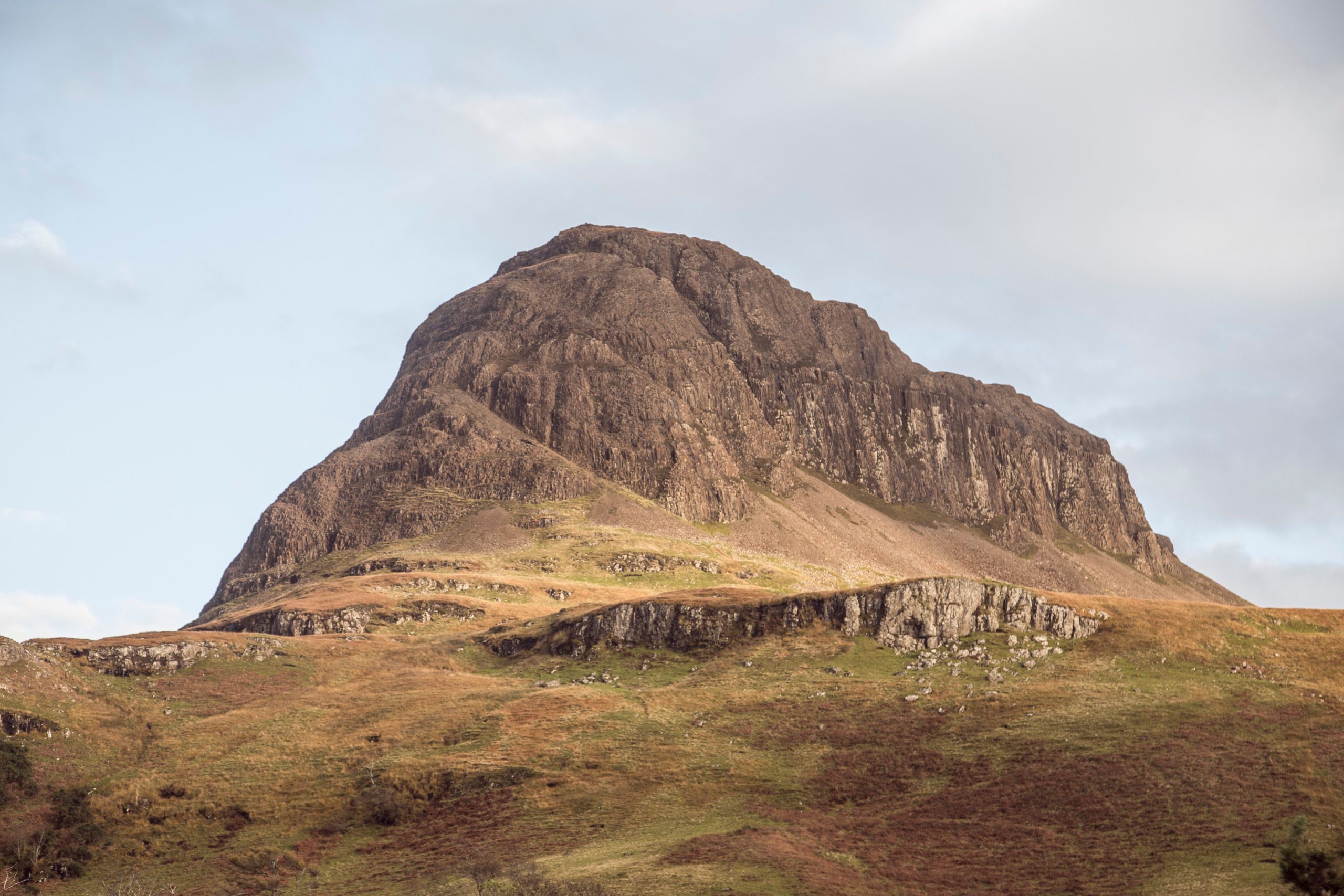
Stage 4: Ullapool, Torridon and the Bealach na Ba
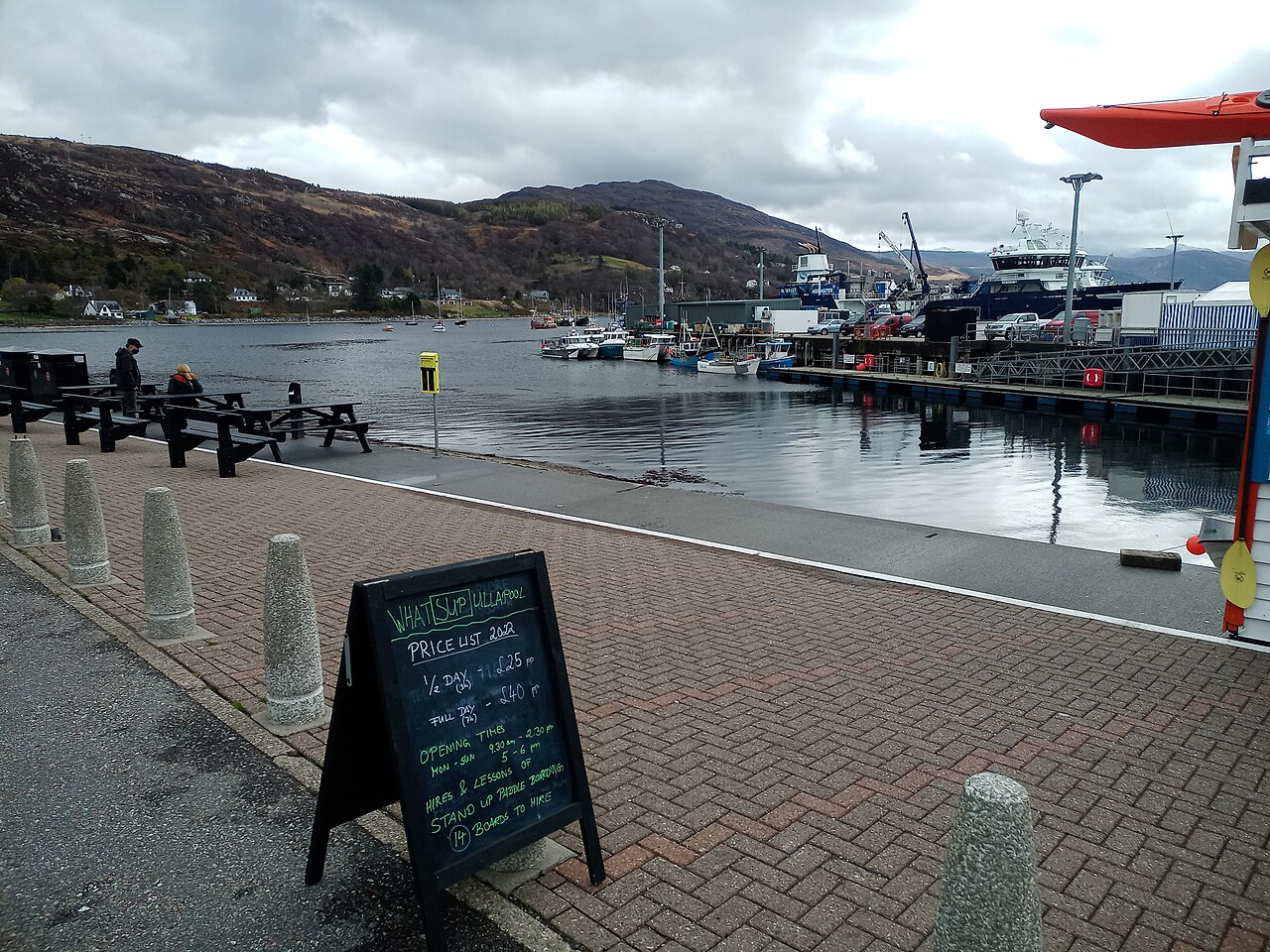
Ullapool is the hub of the west coast, a whitewashed Thomas Telford fishing port on Loch Broom and the seafood capital of the North Coast 500 route. It is the ideal place to break the journey, with a working harbour, galleries and some of the best fish and chips on the road. Just south, Corrieshalloch Gorge plunges 46 metres, crossed by a vertigo-inducing suspension bridge, and the subtropical Inverewe Garden flourishes improbably on the coast at Poolewe.
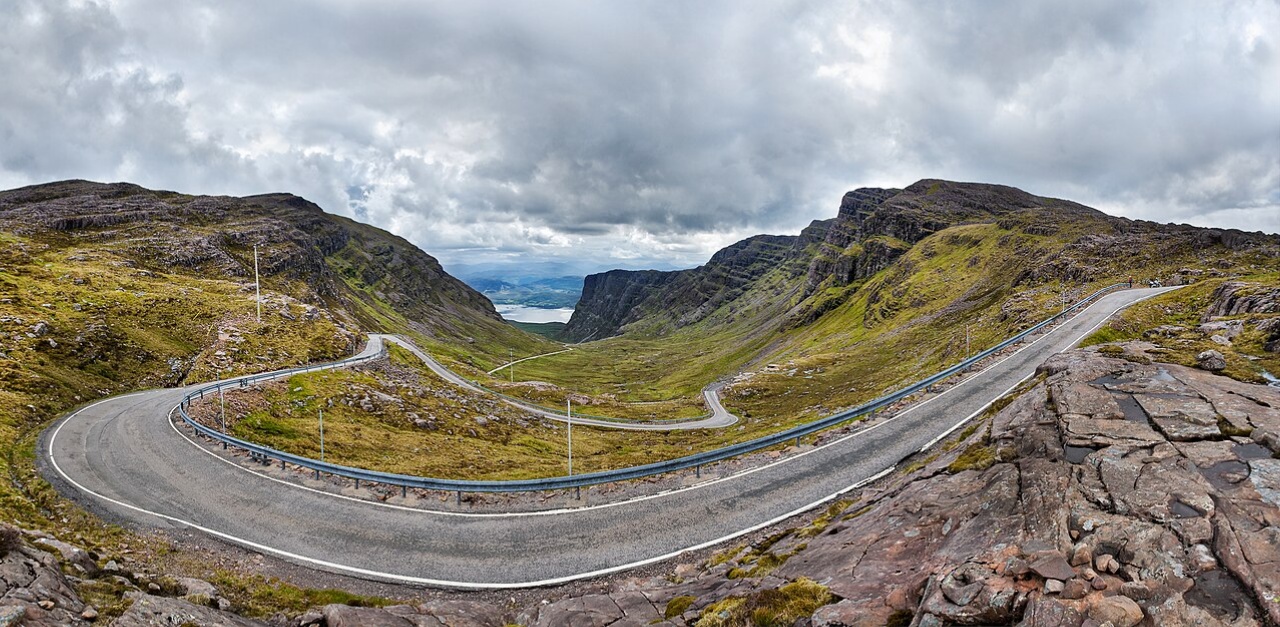
The route then enters Wester Ross and the Torridon valley, with its ancient sandstone peaks, arguably the most scenic glen in all of Scotland. The grand finale, for the brave, is the Bealach na Ba: a legendary mountain pass whose hairpin switchbacks climb to over 2,000 feet with views across to Skye, one of the most dramatic drives in Britain and signed as normally impassable in winter. At the foot of the descent waits the remote village of Applecross and its legendary inn, before the North Coast 500 route loops back via the palm-fringed village of Plockton and, for those taking the scenic final leg, the iconic Eilean Donan Castle, to Inverness.
North Coast 500 Itineraries: 3, 5 and 7 Days
How long you need for the North Coast 500 route depends on your pace and what you want to see. Below are three ready-made NC500 itineraries, from a fast three-day blast to a relaxed week. Each is a framework: linger where you love it, press on where you do not. All run clockwise from Inverness. For a custom plan tailored to your days and interests, try our NC500 itinerary planner.
The 3-Day NC500 Itinerary (for the time-pressed)
Day 1, Inverness to Durness: head up the east coast, with quick stops at Dunrobin Castle and John o’ Groats, then west along the north coast to Durness and Smoo Cave. It is a long driving day, so start early. Day 2, Durness to Ullapool: the wild west coast through Assynt, pausing at Kylesku, Lochinver for a pie, and an Assynt beach, ending in Ullapool for seafood. Day 3, Ullapool to Inverness: Corrieshalloch Gorge, the Torridon glen and, if you are confident, the Bealach na Ba to Applecross before looping back. Three days is rushed but doable, best for those who have driven Highland roads before.
The 5-Day NC500 Itinerary (the sweet spot)
Day 1: Inverness to Dunrobin and the far north, taking in Black Isle dolphins, Glen Ord whisky and Dornoch. Day 2: John o’ Groats, Duncansby Head and the Caithness coast, ending at Thurso or Durness. Day 3: Durness, Smoo Cave and Balnakeil, then south through empty country to Kylesku. Day 4: Assynt’s beaches and mountains, Lochinver and its pies, into Ullapool. Day 5: Corrieshalloch Gorge, Torridon and the Bealach na Ba to Applecross, then back to Inverness. Five days lets you actually stop and breathe, and is the itinerary most NC500 drivers settle on.
The 7-Day NC500 Itinerary (the ideal)
Spread the five-day plan across seven and you gain the time the North Coast 500 route deserves. Add a full morning for the Black Isle and a distillery tour on Day 1; a slower exploration of the Caithness heritage sites, the Whaligoe Steps and Dunnet Head; a whole day for Assynt to climb Stac Pollaidh and swim at Achmelvich; and an unhurried final stretch through Wester Ross with time for Inverewe Garden, the Bealach na Ba without rushing, and the scenic return via Plockton and Eilean Donan Castle. Seven days turns a drive into a holiday, and ten lets you add the west-coast detours and a night on the Isle of Skye.
Where to Stay on the North Coast 500
Accommodation on the North Coast 500 route ranges from luxury Highland hotels to simple campsites, but the golden rule is the same for all: book early. The NC500’s popularity means beds fill months ahead for summer, and the remote stretches have limited options. Plan your overnight stops around the natural hubs and you will not go far wrong.
The best bases for each night
Inverness is the obvious first and last night, with the widest choice of hotels and guesthouses. On the east and north coast, Dornoch, Wick and Thurso offer comfortable town accommodation. In the far north-west, Durness has hotels, hostels and the popular Sango Sands campsite on the cliffs, where you can spot dolphins. Kylesku and Scourie make atmospheric remote stops, the Kylesku Hotel especially. On the west coast, Lochinver and above all Ullapool are the best-equipped hubs, while Torridon offers everything from the luxurious Torridon hotel to the casual Torridon Inn.
Hotels, B&Bs, campsites or campervan
Highland hotels and B&Bs give comfort and a hot meal at the end of a long driving day, and the route has some superb ones, from the three-rosette Torridon to cosy harbour inns. Campsites are plentiful and beautifully sited, and the North Coast 500 route is hugely popular with campervans and motorhomes, which let you follow the weather and wake up by a loch. Bear in mind, though, that campervans are slower on the passes, harder to park, and barred from some single-track loops, so many travellers find a hire car plus booked accommodation the simpler, faster way to enjoy the NC500.
Where to Eat on the North Coast 500
The food is one of the great surprises of the North Coast 500 route. This is some of the best seafood in Britain, landed within sight of where you eat it, alongside Highland pies, artisan chocolate and a dram from the distilleries that line the road. These are verified favourites along the way; many close from November to March, so always check ahead.
Ullapool: the seafood capital
Ullapool is the gastronomic heart of the NC500. The Seafood Shack is famous for its haddock wraps and locally caught langoustines and crab, while Deli-ca-sea by the ferry serves crab sandwiches, Scottish mussels and some of the best fish and chips on the route, with a separate gluten-free fryer. The Ceilidh Place, a bookshop-restaurant hybrid feeding Ullapool since 1970, is a local institution with live music, and the Arch Inn does excellent pub food and seafood on the harbour.
The west coast: pies, langoustines and a legendary inn
The Lochinver Larder is renowned across the Highlands for its pies, filled with venison, lamb or whatever is in season, and worth the queue. At Loch Kishorn, the Kishorn Seafood Bar serves ultra-local shellfish with views across to Skye, while the Kylesku Hotel plates langoustines creel-caught from the loch right outside. The crown, though, is the Applecross Inn, a legendary west-coast pub serving local fish and Highland beef at the foot of the Bealach na Ba, with the cafe-restaurant at the nearby Walled Garden, which grows much of its own produce, as a delightful daytime alternative.
A special meal and a sweet treat
If you have one fine-dining splurge in you on the North Coast 500 route, The Torridon hotel holds three AA rosettes and serves Highland produce at the highest level, while the Torridon Inn next door does a famous, more casual NC500 burger. In the far north, Captain’s Galley at Scrabster is acclaimed for seafood, though it closes on Mondays. And no trip is complete without a stop at Cocoa Mountain in the Balnakeil Craft Village near Durness, home to what many call the best hot chocolate in Scotland.
Whisky and gin, responsibly
The NC500 is whisky and gin country, with Glen Ord, home of the Singleton, and Glenmorangie near the start, and Dunnet Bay Distillers, makers of Rock Rose gin, near the top of the mainland. A distillery tour is one of the route’s great pleasures, but save the dram for the end of the day, never the middle: the single-track roads of the North Coast 500 route demand your full, sober attention.
The Unmissable Highlights of the North Coast 500
With more than thirty stops on our map, it helps to know which sights to prioritise if your time on the North Coast 500 route is limited. These are the highlights that earn their place on almost every NC500 traveller’s list.
The best beaches
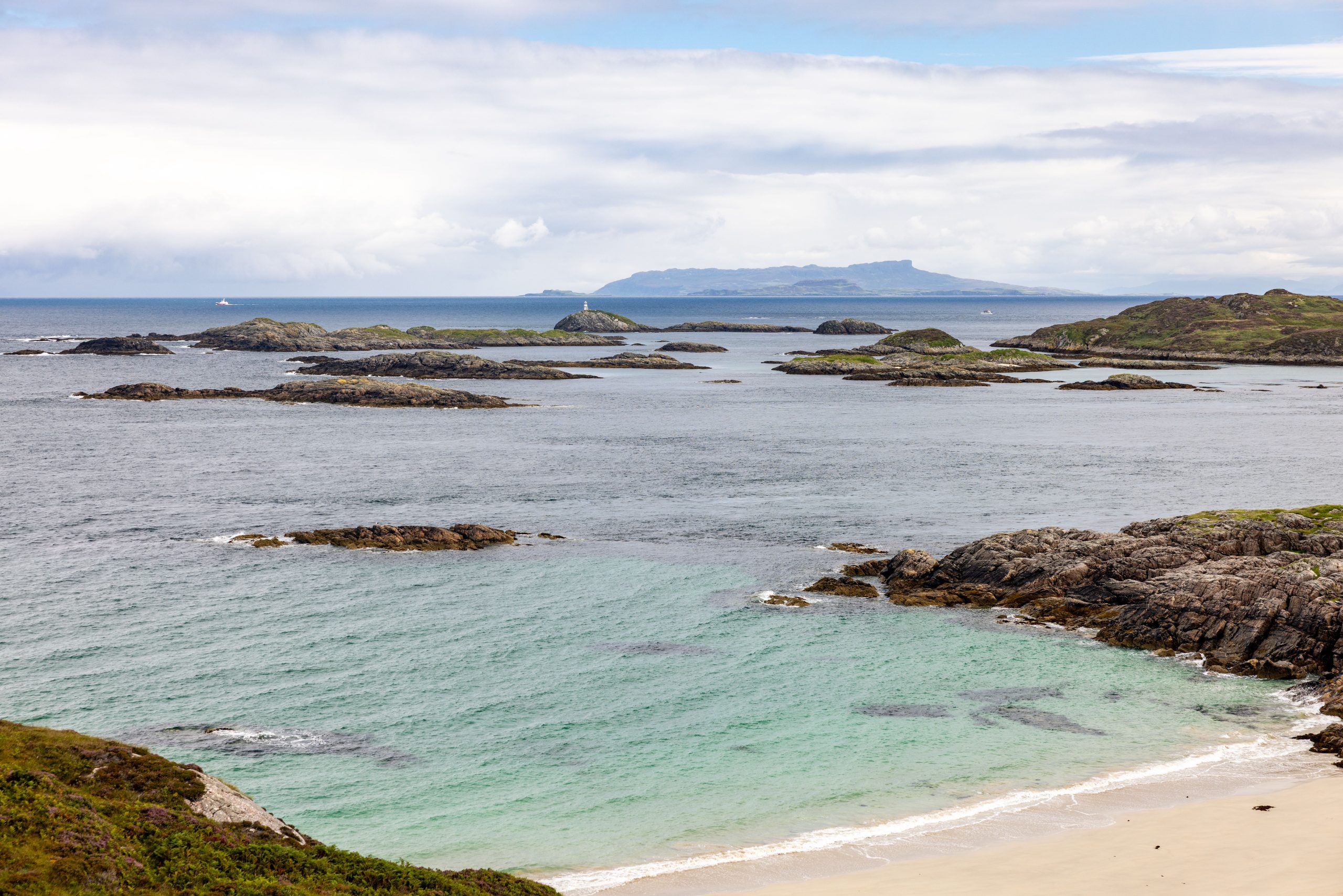
Some of Britain’s most beautiful and least-crowded beaches lie along the western side of the North Coast 500 route. The far North-West hides some of Britain’s most beautiful and least-crowded beaches. Achmelvich, near Lochinver, is a crescent of white sand and crystal water that could pass for the Caribbean on a sunny day. Balnakeil, near Durness, pairs white sand with the craft village and Cocoa Mountain, while Sango Sands at Durness offers golden sand, dramatic cliffs and a real chance of spotting dolphins or even orca offshore. Pack a swimsuit if you are brave; the water is bracing but unforgettable.
The castles and heritage
History lines the North Coast 500 route. Dunrobin Castle is the showpiece, a turreted fairytale seat with formal gardens and falconry, but the romantic lochside ruin of Ardvreck Castle in Assynt is just as photogenic, and Eilean Donan, on the scenic final leg, is the most photographed castle in Scotland. Add the ancient Camster Cairns, the Whaligoe Steps and the Hill o’ Many Stanes in Caithness, and the NC500 becomes a journey through thousands of years of Highland history.
The waterfalls and gorges
Water defines the Highland landscape, and the North Coast 500 route is studded with spectacular cascades. Corrieshalloch Gorge, south of Ullapool, drops 46 metres and is crossed by a thrilling suspension bridge; Rogie Falls near Inverness sees salmon leap in late summer; and the Wailing Widow Waterfall near Kylesku spills 50 feet from a hanging loch. Each makes a perfect leg-stretch between drives on the North Coast 500 route.
The Best Time to Drive the North Coast 500
Late spring and early autumn are the sweet spot for the North Coast 500 route. May, June and September bring the best balance of long daylight, settled weather and thinner crowds, and in June the Highland evenings barely darken at all, giving you more hours to explore the remote far North. For current travel and event information, the official VisitScotland site is worth a look. Autumn paints the glens in russet and gold.
July and August are warmest and busiest, when booking a hire car or campervan well ahead is essential and the famous Highland midge is at its peak around dawn and dusk. Winter brings snow-capped mountains and a stark beauty, but the Bealach na Ba and other high roads may close, and many food stops and attractions shut from November to March. Whenever you travel the NC500, booking your car early secures the best rate.
Driving the North Coast 500 Route: Practical Tips
The driving is the heart of the North Coast 500 route, and a few habits make it safer and more enjoyable. Remember that Scotland drives on the left and all distances and speed limits are in miles, as this is part of the United Kingdom. The main A-roads are straightforward; it is the single-track sections that define the NC500 experience.
On single-track roads, pull into a passing place on your left to let oncoming traffic through, or to let a faster vehicle behind you past, and never park in one. Be patient with delivery vans, farm vehicles and livestock, especially at dawn and dusk when deer and sheep roam the road. Plan fuel carefully, as stations are sparse and may close on Sundays, and save the downloadable GPX map above to your phone so your sat nav has the full North Coast 500 route even where signal fails.
Hiring a Car for the North Coast 500
A hire car is essential for the North Coast 500 route. There is little public transport in the far North, and the entire appeal of the NC500 is the freedom to stop wherever the view, the beach or the seafood shack tempts you. Almost everyone collects their car at Inverness Airport, where the route begins and ends, so you can be on the road within minutes of landing. Compare car hire Inverness Airport deals before you go.
What car to choose
A smaller car is a real advantage on the single-track sections and the Bealach na Ba’s hairpins, and it is kinder on fuel over 516 miles, though you will want enough boot space for luggage. Check that your hire includes unlimited mileage, because the North Coast 500 route alone will use a good chunk of it before any detours. An automatic can make the mountain passes more relaxing if you are not used to a manual on steep gradients.
Car hire or campervan?
Campervans and motorhomes are hugely popular on the NC500, and for good reason: the freedom to follow the weather is seductive. But they are slower on the passes, harder to park, barred from some single-track loops such as the Drumbeg, and pricier to hire in peak season. For many travellers a hire car plus booked accommodation works out simpler, faster and cheaper, with the comfort of a proper bed and a hot meal at the end of each day.
To get the best price, compare cheap car hire Scotland deals before you travel and pick up at Inverness Airport to start the loop straight away. Booking early is the single best way to secure a good rate for the busy Highland summer.
Frequently Asked Questions
How long does the North Coast 500 take to drive?
You can drive the 516-mile loop in as little as three days, but five days is the sensible minimum and a week is ideal. Ten days or more lets you take the west-coast detours and slow down. Rushing the North Coast 500 route misses the point, as the joy is in the stops, not the mileage.
Which direction should I drive the NC500?
Either way works. Clockwise takes the gentler east coast first, easier for those new to single-track roads, and saves the dramatic west for last. Anti-clockwise heads straight for the Bealach na Ba and the west coast. Most drivers prefer clockwise.
Do I need a 4×4 for the North Coast 500?
No. The entire route is driveable in an ordinary car, and a smaller car is actually an advantage on the single-track sections and the Bealach na Ba. In winter, check road conditions, as high passes can close with snow.
Where does the North Coast 500 start and finish?
The NC500 starts and finishes in Inverness, the Capital of the Highlands. Most drivers pick up a hire car at Inverness Airport, which puts them on the route within minutes of arriving.
Is the Bealach na Ba safe to drive?
In good conditions, yes, but it is one of the most challenging roads in Britain, with steep gradients and hairpin bends. Drive it slowly, use the passing places, and avoid it in poor visibility, winter weather or a large vehicle, when there is a signed coastal alternative.
How much does it cost to drive the NC500?
Beyond car hire and fuel, the North Coast 500 route itself is free, with no tolls anywhere in Scotland. Your main costs are accommodation, which is best booked early, food and any paid attractions such as Dunrobin Castle or distillery tours. Travelling outside July and August keeps costs lower.
Can you drive the North Coast 500 in winter?
Yes, but with care. Winter brings dramatic snow-capped scenery and empty roads, but short daylight, icy conditions and possible closures on the high passes, and many attractions and food stops shut from November to March. Check forecasts and road conditions, and make sure your hire car is suitable.
Plan Your North Coast 500 Road Trip
The North Coast 500 route is the drive of a lifetime: 516 miles of mountains, white beaches, castles, seafood and single-track adventure around the wild top of Scotland. With a hire car from Inverness, the freedom of the open road is yours from the moment you land. Download the route map above for your sat nav, compare car hire Scotland deals to find the best rate, and start planning your Highland adventure on the NC500 today.