
100 Malta festivals. One small island. Most visitors see almost none of them. Here is why that happens, and how a hire car changes everything.
Table of Contents
Here is something most people do not realise about Malta until they arrive. This island, which you can drive across in under an hour, hosts more than 100 festivals every single year. Classical music in 400-year-old cathedrals. Fireworks that rattle the windows of medieval fortresses.
A free concert that pulls tens of thousands of people to a square outside Valletta. Village streets that shut down completely for three days while an entire community celebrates their patron saint with brass bands, elaborate street decorations and enough food to feed a small army.
The problem is that most visitors see almost none of it. They book a package, they stay in Sliema or St Julian’s, they do the guided tour to Valletta and the day trip to the Blue Grotto, and they go home thinking Malta was nice. Perfectly pleasant. A bit small.
The visitors who come back year after year are the ones who figured out that Malta is a completely different island when you have a car and you know when to show up.
You can be in Valletta for the fireworks, in Gozo for the most raucous carnival in the Mediterranean, in a village square at midnight watching a brass band that has been playing the same streets for three generations, and back on the coastal road for sunrise. That is not a tour itinerary. That is a Malta road trip built around the festival calendar.
This is the guide for that trip.
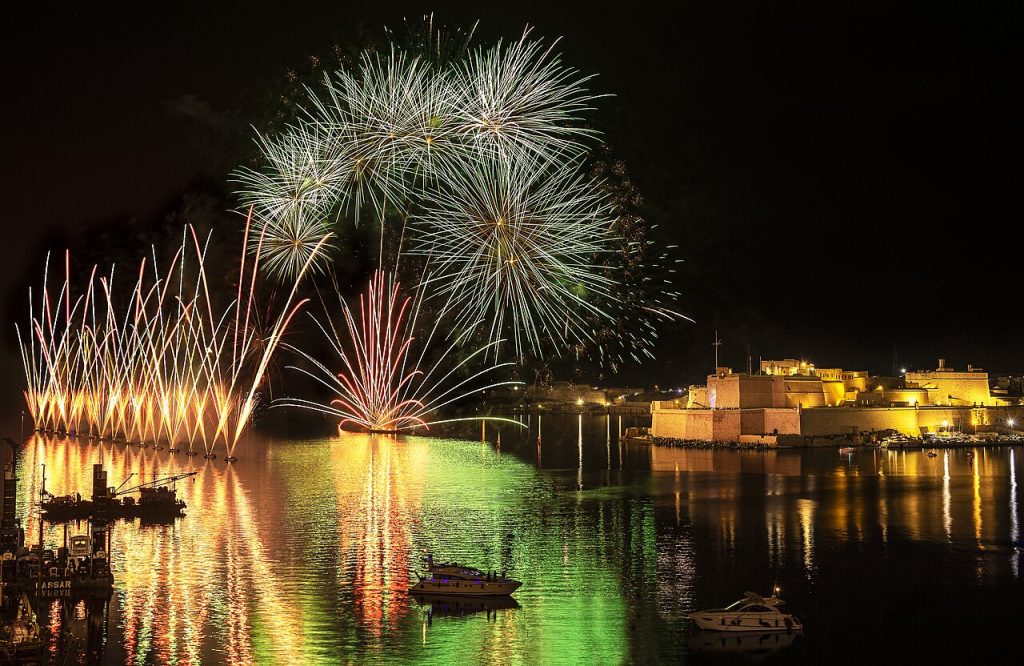
January: Valletta Baroque Festival
The year opens quietly but brilliantly. The Valletta Baroque Festival runs from 8 to 25 January 2026 and brings some of the finest early music performers in Europe into a city that was quite literally built for this kind of sound.
St John’s Co-Cathedral, the Teatro Manoel, the Grandmaster’s Palace: these are not concert venues that had a baroque programme bolted on. They are baroque architecture performing baroque music in baroque light. It is extraordinary.
The driving angle here is subtle but real. Valletta’s concert venues are spread across the city and events run on different evenings throughout the festival.
Staying outside Valletta and driving in gives you flexibility to catch multiple performances across the run rather than committing to one night from a hotel in the capital. Park at the Floriana park-and-ride, walk in, and you have the whole city to explore before and after.
January is also one of the best months to drive. The roads are quiet, the light is low and atmospheric, and the scenic drives in Malta that feel busy in summer are almost entirely yours in January.
If the Baroque Festival feels like the civilised opening act, what comes next is anything but.
February: Malta Carnival and the Gozo Challenge
Malta Carnival 2026 runs from 13 to 17 February. The Valletta parade is everything you would expect: enormous handcrafted floats, elaborate costumes, brass bands, street parties that run well into the night.
It has been going since 1535 and the Maltese take it seriously. The streets of Valletta fill with colour and noise and the kind of communal energy that reminds you why live events exist.
But here is the challenge. And it is a genuine one.
While Valletta is doing the official, photogenic, Instagram-friendly version of Carnival, across the water on Gozo, in the village of Nadur, something considerably wilder is happening. The Nadur Spontaneous Carnival is unofficial, unannounced, and largely unknown to visitors who have not specifically sought it out.
There are no floats, no organised processions. Instead, the villagers and their guests turn out in increasingly inventive and increasingly irreverent costumes, the streets fill, the music gets louder, and the whole thing runs until the early hours.
It has been described as the most authentic carnival experience in the Mediterranean. It is not for everyone. For the right person, it is unmissable.
Getting to Nadur requires taking the ferry from Cirkewwa to Gozo and driving across the island. You cannot get there without a car unless you book an organised tour, which rather defeats the purpose.
Insider tip: The Nadur Carnival has no official programme, no stage and no start time. It simply begins when enough people arrive and ends when they leave. Locals tend to appear after 10pm. If you show up at 8pm you will be standing in a quiet village square wondering what all the fuss is about.
This is the first festival on the calendar where having your own wheels is not just convenient, it is the difference between experiencing something real and missing it entirely.
The challenge: can you do both? Valletta during the day, the Gozo Channel ferry in the evening, Nadur after dark. Yes, you can. It takes planning and the right hire car waiting at the airport when you land.
But it is absolutely doable and it makes for a Carnival experience that very few visitors have ever had.
April: Malta International Fireworks Festival
The Maltese relationship with fireworks is not a casual one. This is a country where individual villages have their own fireworks factories, where the quality of the pyrotechnics is a matter of genuine civic pride, and where the argument about whose village produces the best display has been running for generations.
The Malta International Fireworks Festival, held at the end of April over the Grand Harbour in Valletta, is the national showcase of this obsession.
The displays are synchronised to live orchestras. They are launched from the bastions and from boats in the harbour simultaneously. When it works, and it usually does, the Grand Harbour becomes a theatre unlike anything you have seen from a fireworks display before.
Insider tip: The fireworks are judged by an international panel and each competing team fires on a different night. Most visitors only know about the final night. The earlier nights mean smaller crowds, identical spectacle and you can park within five minutes of the waterfront.
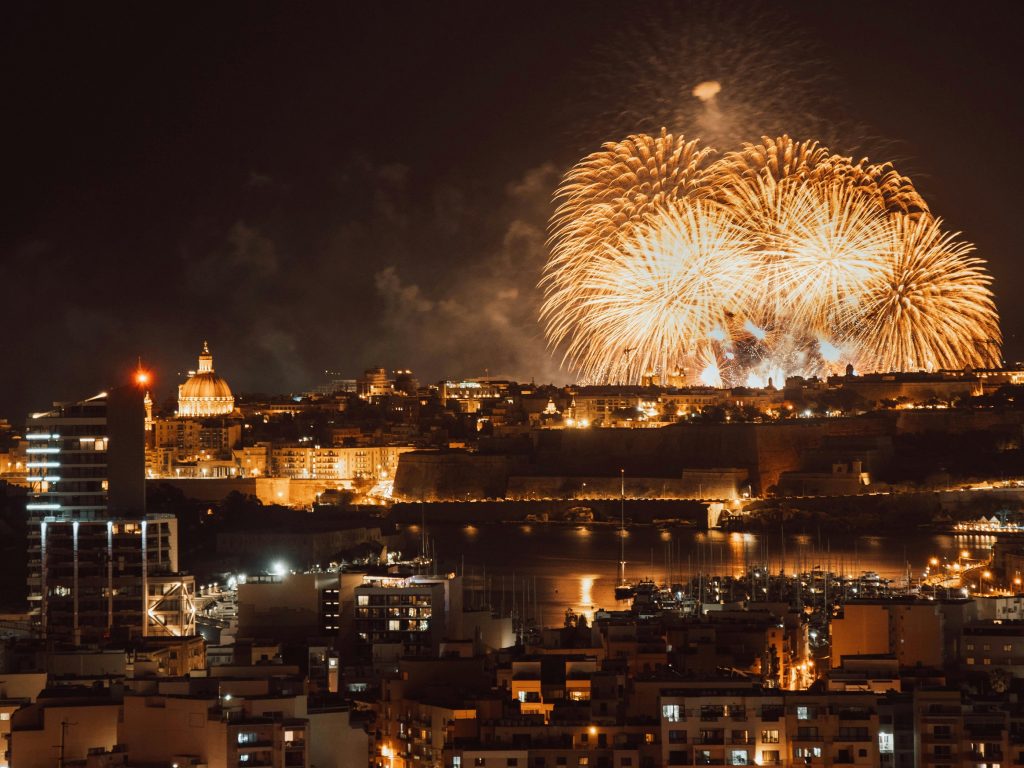
The practical consideration: Valletta fills up completely on fireworks nights. Driving into the city itself is not the play. The better move is to position yourself on the opposite side of the harbour, in the Three Cities, where the viewing angle is extraordinary and the crowds are a fraction of those in Valletta.
Getting to the Three Cities requires either a ferry from Valletta or a car. The car gives you the option to stay late, leave when you want, and stop somewhere along the coastal road on the way back. Which, on a clear April night, is worth the detour.
April: Festa Frawli, the Strawberry Festival, Mgarr
This one catches people off guard. On 12 April 2026, the village of Mgarr in the northwest of Malta hosts its annual Strawberry Festival. The village square fills with stalls selling freshly picked Maltese strawberries in every form imaginable: fresh, in cakes, in jam, in ice cream, in wine, in ravioli. There is folk dancing, live music and the prehistoric temples of Ta’ Hagrat are open to the public nearby.
It sounds gentle. It is genuinely wonderful. And it is the kind of thing that is completely invisible to visitors who are not looking for it. The village is not on the standard tourist circuit, the roads getting there are narrow and the car park fills up early. Arrive before 11am and you will have the square largely to yourself. Arrive at 2pm and you will be fighting for a strawberry crepe in a very good-natured crowd.
This is exactly the sort of discovery that a car makes possible. Nobody is running a tour bus to Mgarr for the Strawberry Festival. You go because you found out about it, you hired a car, and you decided to spend a Tuesday morning doing something most visitors would never know existed.
May: MaltaRONG Open Air Festival
The festival season shifts gear in May. MaltaRONG Open Air returns from 7 to 10 May 2026, bringing four days of trance and progressive music to open-air venues under the Mediterranean sun. The lineup draws serious electronic music fans from across Europe and the atmosphere is exactly what the name suggests: a long weekend of music, sunshine and open skies.
This is not a central Valletta event. The venues are spread across the island and the festival culture here runs partly on the ability to move between locations, follow the lineup and find the sets you actually want. A car, or at minimum a reliable plan for getting between venues, is worth sorting in advance. Book early on both counts. Malta’s hire car market in May is not yet at peak summer pressure but the festival weekend will tighten availability faster than you expect.
June: Earth Garden and the Valletta Waterfront Wine Festival
June brings two very different events that work surprisingly well as a pairing.
Earth Garden, Malta’s alternative music festival, takes place at Ta’ Qali National Park in early June.
Five stages, a mix of live bands and electronic acts, beach parties, boat cruises, sustainability workshops and four days of what the Maltese music community does at its most creative and community-minded. It is the festival most likely to make you want to come back the following year.
Ta’ Qali is in the centre of the island, roughly equidistant from most of the main resort areas. Getting there without a car involves a combination of buses that are fine in theory and unreliable in festival practice.
Getting there with a car means arriving when you want, leaving when the last act finishes, and stopping for pastizzi on the way back at midnight. These are not equivalent experiences.
Later in June, from 11 to 13 June 2026, the Valletta Waterfront transforms into the setting for the Waterfront Wine Festival. Local and international wines, food pairings, live music and long Mediterranean evenings beside the harbour.
It is the civilised counterpart to Earth Garden’s energy, and doing both in the same trip gives you a sense of the full range of what June in Malta actually looks like.
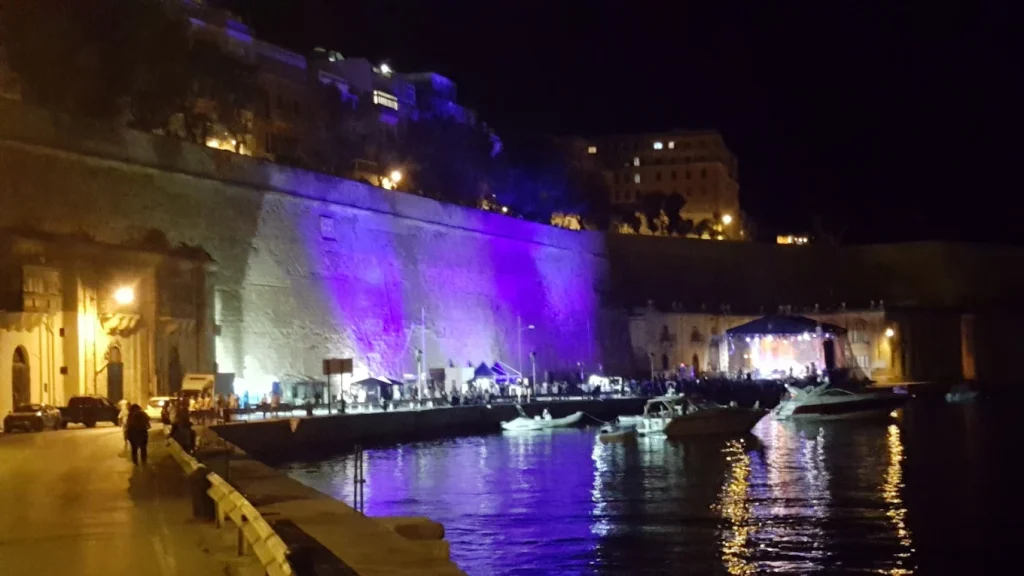
July: Isle of MTV Malta and the Malta Jazz Festival
July is when Malta becomes genuinely difficult to navigate without a hire car, and also when the rewards for having one are at their highest.
Isle of MTV Malta is Europe’s largest free music festival. Tens of thousands of people descend on Il-Fosos Square in Floriana, just outside Valletta, for a single night headlined by artists whose names you will recognise from the radio. Past headliners have included Lady Gaga, Martin Garrix and David Guetta.
The main concert is free but registration is required in advance and the tickets disappear. Surrounding Malta Music Week fills the island’s venues with club nights, boat parties and events that run for several days either side.
The logistical challenge of Isle of MTV is real. Floriana fills completely and the roads around Valletta gridlock well before the headline act. The visitors who have the best experience are not the ones staying in a hotel three minutes from the venue.
They are the ones who have a hire car, a base further up the island, and a plan for parking and walking in early. Getting out afterwards is also considerably easier if you know the back roads north of Valletta, which a car and a bit of local knowledge from the hire company will give you.
Insider tip: Isle of MTV registration opens months before the lineup is announced. Register as soon as the form goes live, not when the headliners are revealed. By then the free tickets are already gone. Gates open 90 minutes before the headline act. The visitors who get closest to the stage arrive when the gates open, not when the headliner is due on.
The Malta Jazz Festival follows later in July, with international jazz artists performing under Valletta’s bastions on warm Mediterranean nights. It is the sonic opposite of Isle of MTV and somehow both work perfectly in the same month. Malta in July is not a quiet island.
If you are building your July trip around Isle of MTV and the Jazz Festival, our Malta road trip itinerary shows how to structure the driving routes so the festival days connect naturally to the best coastal drives and viewpoints on either side.
July: Farsons Beer Festival
Running for ten days in July, the Farsons Beer Festival is free to enter, features more than 50 award-winning beers and hosts local bands across multiple evenings.
It is one of those events that feels designed for the person who wants to have a genuinely good time in Malta without spending a fortune or following anyone else’s itinerary.
The festival is held at the Farsons Brewery in Birkirkara, which is in the centre of the island and not particularly well served by public transport in the evenings.
Sort a designated driver or a taxi plan for the evenings you attend. The daytime sessions are considerably more manageable.
August: Peak Season, Village Festas and the Art of Timing
August is when Malta reaches full intensity. The weather is at its hottest, the tourists are at their most numerous, and the village festas are running almost every weekend across the island. This last point is the one that most visitors completely miss.
The village festas are the heartbeat of Maltese culture. Every village has one, dedicated to its patron saint, and they happen between May and September with the heaviest concentration in July and August.
The format is always roughly the same: a statue of the patron saint is carried through the village streets in a procession, the church holds special masses, brass bands play in the square, street decorations go up days in advance, food stalls appear, and the whole village comes out. Pastizzi, nougat, grilled sausages and ftira are everywhere.
Insider tip: Ask your hire car company or hotel which village is having its festa that weekend. They will know. This is not information that appears reliably on tourist websites but every local knows the schedule by heart. The Malta Tourism Authority also publishes a festa calendar at visitmalta.com which is worth checking before you travel.
But here is the thing about the village festas. They are not announced far in advance on international tourism channels. The dates are known locally and they shift year to year.
Finding out which village is having its festa on which weekend requires either local knowledge or the kind of research that most package tourists are not going to do. And then getting there, at the right time, to a village that might be thirty minutes from your hotel down roads that are partially blocked for the procession, requires a car.
The challenge for August: find three village festas in three different parts of the island and get to all of them. Use the Malta Tourism Authority website to track the schedule. It is one of the most rewarding things you can do on the island and almost nobody from outside Malta does it.
One practical note: August is the hardest month to Malta car hire deals. Book well in advance, ideally alongside your flights. The airport counters run out of available vehicles faster than anywhere else in the Mediterranean during peak August weekends.
October: Notte Bianca and Birgufest
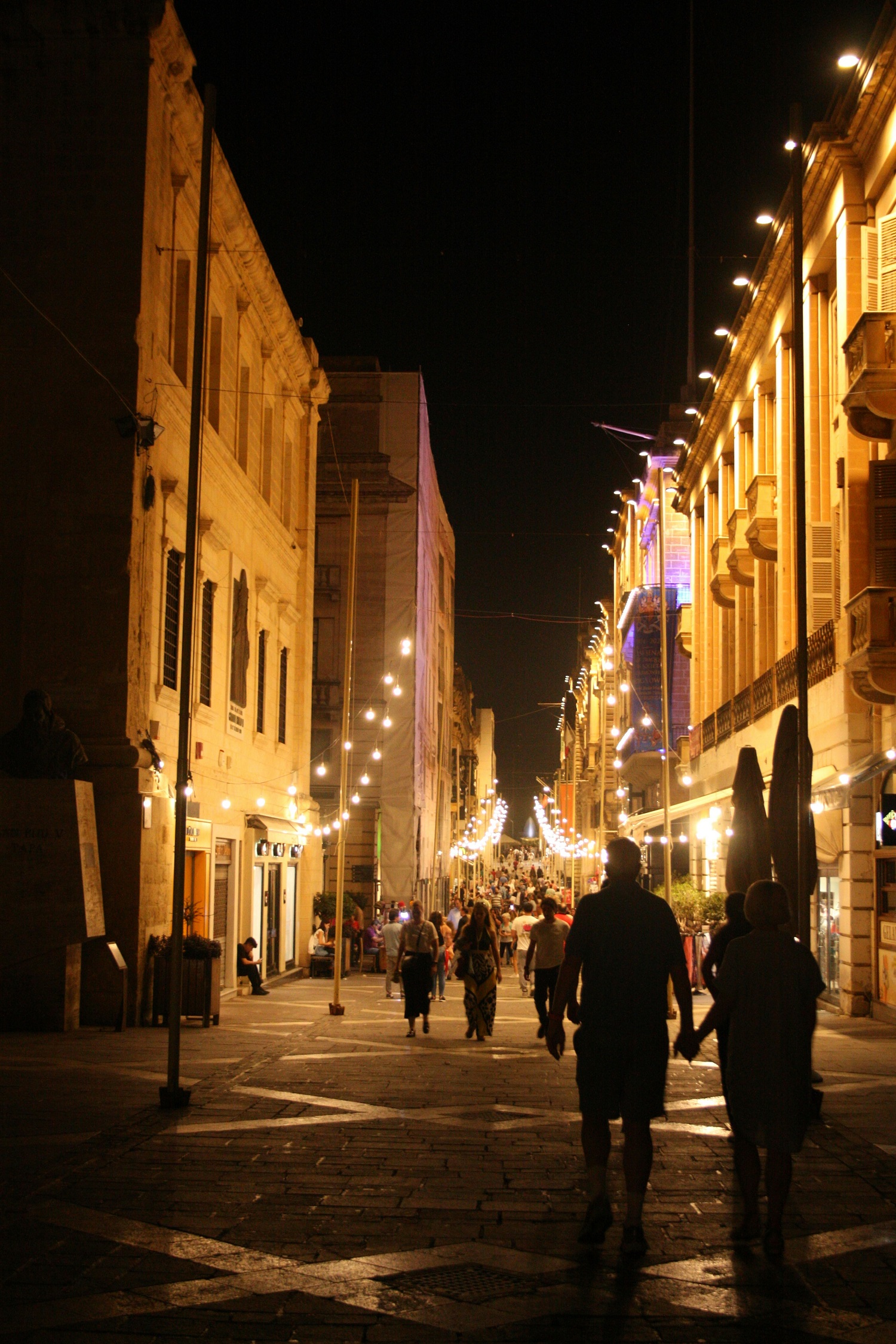
October brings two events that are among the most distinctive on the entire Maltese calendar, both within a few weeks of each other and both requiring a car to experience properly.
Notte Bianca is held on a single Saturday in early October. For one night, Valletta stays open until dawn. State palaces, museums, galleries and historic buildings that are normally closed in the evening throw their doors open. Art installations appear in the streets.
Music plays in the squares. The city looks completely different after dark and the atmosphere is unlike anything you will find during normal visiting hours. It is free, it is extraordinary, and it happens once a year.
Insider tip: The Grandmaster’s Palace opens its state rooms for one night only during Notte Bianca. The queue builds quickly after 9pm. Go there first, before anywhere else, and save the street wandering for after midnight when the crowds thin out.
Birgufest follows shortly after, in the Three Cities. For one weekend, the medieval city of Vittoriosa is lit entirely by candles.
Thousands of them, placed in windows, on walls, along alleyways and down to the waterfront. The effect is theatrical in a way that no photograph quite captures. The city was already one of the most atmospheric places in Malta. Birgufest turns it into something from a different century entirely.
The Three Cities are accessible by ferry from Valletta but the ferry stops running well before Birgufest ends. A car parked in the lower areas of the Cottonera Lines gives you the freedom to stay as late as the candles are burning, which is the only way to see Birgufest properly.
Year Round: The Village Festas You Cannot Plan For
The organised festivals above are the ones with dates you can put in a calendar. But some of the best experiences in Malta come from the village festas that are harder to track down and more rewarding for that reason.
Between May and September, barely a weekend passes without a festa somewhere on the island. The elaborate street decorations go up a week before and stay up for days after.
You can spot a festa village from the car by the coloured lights strung across the streets and the brass band rehearsals drifting out of the church hall. If you see those signs, stop. Park wherever you can and walk in. You will not be turned away and you will not be disappointed.
This is the Malta that the guided tours do not show you. It requires nothing more than a hire car, a flexible itinerary and the willingness to follow the lights.
Planning Your Festival Trip
The festivals above span every month of the year, which means the honest answer to “when should I go?” is: it depends entirely on what you want to experience. February for Carnival and the Gozo challenge.
April for fireworks and the Strawberry Festival. July for Isle of MTV and the festas. October for Notte Bianca and candlelit Vittoriosa.
What none of these experiences have in common with each other is a fixed location. Malta’s festival culture is spread across the island and across Gozo.
The Nadur Carnival is 45 minutes from the airport and a ferry crossing away. The village festas move around by definition. The Ta’ Qali festival site is central but not central to anywhere in particular. The Three Cities are across the harbour from Valletta.
A car is not a luxury add-on for a Malta festival trip. It is the infrastructure that makes the whole thing work.
If you are building your trip around the festival calendar, our Malta road trip itinerary shows how to structure the driving routes so that you are never far from wherever you need to be next.
For a route tailored to your specific dates and interests, use the Malta Trip Planner to build an itinerary that puts the right festivals and the right drives in the right order.
Compare car hire in Malta and book early, particularly if your trip falls in July or August. The difference between booking six weeks ahead and booking the week before can be the difference between the car you want and whatever is left at the airport desk.
Frequently Asked Questions
When is the best time to visit Malta for festivals?
July and August have the highest concentration of events including Isle of MTV and the village festas. February has Carnival. April has the fireworks festival. October has Notte Bianca. There is genuinely no bad month.
Do I need a car to attend Malta’s festivals?
For the main Valletta events you can manage without one. For the Gozo Carnival, the village festas, the Three Cities events and anything at Ta’ Qali, a car makes the difference between a partial experience and a complete one.
Is Isle of MTV Malta really free?
The main concert is free but requires advance registration. Malta Music Week events surrounding it are paid. Register as soon as dates are announced because free tickets still run out.
How do I find out about village festas?
The Malta Tourism Authority website publishes the festa calendar. Local hotel staff are also a reliable source. Once you are on the island, look for streets with coloured light decorations and the sound of brass band rehearsals.
What is the Nadur Carnival in Gozo?
The Nadur Spontaneous Carnival is an unofficial, unsanctioned event that runs alongside the official Malta Carnival in February. It takes place in the Gozo village of Nadur, it runs late, the costumes are creative and irreverent, and it is accessible only by ferry and car. It is one of the most authentic and least-known carnival experiences in Europe.
One Island. One Hundred Festivals. One Car.
Malta does not need to be a “nice holiday”. It can be the trip where you caught the fireworks from the right side of the harbour, stumbled into a village festa you had not planned for, made the ferry to Gozo with twenty minutes to spare and ended up at a carnival that nobody back home has ever heard of.
That version of Malta is available to anyone with a car, a rough plan and the sense to follow the lights when you see them strung across a village street on a warm summer evening.
The calendar is above. The rest is up to you.