
The Isle of Skye is the jewel of the Scottish Hebrides and the setting for one of Britain’s greatest road trips. An Isle of Skye road trip takes you across a 50-mile-long island of jagged mountains, sea cliffs, fairy pools and ancient castles that has become one of the most photographed places in Britain.
But Skye is not a checklist of viewpoints to tick off in a hurry. It is a landscape to be driven slowly, along single-track roads that wind past lochs and through glens, with a passing place every few hundred yards and a new view around every bend. This is an island made for a road trip, and an Isle of Skye road trip is one of the great drives of Europe.
A hire car is not just convenient on Skye, it is essential. Public transport is sparse and infrequent, the best viewpoints sit at the end of remote lanes, and the freedom to stop when the light breaks over the Cuillin is the whole point. This guide takes you region by region around the island, from the otherworldly rock formations of Trotternish to the wild west coast and the brooding Cuillin mountains, with every stop, every drive and every practical tip you need to plan the Isle of Skye road trip of a lifetime.
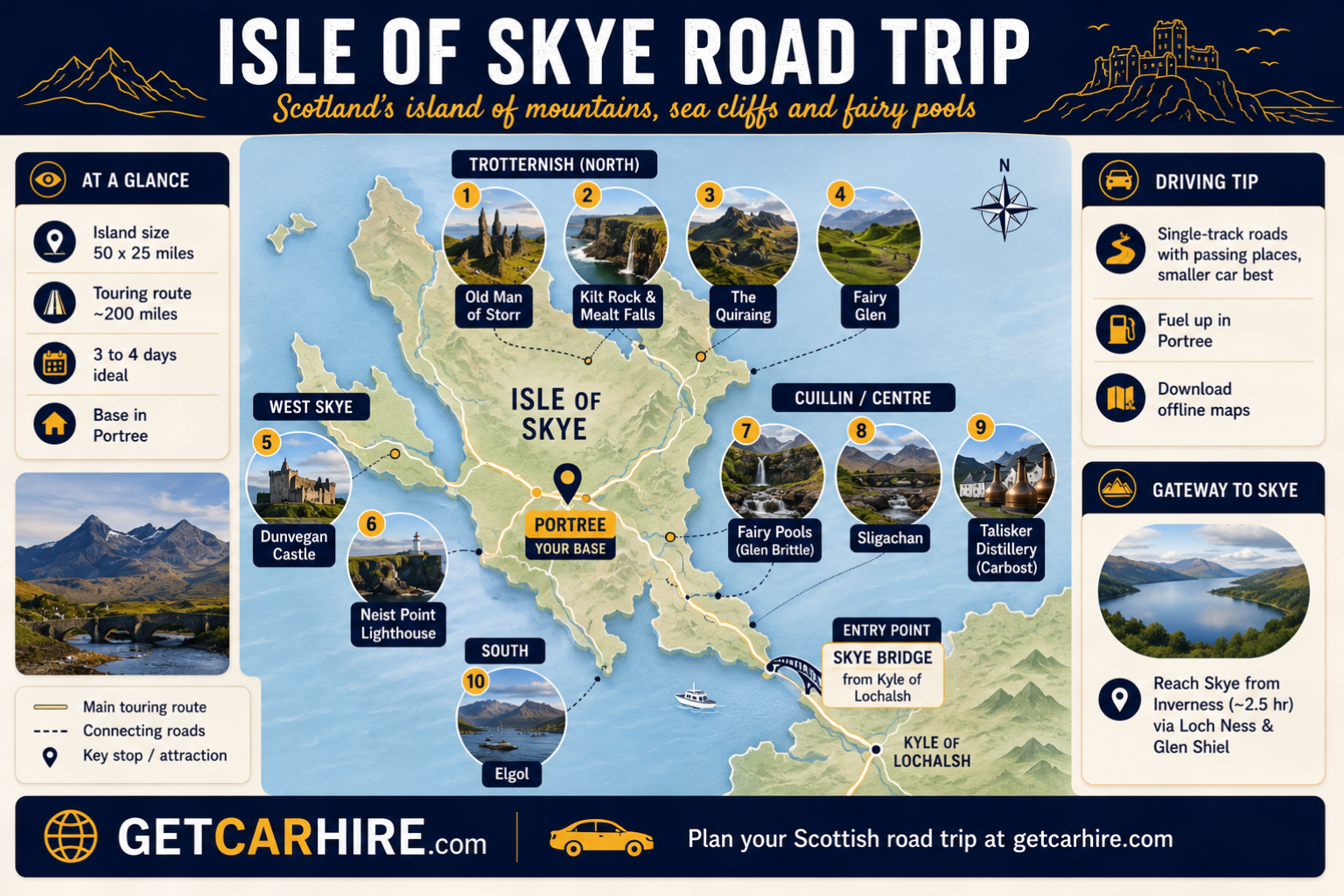
The Isle of Skye Road Trip at a Glance
Skye is roughly 50 miles long and 25 miles wide, and a full Isle of Skye road trip touring route covers around 200 miles. That sounds modest, but Skye’s single-track roads, changeable weather and sheer density of things to see mean distances take far longer than the map suggests. Most visitors find 3 to 4 days is the sweet spot for an Isle of Skye road trip: one day is a rushed checklist, while three or four let you actually breathe the island in. Portree, the island’s small capital, makes the natural base, with the best concentration of places to stay and eat.
An Isle of Skye road trip divides naturally into distinct areas, and this guide follows them in turn: the Trotternish Peninsula in the North, home to Skye’s most famous rock formations; the west coast around Dunvegan and Neist Point; the Cuillin and Glen Brittle in the centre and South, including the Fairy Pools and Talisker distillery; and the quieter Sleat peninsula in the South. Wherever you start, the golden rule of Skye is simple: slow down, the island rewards those who take their time.
Table of Contents
Interactive Isle of Skye Road Trip Map (15 Stops)
⬇ Download route (GPX for sat nav)Getting to the Isle of Skye
For most road trippers, the drive to the start of an Isle of Skye road trip is half the pleasure. The island is connected to the mainland by the Skye Bridge, which sweeps across from Kyle of Lochalsh to Kyleakin and is completely free to cross. The approach itself is one of Scotland’s great drives, and just before the bridge stands Eilean Donan Castle, the most photographed castle in the country, sitting on its own little island where three lochs meet. It is the perfect place to stretch your legs before crossing onto Skye.
Most visitors reach Skye from one of two gateways. From Inverness it is around 110 miles West, a stunning drive of about 2.5 hours past Loch Ness and through Glen Shiel, making Inverness the most popular place to collect a hire car for a combined Highlands and Skye trip. See our car hire Inverness Airport guide for the gateway details.
From the South, Fort William and Glasgow are the usual starting points.
The drive from Inverness is a highlight in its own right: the A87 runs along the shore of Loch Ness, climbs through the wild and beautiful Glen Shiel past the Five Sisters of Kintail, and passes Eilean Donan before reaching the bridge. Whichever way you come, pick up your car at the gateway and let the adventure begin the moment you turn the key.
Trotternish Peninsula: Skye’s Famous North
If you have seen a photograph from an Isle of Skye road trip, chances are it was taken on the Trotternish Peninsula. This is the island at its most dramatic, a 30-mile loop North from Portree that strings together Skye’s most iconic sights along a single, spectacular road. Drive it clockwise to stay ahead of the crowds, and set off early; this is the busiest corner of any Isle of Skye road trip in summer.
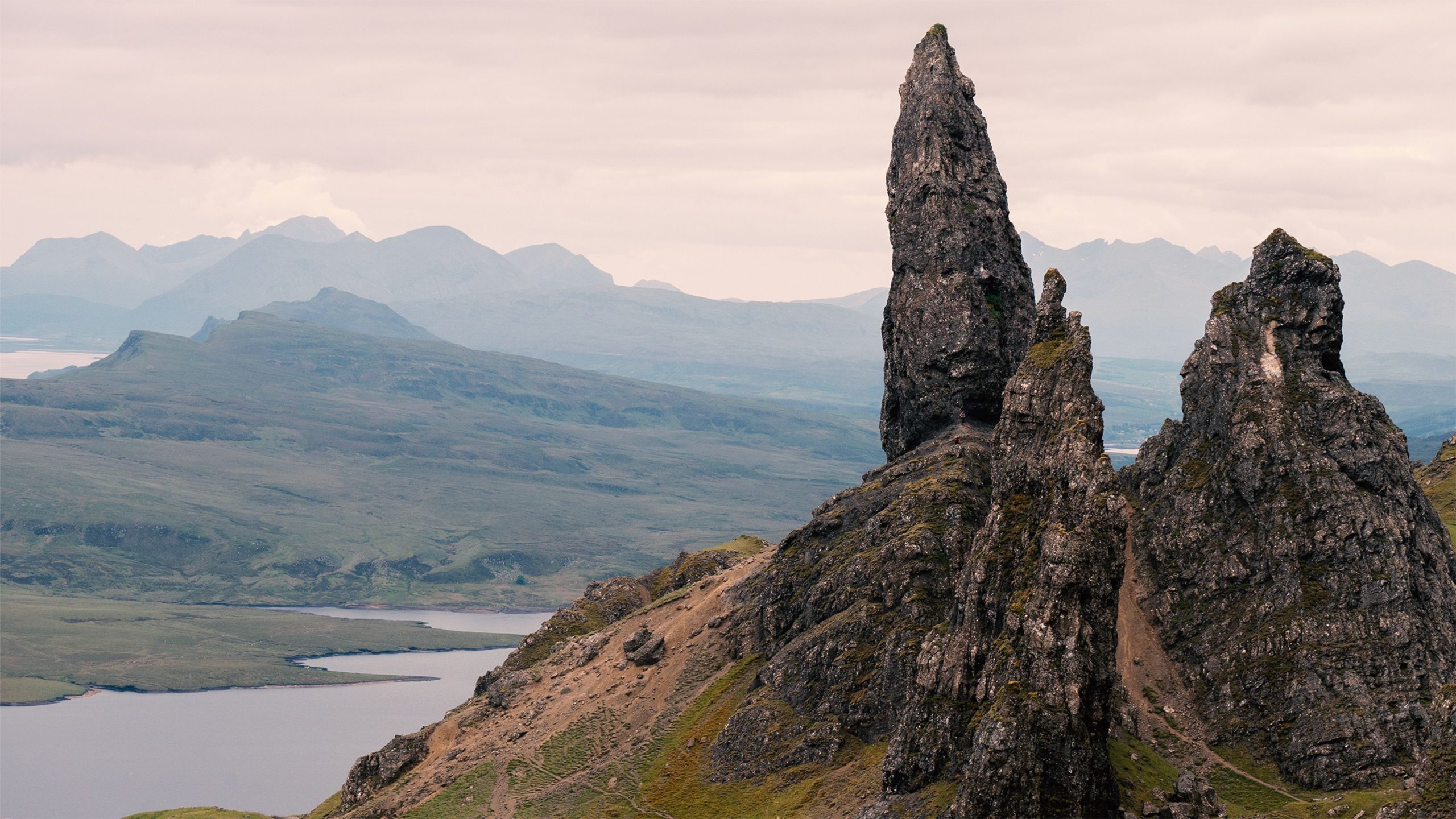
The Old Man of Storr
The Old Man of Storr is the symbol of Skye, a 50-metre pinnacle of rock that juts from the hillside like a giant’s finger, visible for miles around. The walk up from the car park takes around 90 minutes return and is steep but well worth it for the views over the Sound of Raasay. The Storr is at its most magical in early morning light, before the coach parties arrive, so this is the place to start your Trotternish loop.
Lealt Falls, Kilt Rock and Mealt Falls
Continuing North, a series of roadside stops unfolds in quick succession. Lealt Falls tumbles through a deep gorge to the sea, with a viewing platform a short walk from the road. A few miles on, Kilt Rock is a sheer sea cliff whose vertical basalt columns and horizontal bands genuinely resemble the pleats of a kilt, with Mealt Falls plunging straight off the cliff edge into the ocean beside it. Both are quick stops with car parks right by the viewpoints.
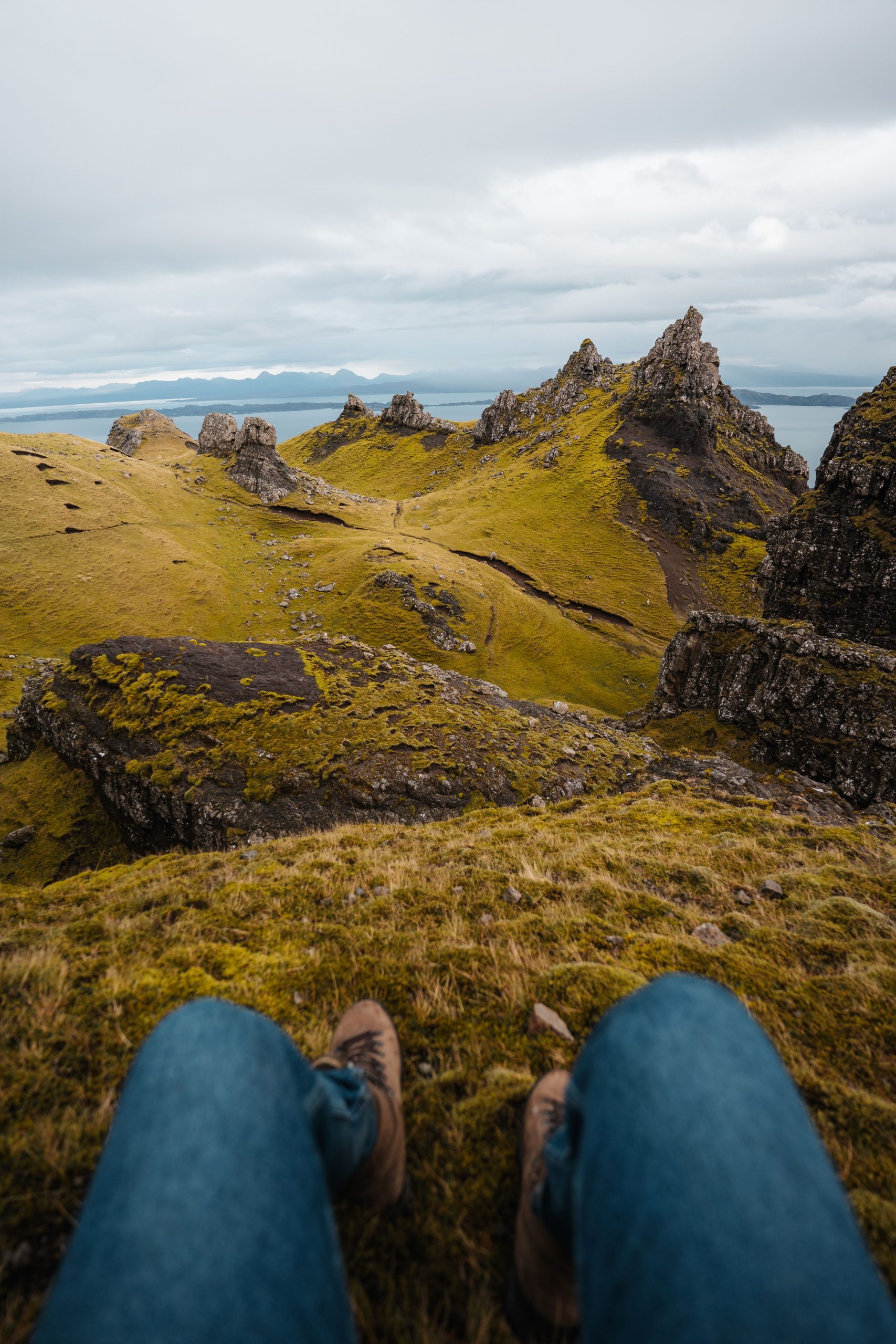
The Quiraing
The Quiraing is the jewel of Trotternish, a vast, still-moving landslip of pinnacles, plateaus and hidden valleys that feels like another planet. The single-track road over the pass from Staffin to Uig is one of the most dramatic drives on Skye, climbing steeply with hairpin bends and astonishing views. There is a car park at the top where the famous walking trail begins. Take care on the road, it is narrow and popular, and use the passing places properly.
Fairy Glen and Duntulm
Near the village of Uig, the Fairy Glen is a miniature landscape of cone-shaped grassy hills, ponds and a rocky tower called Castle Ewen, an enchanting, slightly surreal place that feels made for the fairies it is named after. At the very tip of the peninsula stand the ruins of Duntulm Castle, a former MacDonald stronghold perched on the cliffs with views across to the Outer Hebrides. Nearby, the Museum of Island Life and Flora MacDonald’s grave tell the story of Skye’s Jacobite past.
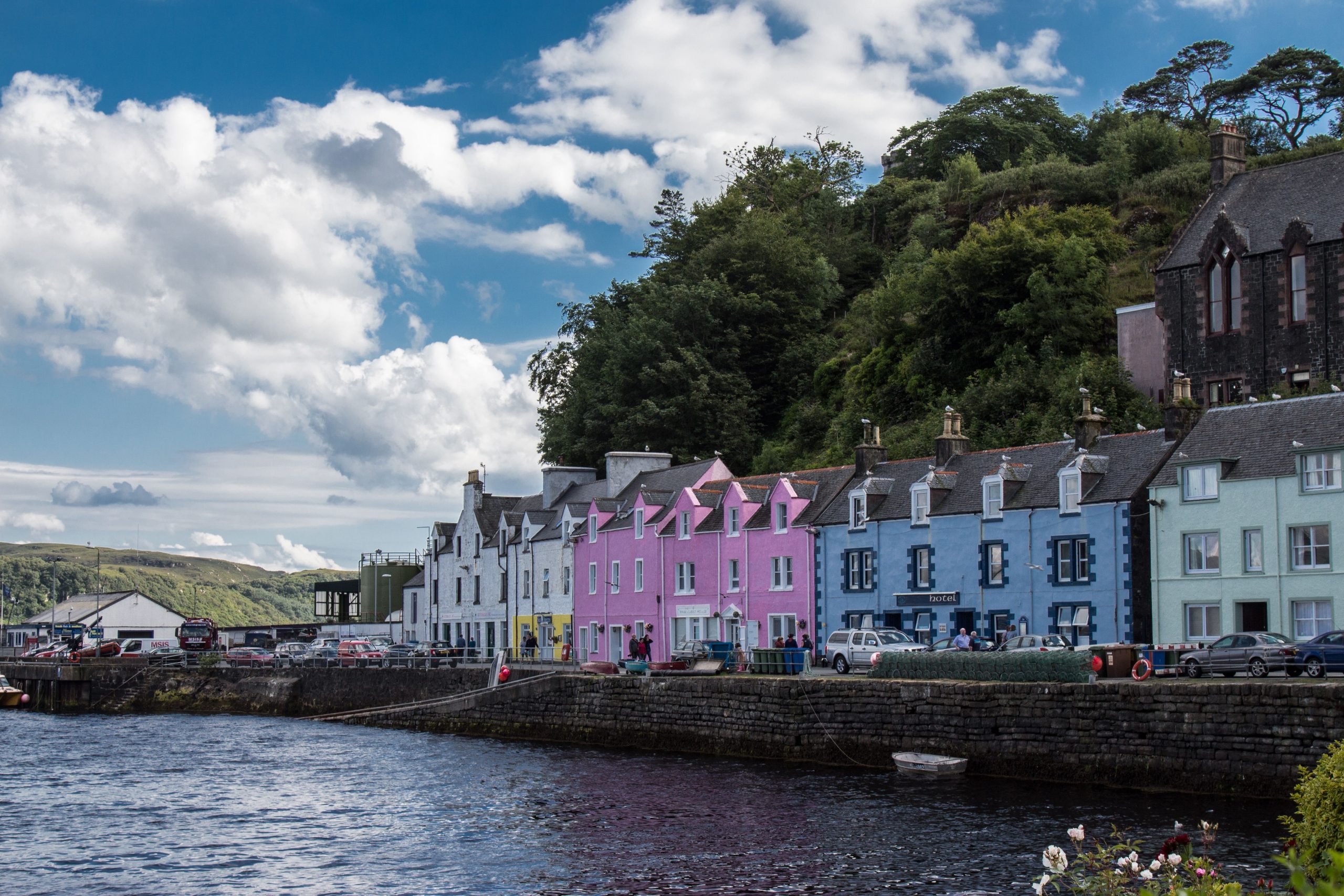
Portree: The Island Capital
Sooner or later, every Isle of Skye road trip passes through Portree, and most use it as a base. The island’s only town is a charming little harbour ringed by a crescent of brightly painted houses, a scene that has become almost as photographed as the Storr. It is the place to refuel, in every sense: top up the tank, stock up on supplies, and enjoy the best choice of restaurants on the island.
Portree is also where Skye’s reputation as a food destination comes alive. The harbour delivers superb seafood, and a stop at one of the town’s restaurants for fresh langoustines, hand-dived scallops or a bowl of Cullen skink is a Skye experience in itself. With the best concentration of hotels, B&Bs and guesthouses on the island, Portree makes the ideal hub from which to explore in every direction.
West Skye: Dunvegan and Neist Point
The west of the island is a wilder, quieter part of any Isle of Skye road trip than the busy North, a landscape of sea cliffs, headlands and big Atlantic horizons. It rewards the drive with two of the great landmarks of any Isle of Skye road trip.
Dunvegan Castle
Dunvegan Castle is the oldest continuously inhabited castle in Scotland, the ancestral home of the Chiefs of Clan MacLeod for 800 years. Built on a rock above its own sea loch, the castle and its gardens are open to visitors via Dunvegan Castle, and the drive out to it through the crofting townships of Skye’s west is lovely in itself. Look out for the famous Fairy Flag inside, a treasured clan relic wrapped in legend.
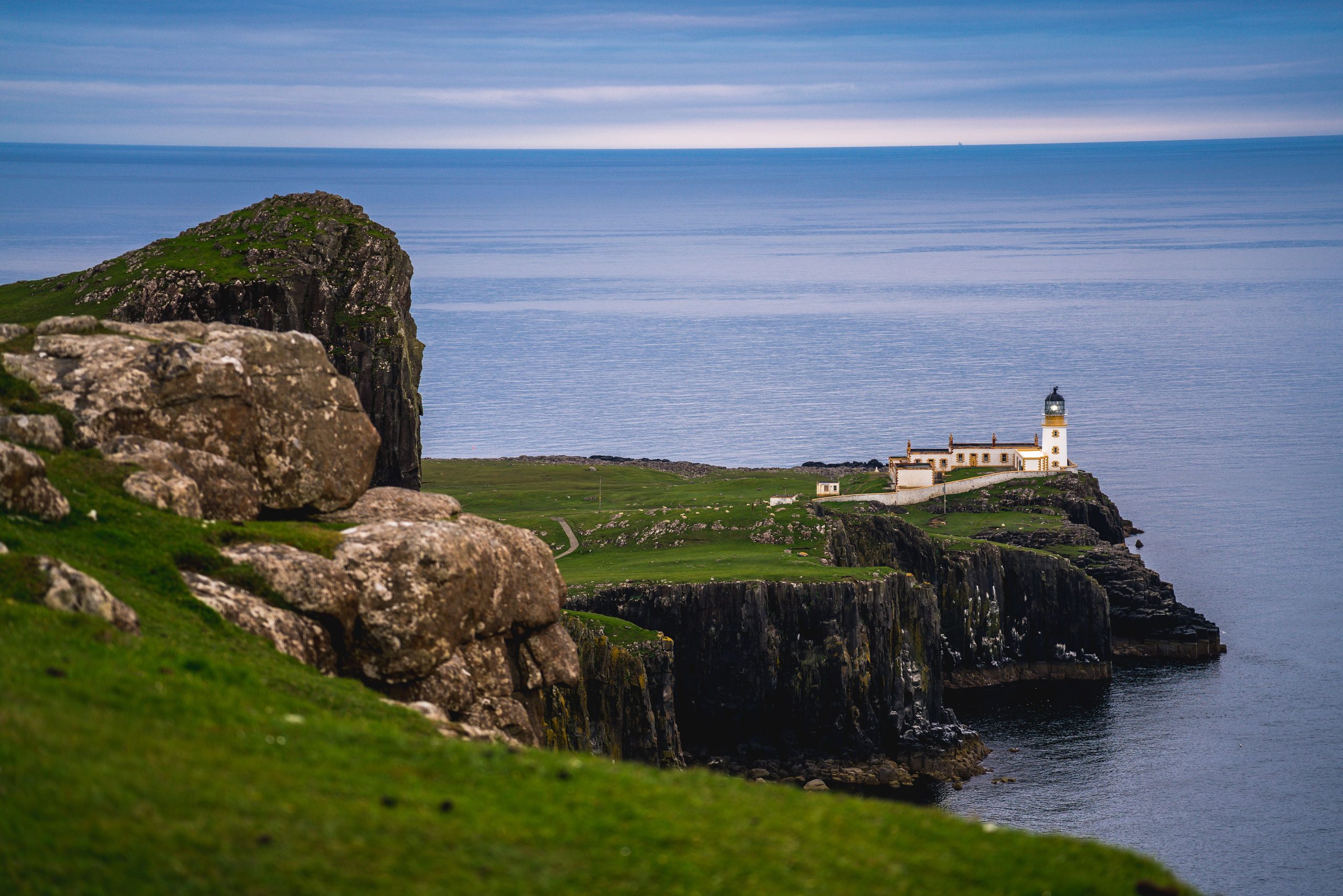
Neist Point Lighthouse
At Skye’s most westerly tip, Neist Point is the island’s most spectacular sunset spot. A single-track road leads to a car park, from where a steep path drops to the white lighthouse on its headland, with sheer cliffs falling to the sea and, on clear evenings, views all the way to the Outer Hebrides. You do not have to walk the full 2 miles to the lighthouse; even the view from the clifftop is breathtaking. Time your visit for golden hour and you will understand why photographers flock here.
On the way, the Coral Beach near Dunvegan is a hidden gem, a stretch of white that is not sand at all but crushed coralline seaweed, lapped by turquoise water on a sunny day.
The Cuillin, Fairy Pools and Glen Brittle
The Cuillin mountains are the dark, jagged heart of an Isle of Skye road trip, the most challenging range in Britain and a magnet for climbers. You do not need to be a mountaineer to enjoy them, the drives and walks around their feet are among the finest on any Isle of Skye road trip, and they form the backdrop to its most famous natural attraction.
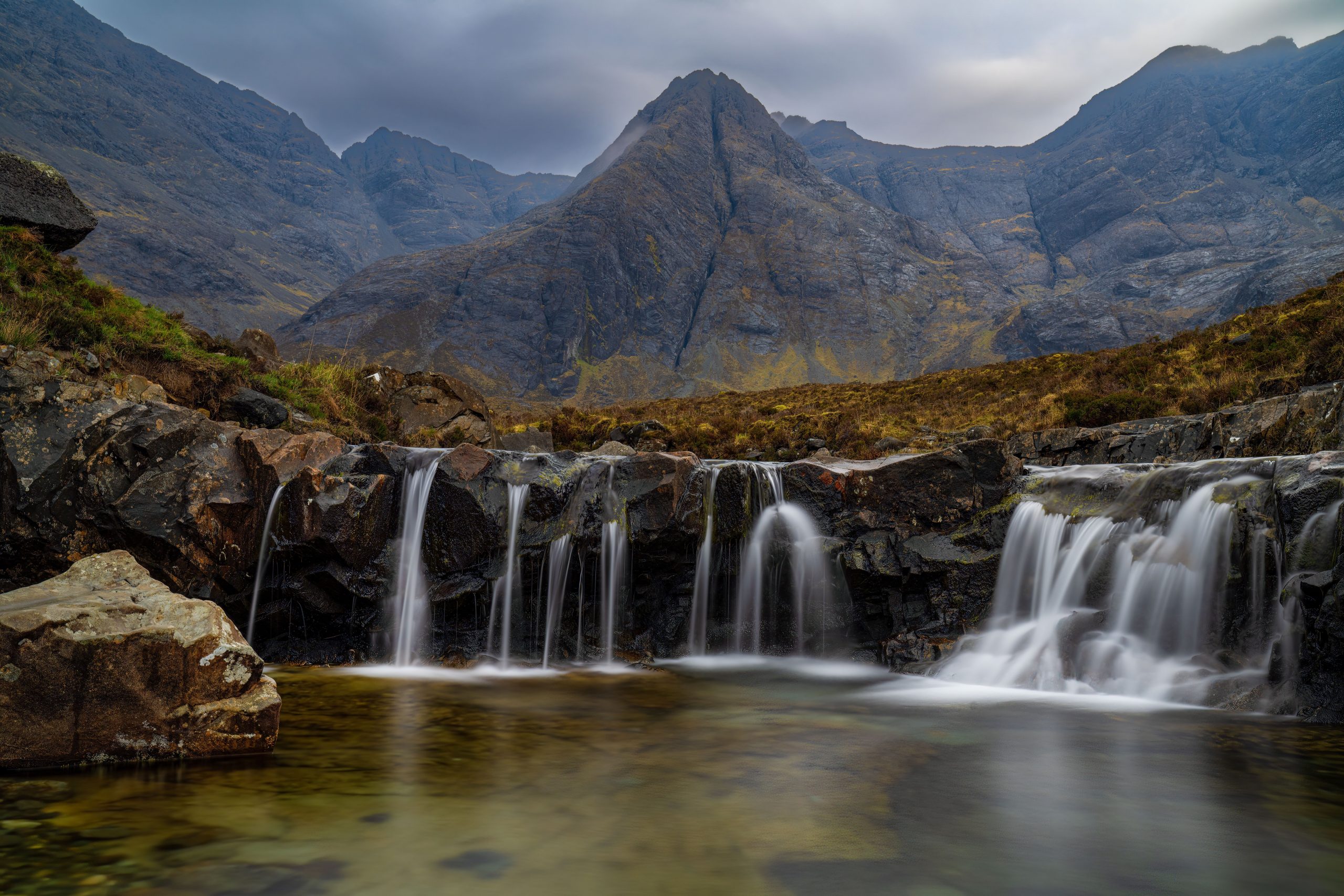
The Fairy Pools
In Glen Brittle, the Fairy Pools are a series of crystal-clear blue and green pools and waterfalls tumbling down from the Cuillin, fed by mountain streams. The walk from the car park is around 2.4km return and can be muddy, but the reward is a string of impossibly clear pools beneath the mountains, and the brave even swim in them. Arrive early, this is one of Skye’s most popular spots and the car park fills fast.
Sligachan and Carbost
The old bridge at Sligachan, where the road from Portree meets the road to the Cuillin, is one of the most photographed spots on Skye, framing the mountains perfectly. From here the road leads to Carbost on Loch Harport, home of the Talisker distillery, Skye’s only malt whisky and one of Scotland’s most characterful drams. A tour and a tasting make the perfect end to a day in the mountains, just remember the driver stays dry, or buy a miniature for later.
Sleat and Elgol: The Quieter South
The Sleat peninsula in the South, a gentler leg of an Isle of Skye road trip, is known as the Garden of Skye, a greener, gentler landscape of woodland and coast that many visitors miss. It is home to Armadale, where the ferry crosses to Mallaig on the mainland, and Armadale Castle with its gardens telling the story of Clan Donald. The drive down the peninsula offers lovely views back to the mainland mountains of Knoydart.
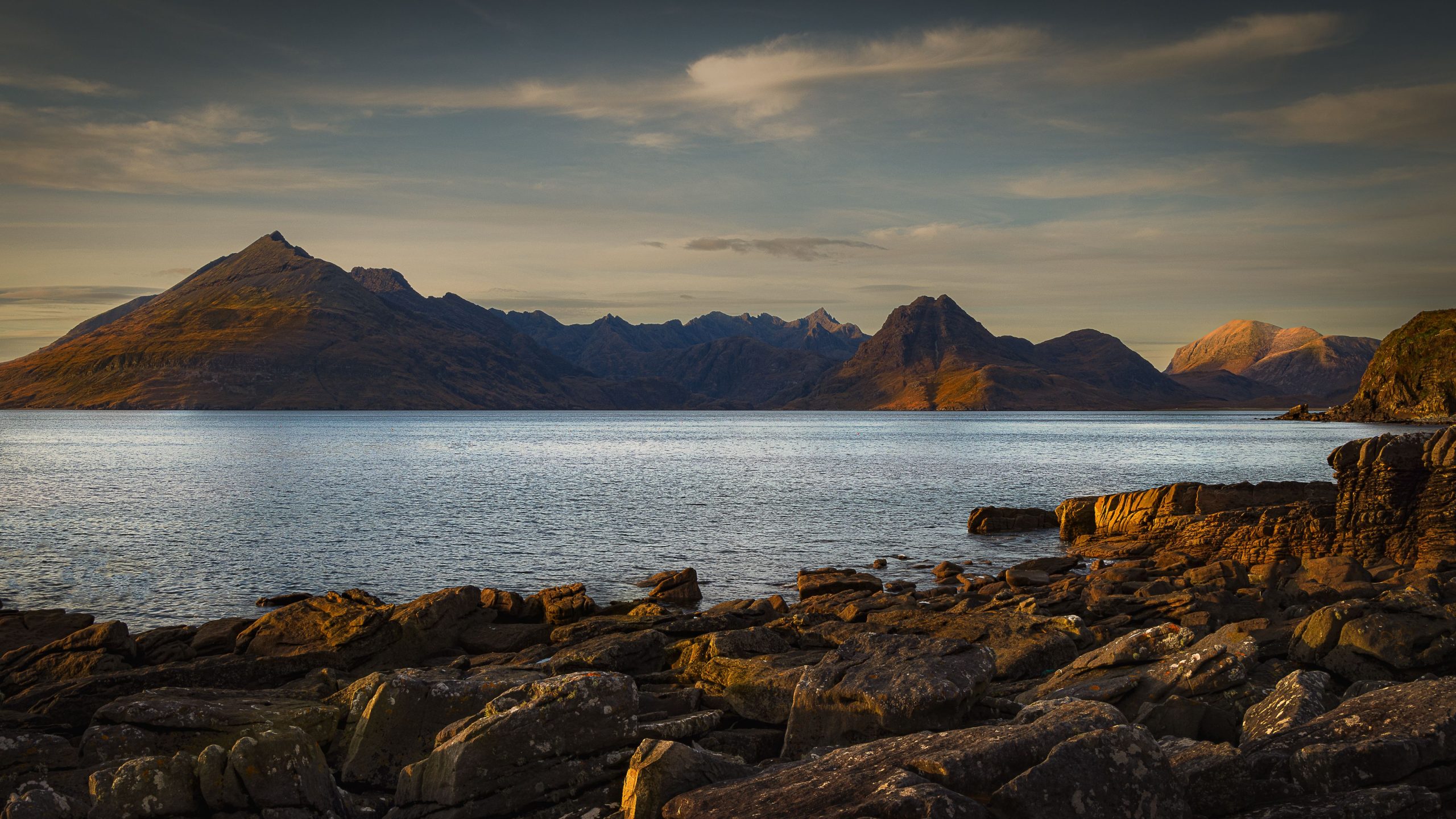
For one of Skye’s most rewarding detours, take the single-track road to Elgol on the Strathaird peninsula. The view from Elgol back across Loch Scavaig to the Cuillin is one of the finest in Scotland, and boat trips run from the little jetty into Loch Coruisk, a remote mountain loch ringed by peaks that can only be reached by sea or a long walk. It is a true off-the-beaten-track Skye experience.
Where to Eat on Skye
Skye has quietly become one of Scotland’s finest food destinations, and an Isle of Skye road trip by hire car lets you reach its scattered gems. The island’s most famous restaurant is The Three Chimneys at Colbost near Dunvegan, a celebrated fine-dining institution in a former crofthouse, where booking well ahead is essential. For something more relaxed, the Oyster Shed at Carbost serves fresh shellfish to eat at outdoor benches with a view, perfect after a Talisker tour.
In Portree, the harbour restaurants serve the day’s catch, from langoustines to hand-dived scallops, while across the island you will find excellent cafes, seafood shacks and welcoming pubs. Wherever you stop, look for local specialities: Skye seafood, island-reared lamb, and cheese from the Isle of Skye Dairy. Eating your way around the island is one of the quiet pleasures of an Isle of Skye road trip.
Driving on Skye: What You Need to Know
Driving is the best way to experience an Isle of Skye road trip, but the island’s roads demand respect and a little know-how. Most roads away from the main A87 are single-track, with passing places marked by white diamond signs. The etiquette is simple but important: pull into a passing place on your left to let oncoming traffic through, or to allow faster vehicles behind you to overtake. Never park in a passing place. A little courtesy keeps the whole island moving.
A few more practical tips for cheap car hire on Skye. A smaller car is a real advantage on the narrow lanes and tight passing places, so resist the urge to oversize. Fuel stations are sparse, so fill up in Portree or Broadford whenever you can and never let the tank run low. Mobile signal is patchy across much of the island, so download offline maps before you set off.
And drive to the weather, Skye can serve rain, fog and brilliant sunshine in a single afternoon, so allow extra time and keep your headlights handy. For more on planning a visit, the official VisitScotland Isle of Skye guide is a useful resource.
Late spring, in May and June, tends to bring the driest conditions and the longest daylight, with the bonus of fewer crowds than high summer. Whenever you visit, pack waterproofs and layers, because the island makes its own weather.
Skye is reached most easily with a hire car from the Highland gateways. Many visitors combine the island with a wider Scottish road trip, picking up a car at Inverness and taking in Loch Ness and Glen Shiel on the way. To plan the bigger picture, see our North Coast 500 route guide and our car hire Scotland hub, and book your car at the gateway that suits your route.
A Note on the Midges
No honest guide to Skye would skip the midges. These tiny biting insects appear in still, damp conditions from roughly late May to September, and they can be fierce at dawn and dusk, especially near water and in sheltered glens. They are harmless but maddening. A good midge repellent is essential in summer, and a head net is worth packing for the worst evenings. The good news on an Isle of Skye road trip is that a breeze or a moving car sees them off completely, so they rarely trouble you at the viewpoints on a fresh day. Do not let them put you off, just be prepared.
A Suggested 3-Day Skye Itinerary
Three days is the ideal length for a first Isle of Skye road trip, enough to see the highlights without rushing. Here is a route that works, all based from Portree.
Day 1: Trotternish Loop
Start early with the Old Man of Storr, then drive the Trotternish loop clockwise, stopping at Lealt Falls, Kilt Rock and Mealt Falls, the Quiraing, the Fairy Glen and Duntulm. Return to Portree for dinner by the harbour. This is Skye’s greatest hits in a single, spectacular day.
Day 2: West Skye
Head West to Dunvegan Castle, then on to the Coral Beach and out to Neist Point, timing the lighthouse for late afternoon light. Dine at The Three Chimneys if you have booked, or back in Portree. A slower, wilder day among the sea cliffs.
Day 3: The Cuillin and the South
Spend the morning at the Fairy Pools in Glen Brittle, then visit Sligachan and the Talisker distillery at Carbost. If time allows, take the drive to Elgol for that unforgettable view of the Cuillin across the water. A fitting finale before you leave the island the way you came, across the Skye Bridge.
Isle of Skye Road Trip: Frequently Asked Questions
How many days do you need on the Isle of Skye?
Three to four days is ideal for a first Isle of Skye road trip, enough for an Isle of Skye road trip taking in Trotternish, the west coast and the Cuillin without rushing. Two days is the minimum to see the main highlights, while a week lets you slow right down and explore the quieter corners. One day only really allows a brief taste of the island.
Do you need a car on the Isle of Skye?
Yes, a hire car is by far the best way to enjoy an Isle of Skye road trip. Public transport is sparse and infrequent, and the island’s best viewpoints, such as the Quiraing and Neist Point, sit at the end of remote single-track roads. A car gives you the freedom to explore at your own pace and reach places buses cannot.
What are the roads like on the Isle of Skye?
Many of the roads on an Isle of Skye road trip are single-track with passing places marked by white diamond signs. Pull into a passing place on your left to let oncoming or faster traffic through, and never park in one. A smaller hire car is easier to handle on the narrow lanes. Drive slowly, the roads are winding and the weather changes quickly.
Where should I stay on the Isle of Skye?
Portree, the island’s capital, is the most popular base for an Isle of Skye road trip, with the best choice of hotels, B&Bs and restaurants. Dunvegan suits history lovers, Sligachan is ideal for mountain views, and Broadford is handy for the bridge. Book well ahead in summer, as Skye is extremely popular and accommodation fills fast.
How do you get to the Isle of Skye?
An Isle of Skye road trip is connected to the mainland by the Skye Bridge from Kyle of Lochalsh, which is free to cross. Most visitors drive from Inverness, around 2.5 hours East, or from Fort William and Glasgow to the South. Eilean Donan Castle on the mainland approach makes a perfect stop before you cross.
When is the best time to visit the Isle of Skye?
Late spring (May and June) offers the driest weather and long daylight hours for an Isle of Skye road trip, while summer is warmest but busiest. Skye suffers from overtourism in peak season, so visit popular spots like the Storr and Fairy Pools early in the day. Autumn brings beautiful colours, and winter is quiet but roads can be icy.
Plan Your Isle of Skye Adventure
The Isle of Skye is Scotland at its most spellbinding, and there is no finer way to experience an Isle of Skye road trip than behind the wheel, free to chase the light from the Old Man of Storr to Neist Point. Pick up a hire car at your chosen Highland gateway, point it towards the Skye Bridge to begin your Isle of Skye road trip, and let one of the world’s great islands unfold at your own pace. Compare deals and start planning your Scottish road trip today.