
The Carnac scenic drive takes you into the deep past of Brittany and out to one of its wildest coasts. Carnac is home to the greatest concentration of standing stones anywhere on Earth, more than 3,000 menhirs raised in long, mysterious rows some 7,000 years ago, older than Stonehenge and the pyramids of Egypt. Around this astonishing Neolithic heart lie elegant beach resorts, a famous sailing port and the rugged Atlantic drama of the Quiberon peninsula, making this one of the most varied and rewarding short drives in all of Southern Brittany.
What makes the Carnac scenic drive so special is the sheer sweep of history and landscape it covers in a single day. These stones were raised by a forgotten people a thousand years before the first pyramid, and nobody knows quite why: theories range from an astronomical calendar to a religious procession to a memorial to the dead. Whatever the truth, they have stood here through the entire span of recorded history, and the coast around them is every bit as timeless.
Most visitors come for the stones and never explore the coast around them, but a car turns Carnac into a wonderful day of contrasts, from the silent alignments to the crashing surf of the Côte Sauvage. This Carnac scenic drive links the finest of it with real drive times, parking notes, the best walks and where to eat. Car hire in the region starts from around £20 a day, and Brittany’s roads are toll-free, so the Neolithic coast is yours to explore at your own pace.
The Carnac Scenic Drive at a Glance
Route: Carnac alignments, Carnac-Plage, La Trinité-sur-Mer, the Quiberon peninsula, Locmariaquer
Distance: About 40 miles (65 km) around the Neolithic coast
Driving time: Around 1 hour 30 of pure driving, but allow a full day with stops and a walk
Nearest airport: Nantes (NTE), about 1 hour 40, the closest gateway to Southern Brittany
Best time: May to September for the light and the beaches, though the stones are atmospheric year-round
Roads: Toll-free throughout, with the Quiberon peninsula road busy in summer
Table of Contents
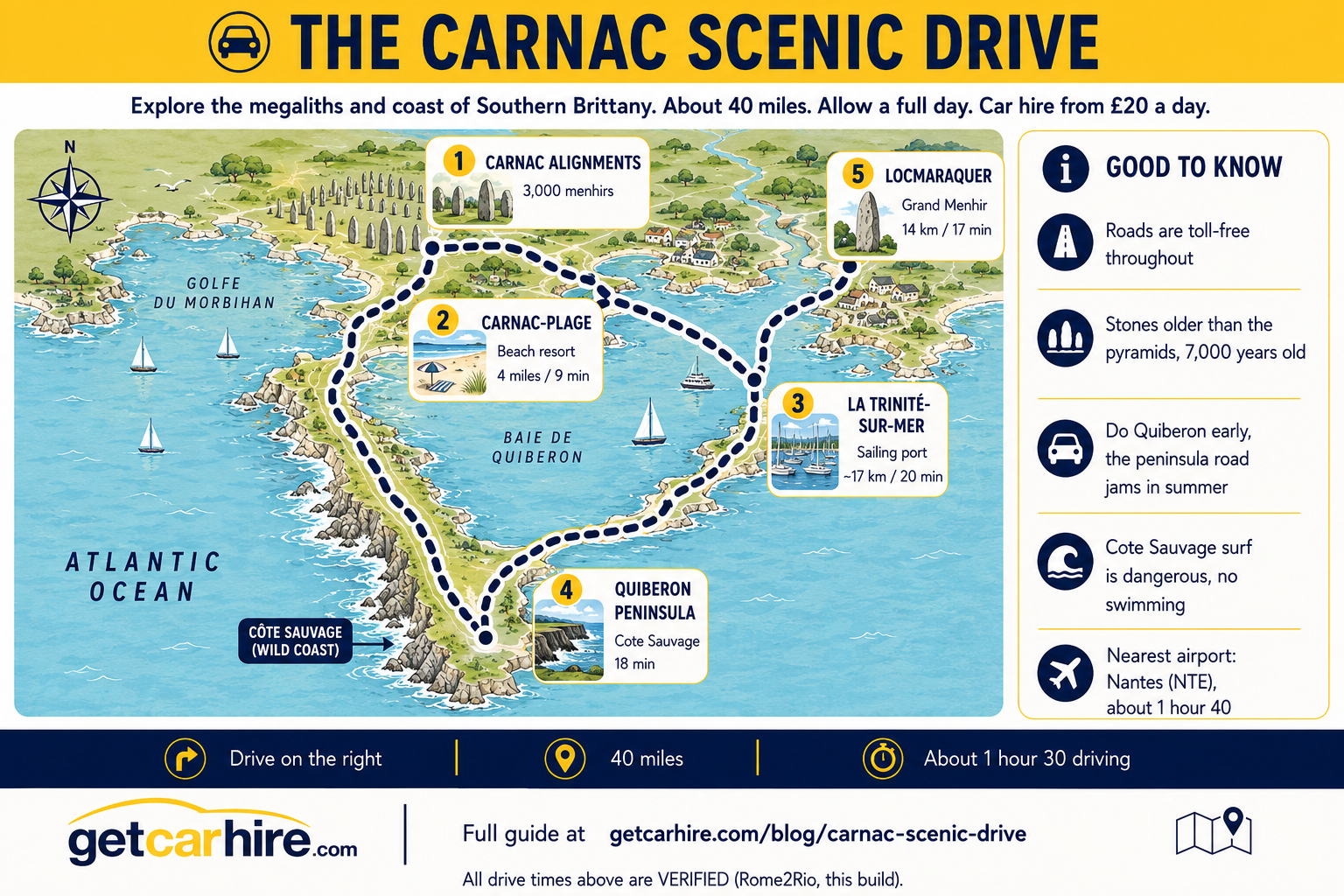
The Carnac Scenic Drive, Stop by Stop
1. The Carnac Alignments: Stones Older Than the Pyramids
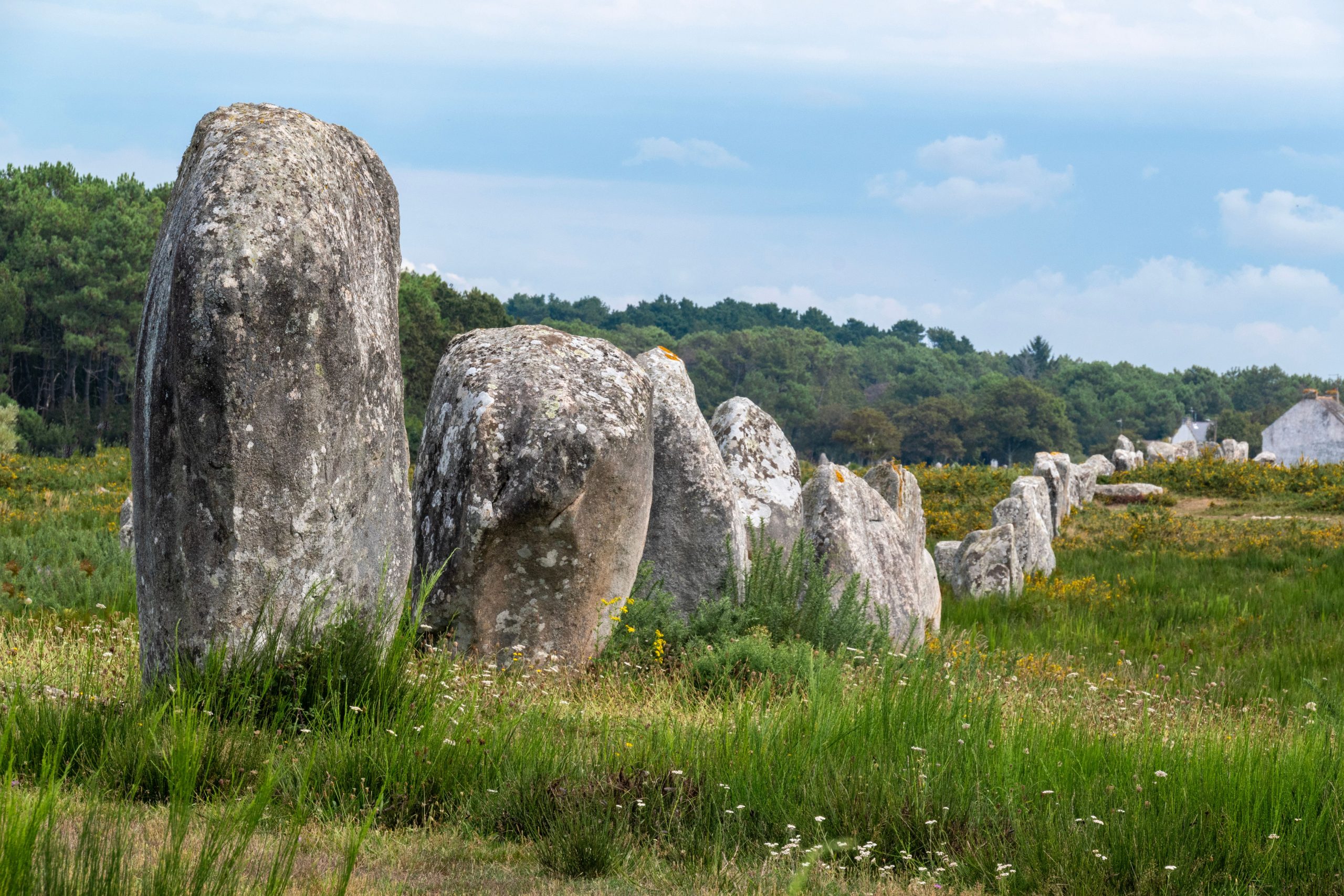
The Carnac scenic drive begins with the sight that draws the world to the town: the great alignments. Stretching for over four kilometres across the heath just North of the town, more than 3,000 standing stones march in long parallel rows, raised by a Neolithic people between about 4500 and 3300 BC. The three main fields, the Ménec, Kermario and Kerlescan alignments, each have their own character, and standing among these silent giants, older than any pyramid, is a genuinely humbling experience that no photograph quite conveys.
The stones are not the only Neolithic wonder here. Scattered through the area are dolmens, burial chambers and tumuli, and the whole landscape is one vast prehistoric site, the richest of its kind anywhere in the world. It is worth remembering that what survives is only part of the original: over the centuries many stones were taken for building, so the rows you see, astonishing as they are, were once larger still.
Start at the Maison des Mégalithes visitor centre opposite the Ménec rows, which explains the site and its mysteries, why the stones were raised remains unknown to this day. In summer the alignments are fenced to protect the fragile ground, with guided access, while in the quieter months you can often walk among them more freely. Nearby stands the Saint-Michel tumulus, a vast Neolithic burial mound you can climb for a view over the whole area. Park at the visitor centre and allow a good hour or two.
2. Carnac-Plage: The Elegant Resort
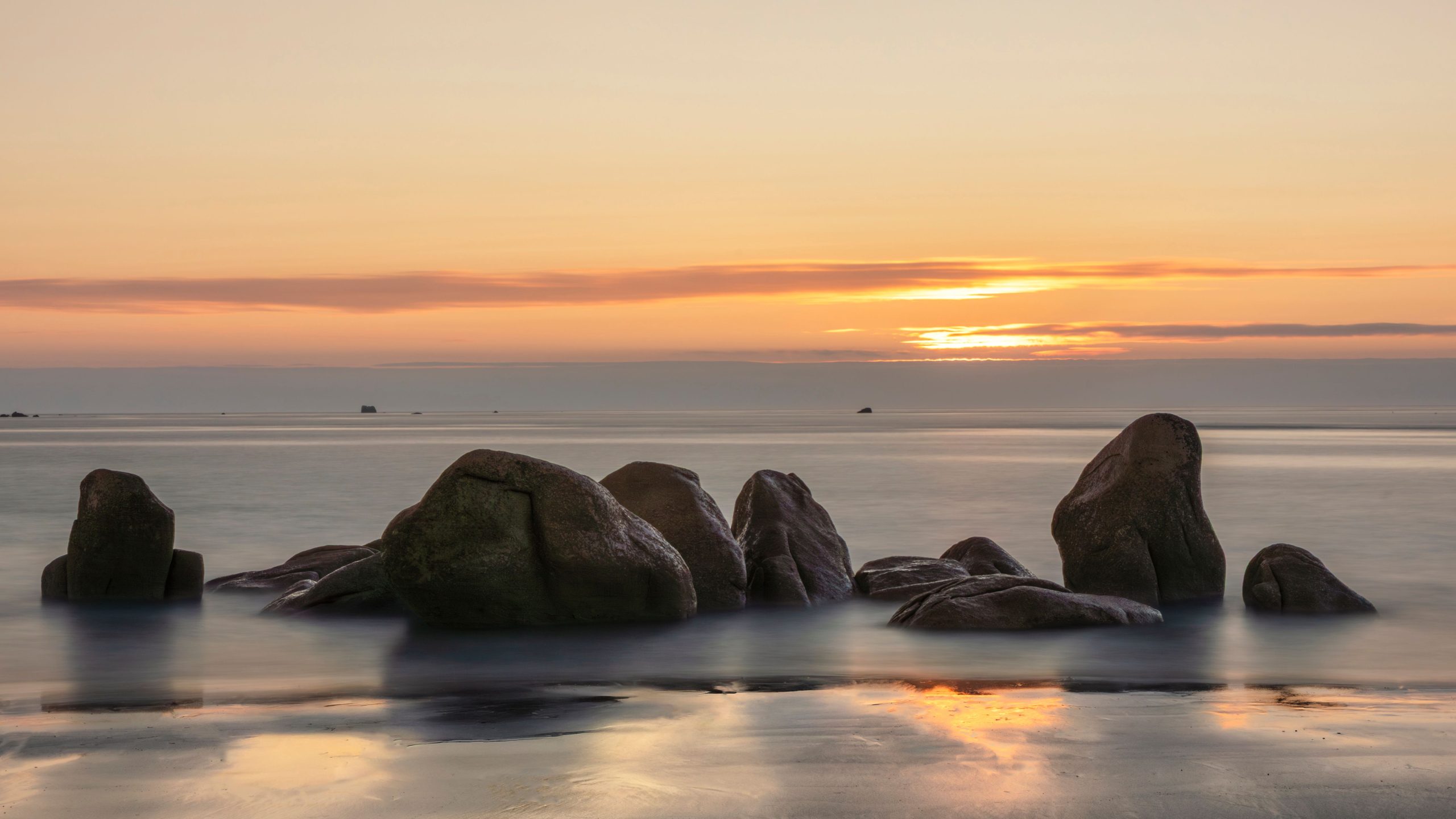
The second stop on the Carnac scenic drive lies a couple of kilometres South, where the old stone town gives way to Carnac-Plage, its genteel seaside sister. This is a classic Breton beach resort, with a long promenade, whitewashed villas among the pines and five sandy beaches strung along the sheltered Bay of Quiberon. The Grande Plage is the liveliest, backed by cafés and shops, while quieter stretches like the Plage de Légenèse are just a short walk away.
The water here is calm and shallow, warmed by the sheltered bay, which makes it perfect for families and a lovely contrast to the wild coast to come. It is a fine place to pause for a swim or a coffee on the front before continuing. Park near the Grande Plage and stroll the promenade, or find a quieter beach for a first dip.
3. La Trinité-sur-Mer: The Sailing Port
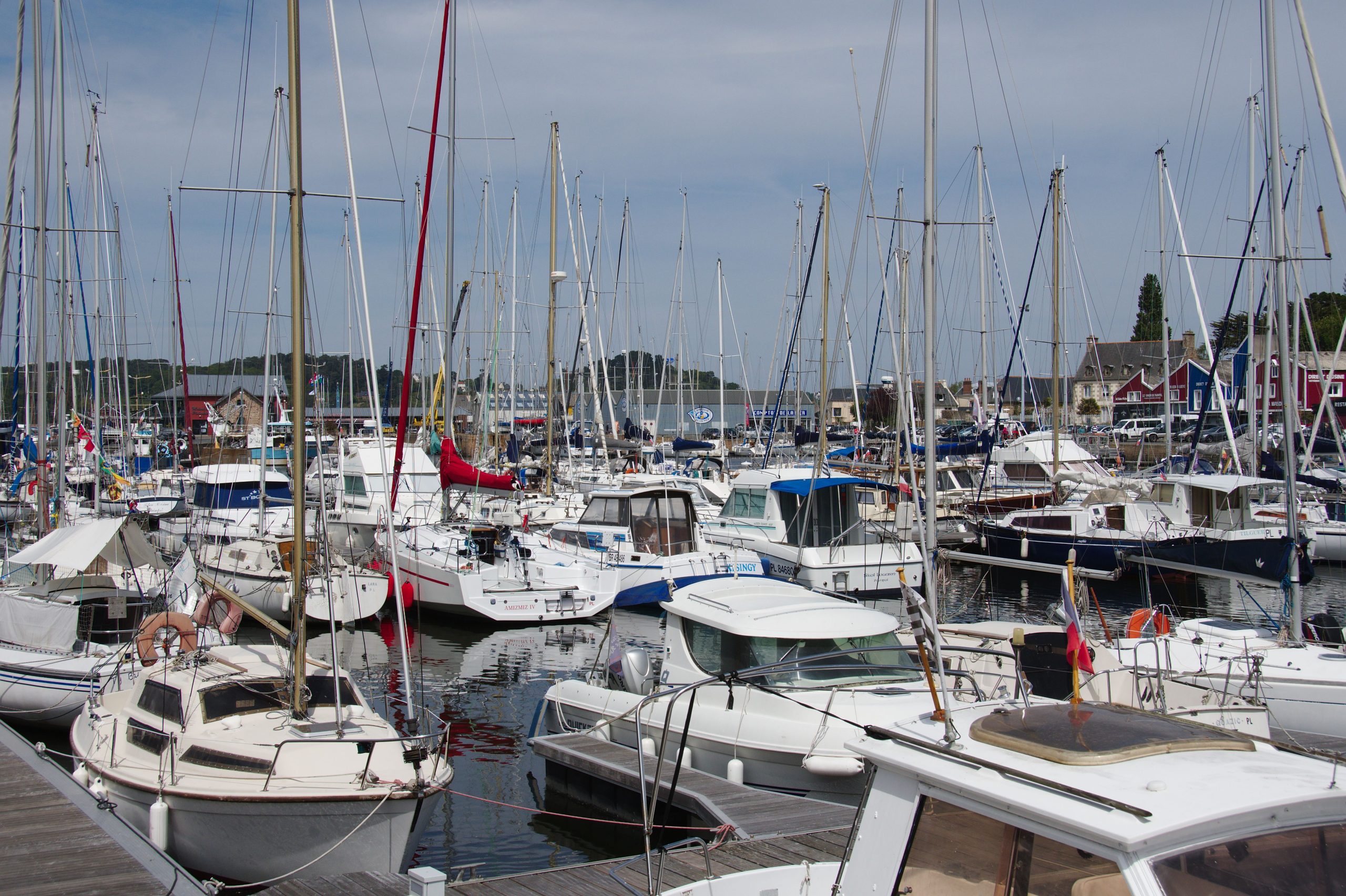
A short hop East along the Carnac scenic drive brings you to La Trinité-sur-Mer, one of the great sailing towns of France and a place with a wonderful maritime buzz. Its deep, sheltered harbour on the Crac’h estuary is home to a fleet of gleaming yachts and the huge ocean-racing maxi-trimarans that have made the town famous, and many legendary French sailors have called it home. The quayside, lined with seafood restaurants and bars, is one of the liveliest and most enjoyable spots on this coast.
Cross the high bridge over the estuary for fine views of the port and the oyster beds, and wander the quay to watch the boats come and go. It is an ideal lunch stop, with the day’s catch served right beside the water. Park near the port and take in the sailing atmosphere before heading South to the wild peninsula.
4. The Quiberon Peninsula and the Côte Sauvage
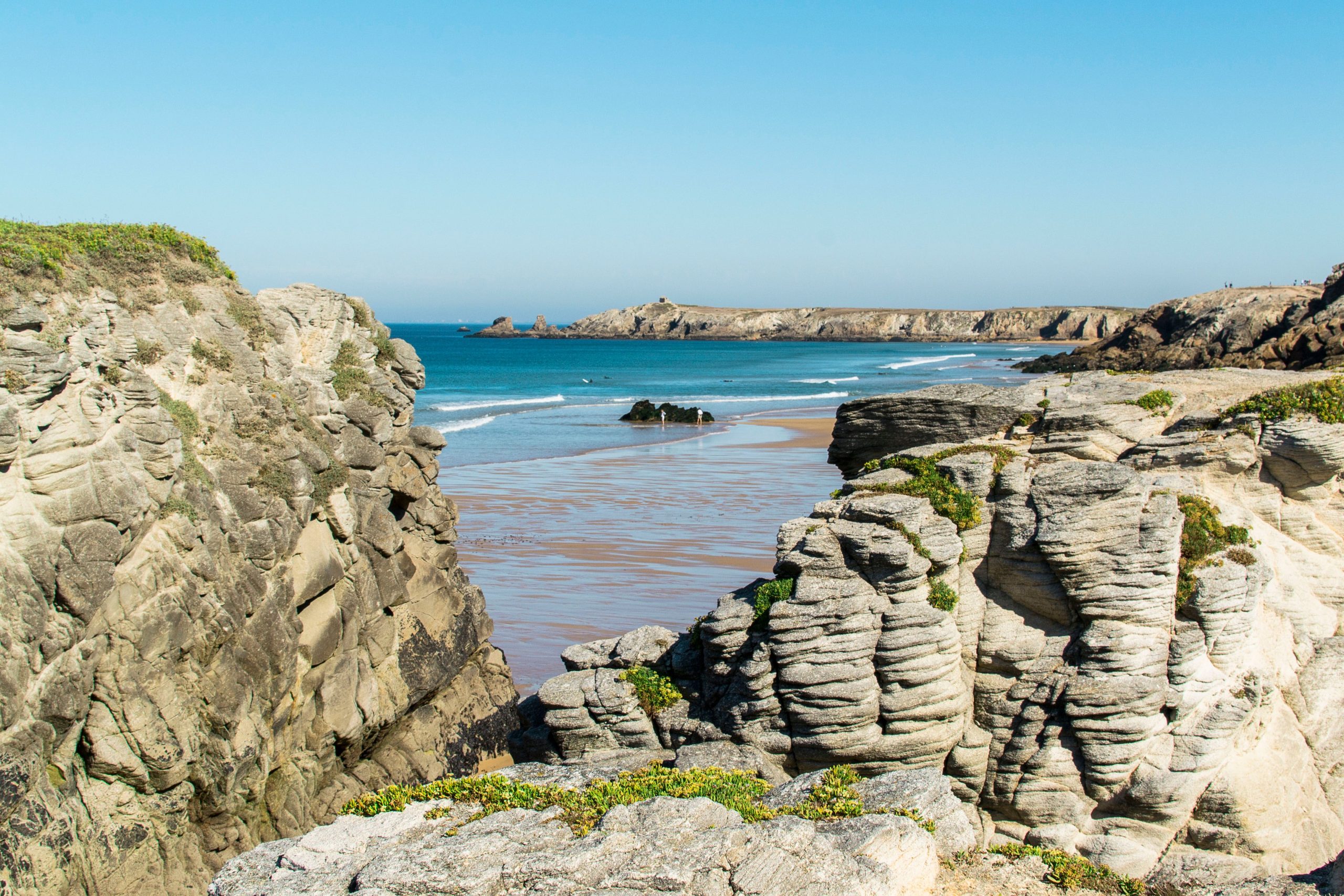
Now for the drama of the Carnac scenic drive. The Quiberon peninsula juts nine miles out into the Atlantic, tethered to the mainland by an isthmus just 22 metres wide at its narrowest point, and it offers two utterly different coastlines. The Western side, the Côte Sauvage or Wild Coast, is a magnificent run of jagged cliffs, sea caves, blowholes and crashing surf, one of the most spectacular stretches of coast in Brittany, with a road and coastal path following it South towards Quiberon town.
The Eastern side, by contrast, is sheltered and gentle, with long sandy beaches facing the bay. At the tip, the lively resort town of Quiberon is the departure point for boats to Belle-Île, Brittany’s largest island. Drive down the Côte Sauvage with plenty of stops at the viewpoints, but heed the warning signs: the surf here is powerful and swimming is dangerous. Park at the signed viewpoints along the Wild Coast and walk a stretch of the path for the full effect.
5. Locmariaquer: The Great Megaliths
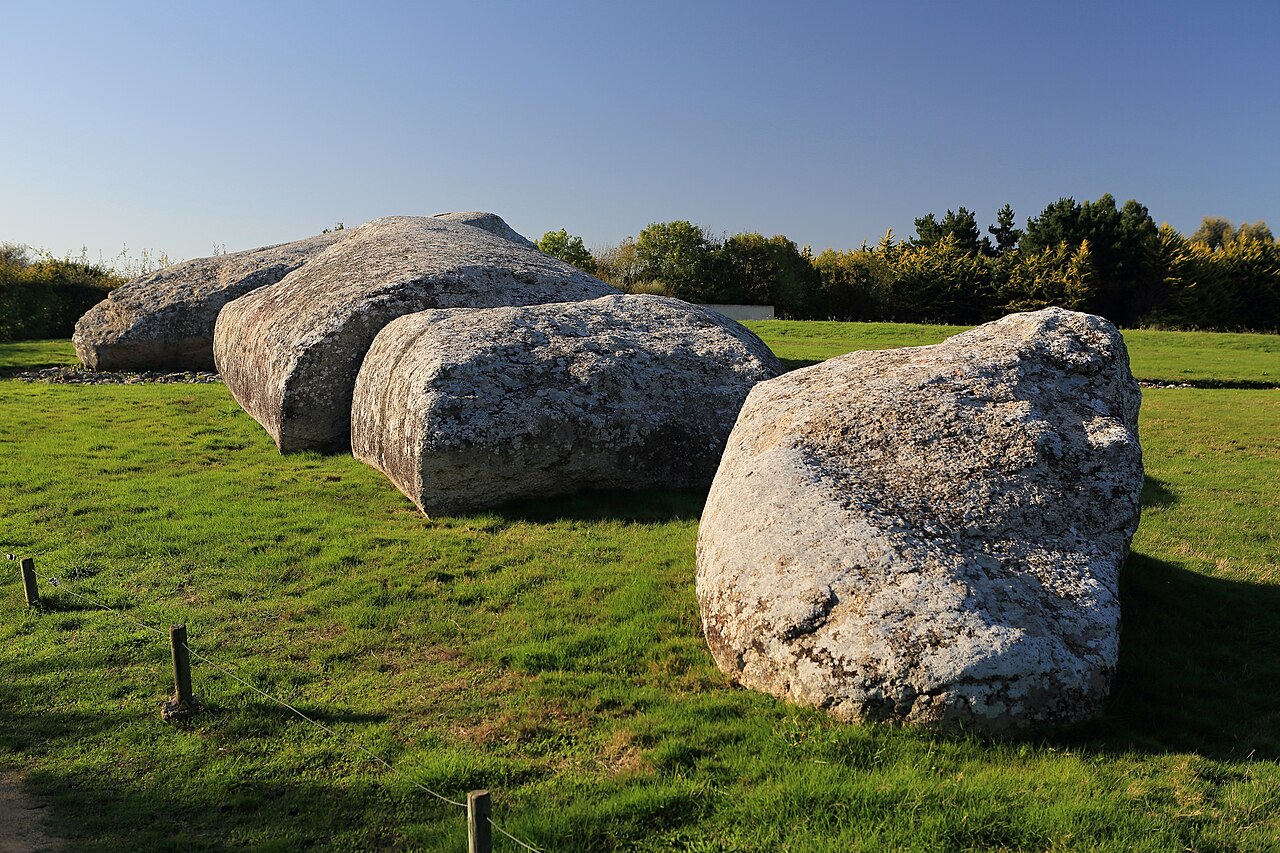
The Carnac scenic drive ends where the story reaches its climax, at Locmariaquer, a short drive North East at the mouth of the Gulf of Morbihan. This oyster village guards some of the most important Neolithic monuments in Europe, including the Table des Marchand dolmen and the astonishing Grand Menhir Brisé, the Great Broken Menhir, which once stood over 20 metres tall and weighed some 330 tonnes, the largest single stone ever raised by prehistoric people anywhere.
Seeing it here, close to the alignments of Carnac, brings the whole extraordinary Neolithic landscape of this coast together in one place. The village itself is charming, with a little port and good oyster bars looking out across the water. Park at the megaliths site, which has a visitor centre, and combine it with a wander around the village. From here it is an easy run back to Carnac or on towards Vannes and the wider gulf.
Where to Eat on the Carnac Scenic Drive
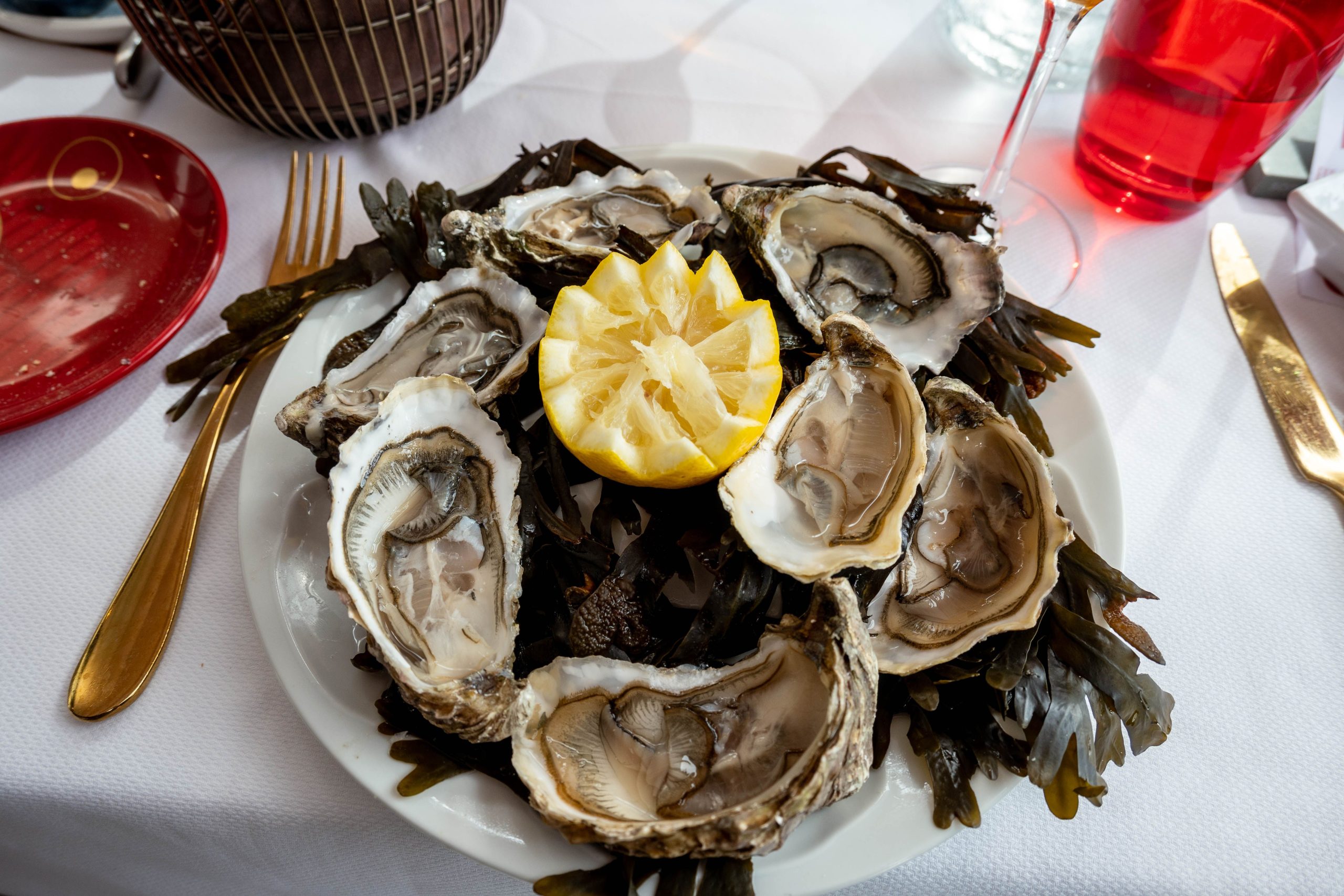
The Carnac scenic drive eats very well, and seafood is the star. La Trinité-sur-Mer is the obvious highlight, its quay lined with restaurants serving oysters, langoustines and the day’s catch straight off the boats, best enjoyed with a glass of Muscadet as you watch the yachts. Carnac-Plage and Carnac town both have plenty of choice too, from crêperies to seafood brasseries, and the oysters of the Gulf of Morbihan, farmed just around the coast, are superb everywhere.
Look out for the local Breton specialities as you go, galettes filled with ham and cheese, buttery kouign-amann and salted-caramel everything, all washed down with cider served in traditional bowls. On the Quiberon peninsula, the town of Quiberon has good seafood and is famous for its niniches, long lollipops sold in dozens of flavours. As across Brittany, many kitchens close in the mid-afternoon, so time your lunch rather than leaving it to chance.
When to Go and How Long to Allow
Allow a full day for the Carnac scenic drive. The driving itself is only around an hour and a half in total, but the alignments deserve a proper couple of hours, and the Quiberon peninsula and the beaches reward time rather than a quick pass.
May to September brings the best weather and the warmest sea for the Carnac scenic drive, ideal for combining the stones with time on the beaches, though July and August are busy and the Quiberon peninsula road in particular can be slow, so an early start pays off. Spring and autumn are quieter and often beautifully clear, and the alignments take on a special atmosphere in the low, golden light of morning and evening. Even in winter, on a bright day, the stones and the Côte Sauvage are magnificent and almost empty.
Making a Weekend of the Carnac Scenic Drive
The Carnac scenic drive fills a full day, but the surrounding coast rewards a longer stay. The most natural extension is the neighbouring Gulf of Morbihan scenic drive, around the near-enclosed little sea just to the East, with its walled capital of Vannes, its scattered islands, an easy and rewarding companion to Carnac that shares the Locmariaquer megaliths. The two drives together make a perfect long weekend in Southern Brittany.
From Quiberon, a short ferry crosses to Belle-Île-en-Mer, Brittany’s largest island and one of its loveliest, with dramatic cliffs, pretty ports and the famous needles of Port-Coton that Monet painted. It makes a wonderful day trip or overnight. Closer at hand, the Ria d’Étel, a maze of a tidal river to the West, and the pretty island chapel of Saint-Cado are quiet, lesser-known gems well worth seeking out.
For a base, Carnac itself is ideal, central to everything and with a good range of hotels and the Thalazur seawater spa for a touch of luxury. La Trinité-sur-Mer is a livelier, more maritime alternative, and Quiberon suits those wanting the beaches and the ferry on the doorstep. Any of them puts the whole Carnac scenic drive within easy reach, close enough to catch the alignments at their best in the quiet golden light of early morning.
Getting to Carnac: Your Gateway
Carnac lies in Southern Brittany, and the closest major gateway is Nantes Airport (NTE), around an hour and forty minutes to the South East. Nantes has the best flight connections and rental supply of any airport near this coast, and the drive is straightforward on the toll-free N165. Compare deals and pick up your car on our cheap car hire Nantes Airport page, where prices start from around £20 a day in the quiet season.
Lorient has a smaller airport under an hour to the West, worth checking if the flight times suit, and Rennes is around two hours to the North East. Wherever you land, a car is essential here: while there are seasonal shuttles around Carnac itself, exploring the alignments, the sailing ports and the Quiberon peninsula really needs your own wheels, and the freedom to combine the stones with the coast is exactly what makes this drive special. Our guide to car hire in Brittany compares all four regional gateways side by side. For the complete picture, our easy touring Brittany guide brings together all six of the region’s finest scenic drives and the three airport gateways that unlock them.
Driving Tips for Carnac and the Quiberon Peninsula
France drives on the right, and the roads around Carnac are toll-free and generally easy, though the single road down the Quiberon peninsula becomes very busy in high summer and can jam badly, so an early start or an out-of-season visit is a real advantage. A small car makes parking simpler at the beaches and the alignments.
Speed limits are 50 km/h in towns, 80 km/h on two-way rural roads and 110 km/h on dual carriageways, lower in the wet. Watch for priorité à droite at smaller junctions. Parking at the alignments, the beaches and Quiberon is paid and fills early on summer days. For the official rules of the road, the UK Foreign, Commonwealth and Development Office keeps an up to date summary on its France travel advice pages.
One tip worth knowing: in July and August the Quiberon peninsula road can turn into a long queue, and there is a park-and-ride and a little train, the Tire-Bouchon, from Auray precisely to relieve it. If you are visiting in peak season, do the peninsula early in the day, or leave it for a quieter afternoon, and save the alignments for the beautiful light of late afternoon when the tour groups have gone.
What Most Guides Do Not Tell You
Three things will improve your Carnac scenic drive more than any list of sights. The first is to pair Carnac with Locmariaquer. Most visitors see the famous alignments and stop there, but the Grand Menhir Brisé at Locmariaquer, the largest standing stone ever raised anywhere, is only twenty minutes away and completes the Neolithic story in a way the rows alone cannot. Seen together, the two sites are far greater than the sum of their parts.
The second is to time the alignments for early morning or late evening. In the middle of a summer day they are busy and fenced, but in the golden light of dawn or dusk, especially out of season, the long shadows of the stones across the heath are unforgettable, and you may have them almost to yourself. This is when photographers get their best shots.
The third is to drive the Côte Sauvage rather than just the beaches. Many visitors stick to the sheltered sandy side of the Quiberon peninsula and never see the Wild Coast on the West, yet it is one of the most dramatic stretches of shoreline in Brittany. The contrast between the two coasts, a few minutes apart, is the whole point of the peninsula, so make time for both.
Frequently Asked Questions
How long is the Carnac scenic drive?
The Carnac scenic drive, a loop from the alignments through Carnac-Plage and La Trinité-sur-Mer, down the Quiberon peninsula and round to Locmariaquer, is about 40 miles, with around an hour and a half of driving. Allow a full day to enjoy the stones, the coast and a walk.
Do I need a car for Carnac?
A car is by far the best way to do the Carnac scenic drive and combine the alignments with the coast, the sailing ports and the Quiberon peninsula. Seasonal shuttles serve Carnac itself, but reaching the wider sights around it really needs your own wheels.
Which airport is best for Carnac?
Nantes (NTE) is the closest major airport, about an hour and forty minutes away with the best flight and rental choice. Lorient has a smaller airport under an hour to the West. Both work well as a starting point for the drive.
How old are the Carnac stones?
The Carnac alignments were raised between about 4500 and 3300 BC, making them roughly 7,000 years old, older than both Stonehenge and the Egyptian pyramids. Why they were built remains one of prehistory’s great mysteries.
Can you walk among the Carnac stones?
In summer the main alignments are fenced to protect the ground, with guided access, but in the quieter months you can often walk among them more freely. The visitor centre has the current arrangements, and some smaller sites nearby are open year-round.
Download the Carnac Scenic Drive Guide
Take the route with you. Our free downloadable guide has everything you need for the day, and the GPX file loads straight into your sat nav or phone.
Download includes:
- The full stop-by-stop route with verified drive times
- Parking notes for every stop
- The best of the alignments and the Côte Sauvage
- Where to eat, from La Trinité seafood to Carnac crêpes
- A printable route map
Drive Carnac for Yourself
There are few places on any scenic drive where deep history and wild coast sit as close together as on the Carnac scenic drive. Three thousand standing stones older than the pyramids, an elegant beach resort, a famous sailing port, the crashing surf of the Côte Sauvage and the greatest menhir ever raised, all within a few toll-free miles of Southern Brittany. Pick up your car, follow the Neolithic coast, and let the Carnac scenic drive show you one of the most remarkable corners of France. Compare deals on our cheap car hire Nantes Airport page and start planning.
About the Author
Written by the Digitalhound.co.uk editorial team. Every guide is thoroughly researched with genuine local knowledge, road numbers, food stops and practical driving tips gathered from on-the-ground experience.