
Northern Ireland’s great coastal drive: the Causeway Coastal Route from Belfast to Derry, all castles, cliffs, the Giant’s Causeway and world-class seafood.
- Route difficulty ratings
- Safety tips
- Food and pub recommendations
- Belfast and Dublin Airport access guide
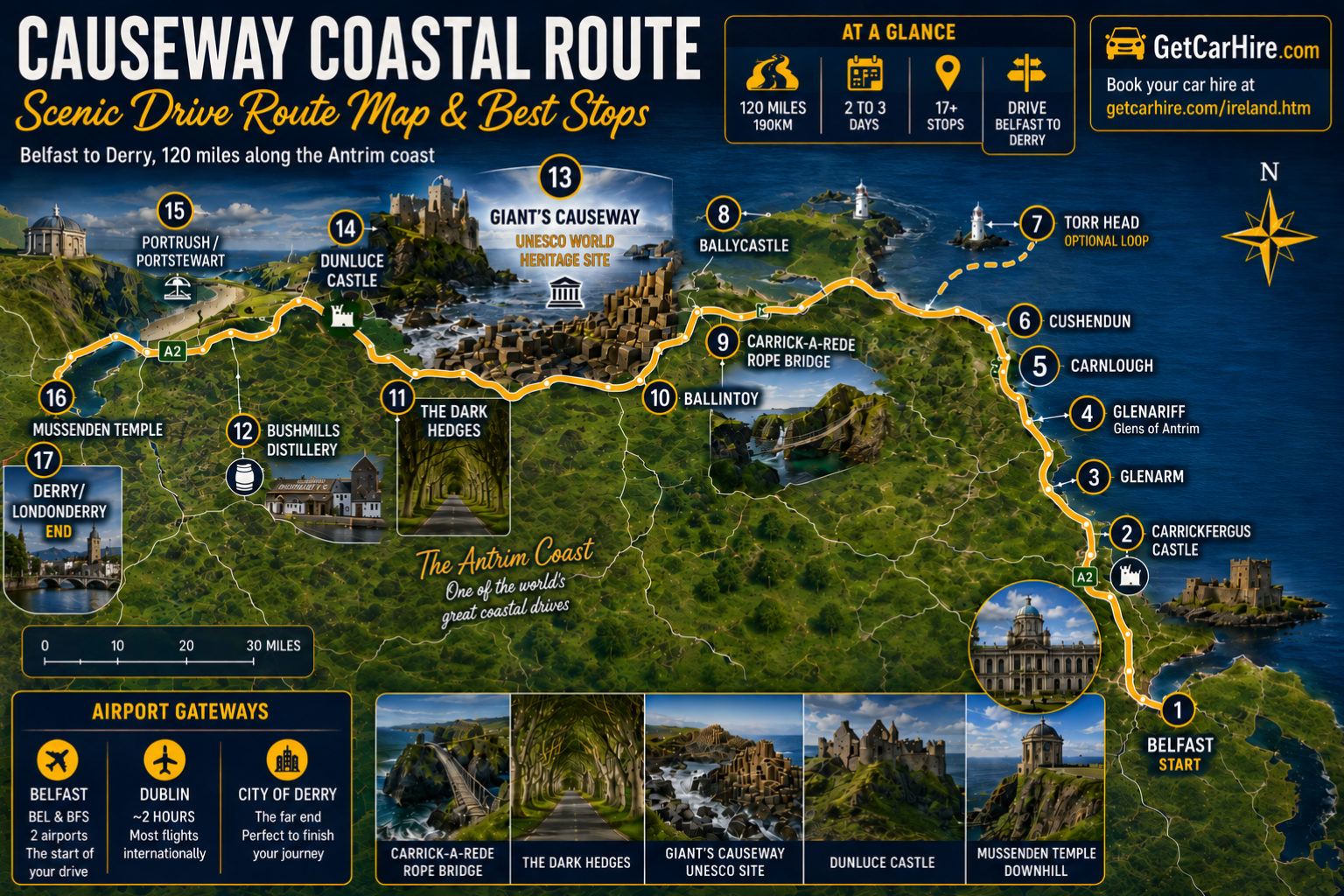
The Causeway Coastal Route is one of the world’s great coastal drives, tracing the Antrim coast of Northern Ireland from Belfast to Derry/Londonderry. In around 120 miles it packs in clifftop castles, the Glens of Antrim, the swaying Carrick-a-Rede rope bridge and the geological wonder of the Giant’s Causeway, along with some of the finest seafood anywhere in Ireland.
Quieter than the busier routes south of the border, the Causeway Coastal Route scenic drive rewards those who take their time and stop often. A hire car is the only sensible way to explore it, letting you pause at every harbour, headland and castle ruin along the way. This guide covers the full Causeway Coastal Route scenic drive, the best stops, where to eat, and how to get there, whether you have a single day or a relaxed long weekend.
Table of Contents
The Causeway Coastal Route Scenic Drive at a Glance
The full Causeway Coastal Route scenic drive is around 120 miles (190km) from Belfast to Derry, and while you could drive it in a long day, two or three days lets you do it justice, with overnight stops in Ballycastle, Bushmills or Portrush breaking the journey nicely. Here are the key stretches of the Causeway Coastal Route scenic drive at a glance, with the main stops on each.
| Stretch | Distance | Highlights |
|---|---|---|
| Belfast to the Glens | Approx 30 miles | Carrickfergus Castle, the Gobbins, Glenarm, Carnlough |
| The Glens of Antrim | Approx 25 miles | Glenariff, Cushendun, Torr Head |
| Ballycastle to Carrick-a-Rede | Approx 15 miles | Carrick-a-Rede, Ballintoy, the Dark Hedges |
| Bushmills and the Causeway | Approx 10 miles | Bushmills, the Giant’s Causeway |
| Dunluce to Derry | Approx 40 miles | Dunluce Castle, Portrush, Portstewart, Derry |
Interactive Causeway Coastal Route Map
⬇ Download route (GPX for sat nav)Tap any numbered marker for the stop details, a photo of the main sights, road numbers and drive time to the next stop. The red line is the main route, the dashed branch is the optional Torr Head loop. Download the GPX to load the full route into Google Maps, a sat nav or a phone app.
What You Need to Know Before Driving the Causeway Coastal Route
IMPORTANT: The Causeway Coastal Route is best driven from Belfast towards Derry, keeping you on the seaward side of the road for the finest coastal views. The main A2 coast road is well surfaced and easy to drive, but the side roads up the Glens and out to Torr Head are narrow and steep with passing places, so keep your speed down and use the lay-bys. Watch for cyclists, walkers and livestock on the quieter stretches, and allow far more time than the distance suggests.
Northern Ireland is part of the United Kingdom, so distances on road signs are in miles, not kilometres, unlike the Republic to the south. Driving is on the left. The route is well signposted with its brown Causeway Coastal Route signs, but a good map or sat nav helps for the detours up the Glens.
The weather on the north coast is changeable, blowing in off the Atlantic, so pack layers and a waterproof whatever the forecast. Many of the big sights, the Giant’s Causeway, Carrick-a-Rede and the castles, are busiest in the middle of the day, so an early start helps you enjoy them in peace. For official route information see Discover Northern Ireland and nidirect.
Stop 1: Belfast to the Glens
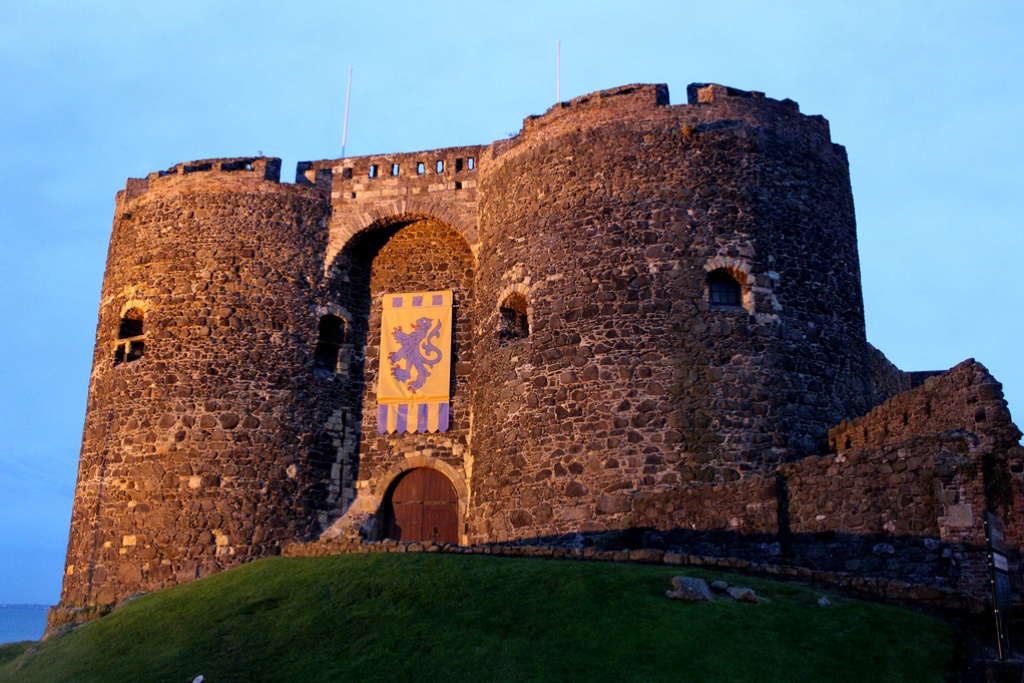
Most drivers begin in Belfast, Northern Ireland’s lively capital, well worth a day or two of its own for the Titanic Quarter, the historic Cathedral Quarter and its famous black-cab tours. Leaving the city, the first major stop on the Causeway Coastal Route scenic drive is Carrickfergus Castle, a magnificent Norman fortress on the shores of Belfast Lough, built in 1177 and one of the best-preserved medieval castles in Ireland.
Beyond Larne the coast road proper begins, hugging the shore beneath the cliffs, passing the village of Ballygally with its 17th-century castle, now a hotel said to be among the most haunted in Ireland. Adventurous travellers can detour to the Gobbins, a dramatic cliff path of bridges and tunnels bolted into the basalt, booked in advance as a guided walk and one of the most thrilling experiences on the whole coast. The pretty conservation village of Glenarm, with its castle and walled garden, and the harbour village of Carnlough, where Liam Neeson once worked, make lovely first pauses.
This first stretch of the Causeway Coastal Route scenic drive sets the tone, with the Antrim Coast Road, an engineering marvel of the 1830s, blasted out of the cliffs and running right beside the sea. The white limestone arch known as the Black Arch and the views across to Scotland are an early hint of the drama to come.
Stop 2: The Glens of Antrim
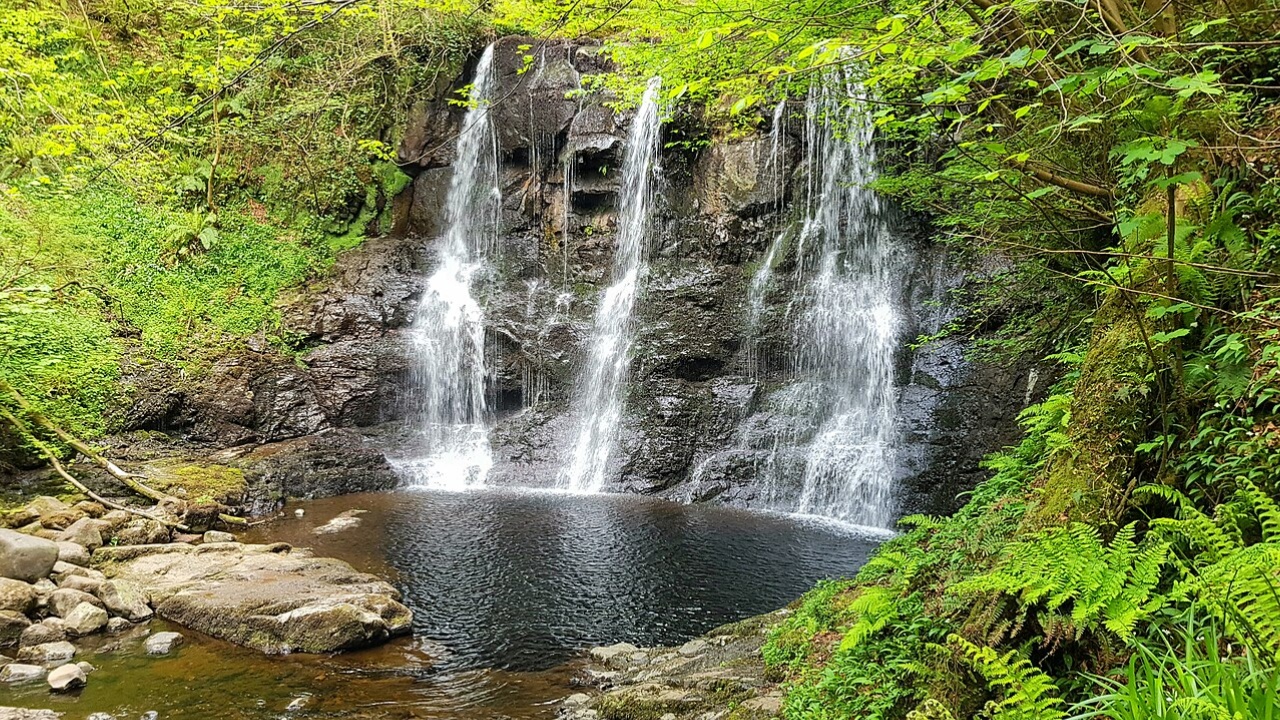
The nine Glens of Antrim are a string of lush green valleys running down to the sea, and one of the most beautiful parts of the Causeway Coastal Route scenic drive. Glenariff Forest Park, known as the Queen of the Glens, is the highlight, with a celebrated waterfall walk of around 3km through woodland past tumbling falls, well worth the short detour inland from the coast.
Back on the coast, the village of Cushendun is a National Trust gem of Cornish-style cottages designed by the architect Clough Williams-Ellis, who also created Portmeirion in Wales, with sea caves nearby that featured in Game of Thrones.
Remote Murlough Bay, reached down a steep single-track lane, is one of the most beautiful and least-visited spots on the whole coast, an isolated sweep of shoreline that feels like the edge of the world. The narrow, vertiginous road out to Torr Head, the closest point to Scotland, is not for the faint-hearted but rewards you with staggering views across the sea to the Mull of Kintyre on a clear day.
Each of the nine Glens has its own character, from wooded Glenariff to the quiet beauty of Glenann and Glendun, and the area is steeped in Irish folklore and legend. Cushendall, known as the capital of the Glens, makes a good base, with its red sandstone Curfew Tower and a clutch of traditional pubs where a session is never far away.
Stop 3: Ballycastle to Carrick-a-Rede
Ballycastle is the main town along this part of the Causeway Coastal Route scenic drive, a cheerful seaside spot with a fine beach and the ferry to Rathlin Island, where puffins nest in summer. From here the Causeway Coastal Route scenic drive heads west towards its most famous sights, and the scenery becomes ever more dramatic.
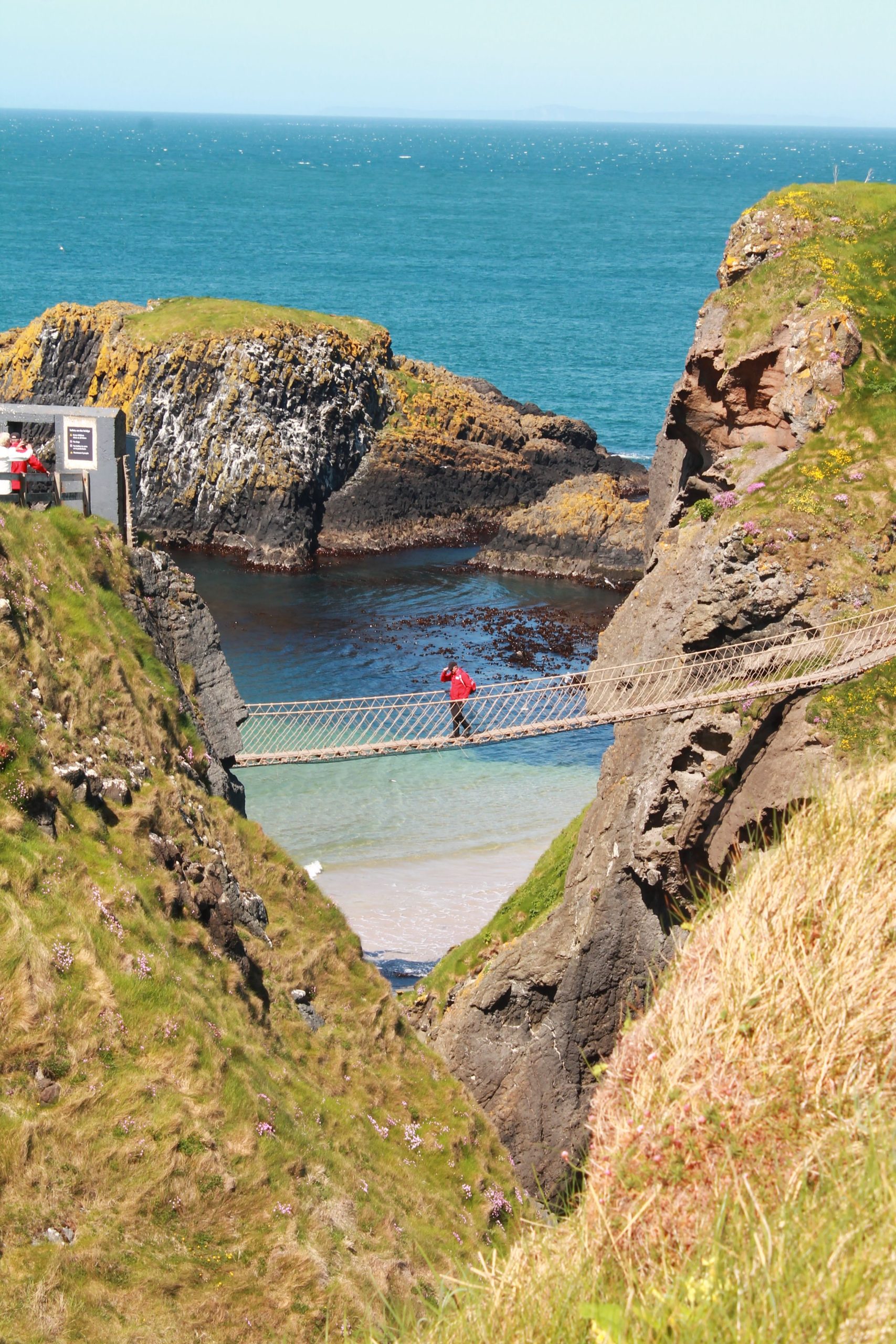
The Carrick-a-Rede rope bridge is one of the Causeway Coastal Route scenic drive’s signature experiences, a swaying bridge slung 30m above the sea, connecting the mainland to a tiny island once used by salmon fishermen. Nearby, Ballintoy Harbour is a picture-perfect cove that also starred in Game of Thrones. Inland a short way, the Dark Hedges, an eerie avenue of beech trees made famous as the Kingsroad in the same series, is one of the most photographed spots in Northern Ireland.
Crossing the Carrick-a-Rede bridge is not for those who dislike heights, but the reward is a tiny island with sweeping views and, in summer, seabirds wheeling below. Booking a timed ticket in advance is essential in peak season. Ballycastle itself hosts the historic Ould Lammas Fair each August, one of the oldest fairs in Ireland, famous for its dulse and yellowman treats.
Stop 4: Bushmills and the Giant’s Causeway
The village of Bushmills is home to the Old Bushmills Distillery, the oldest licensed whiskey distillery in the world, dating to 1608, where tours and tastings make a fine stop. A guided tour takes you through the mashing, distilling and ageing process, ending with a tasting of the smooth triple-distilled whiskey. It is the perfect prelude to the Causeway Coastal Route scenic drive’s crowning glory, just up the road.
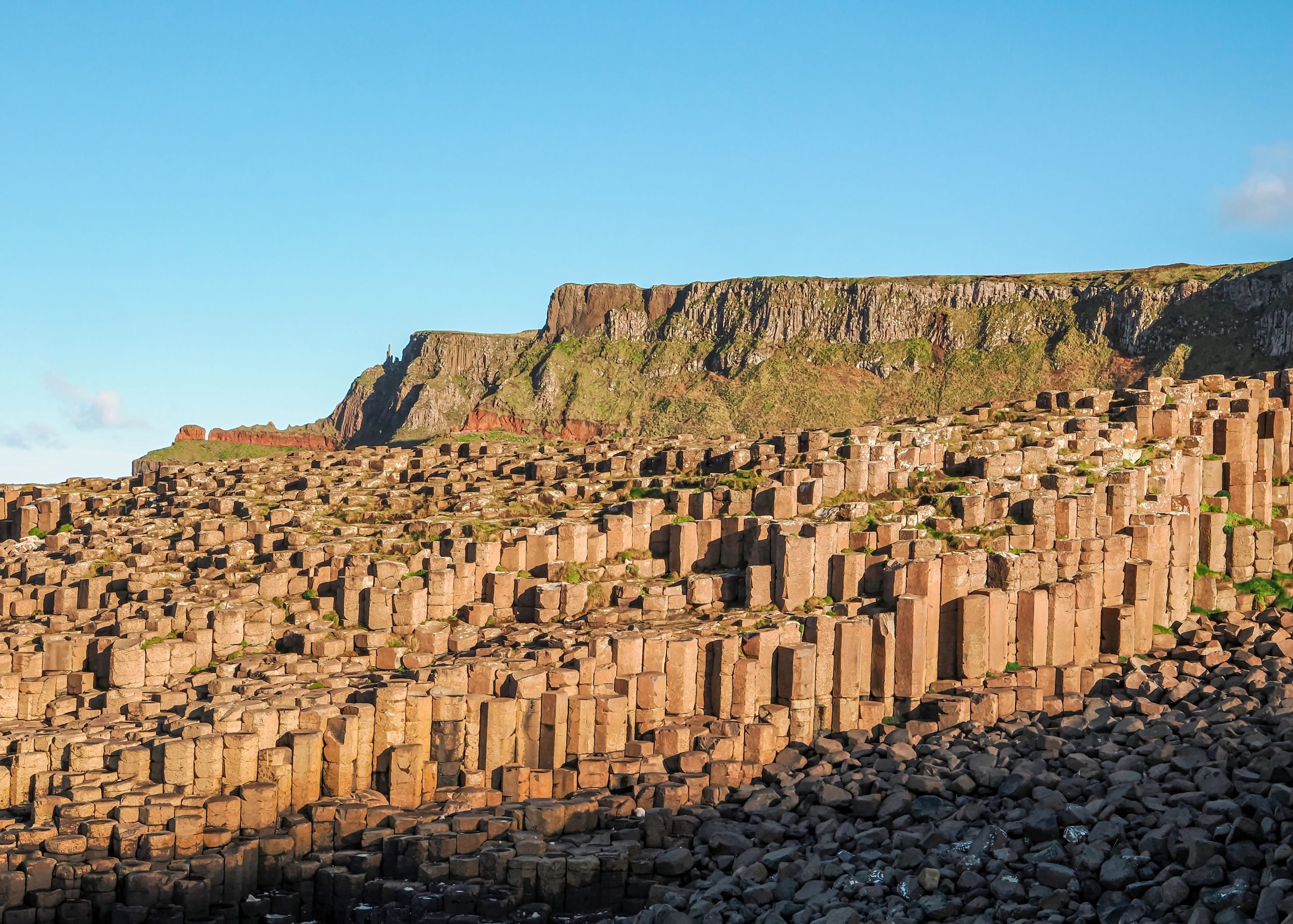
The Giant’s Causeway is Northern Ireland’s only UNESCO World Heritage Site, an extraordinary expanse of around 40,000 interlocking basalt columns formed by ancient volcanic activity, though legend prefers the tale of the giant Finn McCool. Stepping out across the hexagonal stones to the crashing Atlantic is the highlight of the whole Causeway Coastal Route scenic drive. Arrive early or late to avoid the crowds, and note the visitor centre car park is the paid official option.
A clifftop path links the Giant’s Causeway to the wider coast, with the famous Shepherd’s Steps and views of rock formations named the Organ, the Camel and the Giant’s Boot. The whole site is free to walk if you arrive on foot or park nearby, though the visitor centre exhibition is worth the entry for the geology and the Finn McCool legend.
Stop 5: Dunluce Castle to Derry
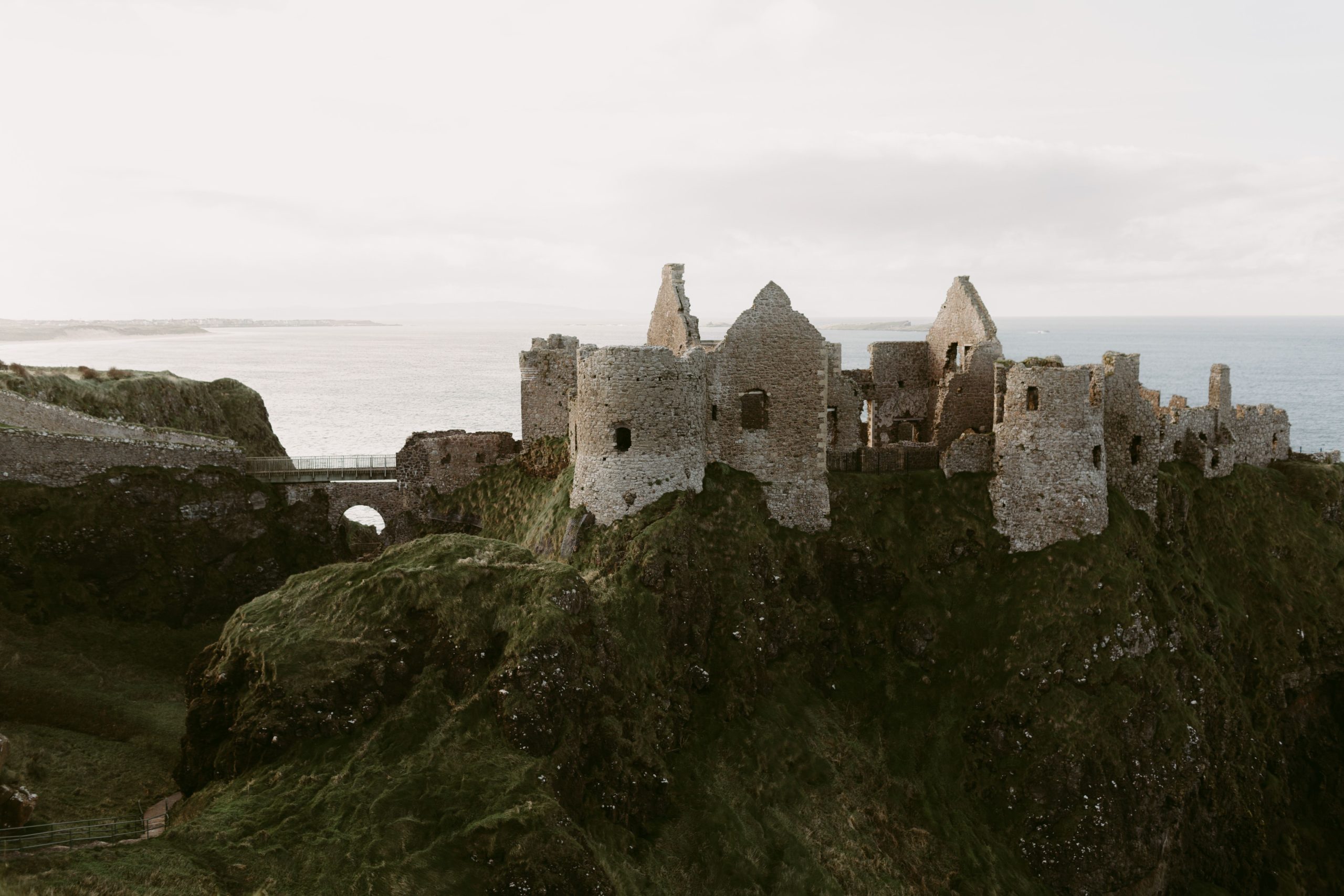
A little further on, Dunluce Castle is the most dramatic ruin in Ireland, perched on the very edge of a sea cliff, reached by a bridge from the mainland. Its kitchens famously fell into the sea in 1639, taking the cooks with them, and the romantic ruins are unforgettable against the Atlantic backdrop. The castle is said to have inspired Cair Paravel in C.S. Lewis’s Chronicles of Narnia, and it featured as House Greyjoy’s seat of Pyke in Game of Thrones.
The lively resort towns of Portrush and Portstewart come next, with three golden sandy beaches, championship golf at Royal Portrush, host of the Open, and the best concentration of restaurants on the coast. Portrush sits on the slim Ramore Head peninsula, with surf beaches on either side and a buzzing seaside atmosphere in summer. From here the route turns inland towards the historic walled city of Derry/Londonderry, with its 17th-century walls and the striking Peace Bridge, a fitting and characterful end to the drive.
Before Derry, a worthwhile detour leads to Mussenden Temple, a small clifftop rotunda perched dramatically above Downhill Beach, and the sweeping sands of Benone Strand. The route then passes Castlerock and the Georgian market town of Limavady before reaching the city. Derry itself rewards a night’s stay, the only completely walled city in Ireland, with a lively food and music scene within its historic ramparts.
A Suggested Causeway Coastal Route Itinerary
The Causeway Coastal Route scenic drive is best enjoyed over two or three days. Here is a suggested itinerary that balances the famous sights with quieter corners, with overnight stops that break the journey naturally. Adjust it to your own pace, the joy of the Causeway Coastal Route scenic drive is in stopping where the mood takes you.
Day 1: Belfast to Ballycastle
Leave Belfast after breakfast and trace Belfast Lough to Carrickfergus Castle, then join the Antrim Coast Road north. Pause at Glenarm and Carnlough, detour inland to Glenariff Forest Park for the waterfall walk, and visit pretty Cushendun. If you are a confident driver, take the white-knuckle Torr Head loop on the way to Ballycastle, your overnight stop, with dinner in town.
Day 2: Ballycastle to Portrush
Day two of the Causeway Coastal Route scenic drive takes in the headline sights. Cross the Carrick-a-Rede rope bridge first thing to beat the crowds, then explore Ballintoy Harbour and the Dark Hedges. Tour the Old Bushmills Distillery, then spend the afternoon at the Giant’s Causeway. Finish at clifftop Dunluce Castle before settling into Portrush or Portstewart for the night, with a seafood dinner on the coast.
Day 3: Portrush to Derry
On the final day, enjoy the beaches around Portstewart, then follow the coast to clifftop Mussenden Temple above Downhill Beach and the sweeping sands of Benone. Continue through Castlerock and Limavady to the historic walled city of Derry/Londonderry, where the city walls, the Peace Bridge and a lively food scene make a fitting finale to the Causeway Coastal Route scenic drive.
Where to Eat on the Causeway Coastal Route
The Causeway Coast has become one of the best places to eat in Ireland, with superb seafood landed along the coast, world-class fish and chips, and some genuinely fine dining. Most of the choice is concentrated around Portrush, Portstewart, Bushmills and Ballycastle, so plan your stops along the Causeway Coastal Route scenic drive around a good lunch or dinner. The cold, clean waters off the Antrim coast yield superb crab, lobster, mussels and white fish, and many menus change with the daily catch.
In Portrush, the Ramore complex on the harbour is the standout, several restaurants and a lively bar under one roof, from the Harbour Bistro’s wood-fired grills to the Mermaid’s fresh fish. Along the strand at Portstewart, Harry’s Shack serves top-class seafood right on the sand, washed down with its own Shacked Beach pale ale, one of the most memorable meals on the coast.
In Bushmills, Tartine at the Distillers Arms serves inventive modern European cooking using local award-winning produce, while the historic Bushmills Inn is a lovely spot for dinner by a turf fire. Over in Ballycastle, Nelly Rua’s is famous for its seafood chowder, made with fish straight from the harbour, and Marconi’s at the Marine Hotel is another seafood favourite.
For a proper pint and traditional music, the Bush House in Bushmills is said to serve the best Guinness on the north coast, while the Harbour Bar in Portrush, one of the oldest pubs on the coast, has live entertainment most evenings. The Fullerton Arms overlooking Ballintoy Harbour is the perfect place to end a day on the road, with hearty food, a warm welcome and live music.
The Best Time to Drive the Causeway Coastal Route
Late spring and early autumn, May, June and September, are the sweet spot for the Causeway Coastal Route scenic drive, with settled weather, long days and fewer crowds than the July and August peak. The coast is beautiful year round, but the big sights along the Causeway Coastal Route scenic drive are far more enjoyable outside the busiest summer weeks.
North-coast weather is famously changeable, with sunshine, cloud and showers often in a single day, so come prepared and do not be put off by a grey sky, the coast is at its most dramatic under brooding cloud, and the light shifts constantly. Summer brings long northern daylight, with light lingering past ten o’clock in June, perfect for unhurried evenings exploring the harbours and beaches along the Causeway Coastal Route scenic drive.
Whatever the season, give yourself at least two days for the Causeway Coastal Route, ideally three. Between the castles, the Glens, the Giant’s Causeway and a long lunch by the sea, the route easily fills the time, and rushing it would miss the entire point of one of the world’s most rewarding coastal drives.
Hiring a Car for the Causeway Coastal Route
A hire car is essential for the Causeway Coastal Route scenic drive, as public transport along the coast is limited and the best of the route lies well off any bus route. Belfast is the natural gateway, with two airports, Belfast International and George Best Belfast City, and the start of the route on its doorstep. For everything you need on collecting a car and the best rates, see our guide to car hire in Ireland.
Dublin is a popular alternative, around two hours from the coast, with the widest choice of flights and suppliers, while City of Derry Airport sits at the far end of the route. The Causeway Coast also connects to the Wild Atlantic Way at Muff in Donegal, so the two can be combined into one epic drive around the whole island. Compare car hire deals below and start planning your Causeway Coastal Route scenic drive.
Frequently Asked Questions
How long does the Causeway Coastal Route take?
The Causeway Coastal Route is around 120 miles from Belfast to Derry and could be driven in a long day, but two or three days on the Causeway Coastal Route scenic drive is far better. With the castles, the Glens, the Giant’s Causeway and the coastal villages, most visitors find two days the minimum to enjoy the Causeway Coastal Route scenic drive properly, and three lets you take it at a relaxed pace.
Which direction should you drive the Causeway Coastal Route?
Drive the Causeway Coastal Route scenic drive from Belfast towards Derry, heading north and west along the coast. This keeps you on the seaward side of the road for the best coastal views and follows the natural order of the sights, from Carrickfergus Castle through the Glens to the Giant’s Causeway and on to Derry. The brown Causeway Coastal Route signs guide you the whole way.
What are the best stops on the Causeway Coastal Route?
The highlights are the Giant’s Causeway, the Carrick-a-Rede rope bridge, Dunluce Castle, Carrickfergus Castle, the Glens of Antrim and the Dark Hedges. The coastal villages of Cushendun and Ballintoy, the resort towns of Portrush and Portstewart, and the Old Bushmills Distillery are also well worth your time. Allow at least two days to take them in, and three to add the Glens detours and the Derry city walls.
Is the Causeway Coastal Route suitable for nervous drivers?
The main A2 coast road is well surfaced and straightforward, so the Causeway Coastal Route scenic drive suits most drivers. The detours up the Glens and out to Torr Head are narrower and steeper, but these are optional, and the core route is comfortable. Driving is on the left, and distances are in miles, as Northern Ireland is part of the United Kingdom.
Which airport is best for the Causeway Coastal Route?
Belfast is the best gateway, with two airports and the start of the Causeway Coastal Route scenic drive nearby. Belfast International has the widest choice of flights, while George Best Belfast City is closest to the centre. Dublin is a popular alternative around two hours away with more suppliers, and City of Derry Airport sits at the far end. See our car hire Ireland guide for details.
Plan Your Causeway Coastal Route Scenic Drive
From the Norman walls of Carrickfergus to the basalt columns of the Giant’s Causeway, the swaying Carrick-a-Rede rope bridge and the cliff-edge ruins of Dunluce, the Causeway Coastal Route is Northern Ireland at its most spectacular. The Causeway Coastal Route scenic drive is a journey of castles, cliffs and legends, with world-class food and a warm welcome at every stop.
Pick up a hire car in Belfast or Dublin, point it towards the coast, and the Causeway Coastal Route is yours. Compare car hire deals below and start planning your Causeway Coastal Route scenic drive.
Closer to Dublin, the Wicklow Mountains scenic drive makes a superb day out.