
Most people come to Ibiza for the clubs. The island they discover by car is something else entirely: limestone cliffs dropping straight to the Mediterranean, pine forest switchbacks that smell of resin and salt air, bohemian village squares unchanged since the 1970s, flamingos on the salt flats at dawn and a mystical volcanic rock rising from the sea that has been drawing travellers for centuries.
This guide covers the 5 best scenic drives in Ibiza, each one revealing the island that exists beyond the beach bars and the VIP queues. Every drive includes where to stop, what to eat and the road numbers to follow.
Table of Contents
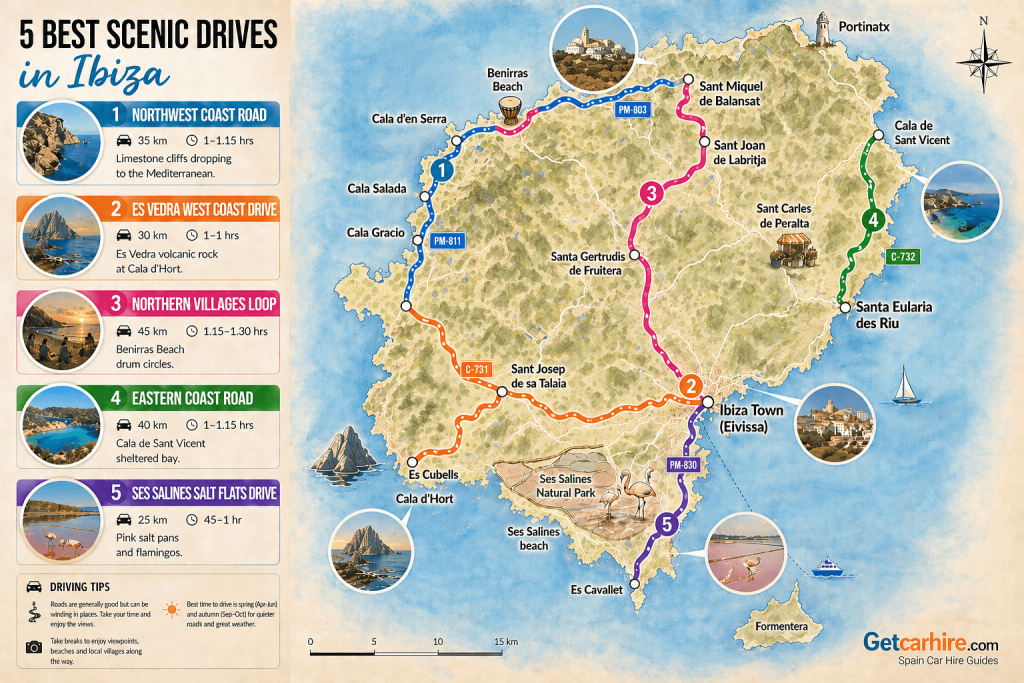
The 5 Best Scenic Drives in Ibiza at a Glance
Drive 1: The Northwest Coast Road. Sant Antoni to Sant Miquel via the PM-811 and PM-803. Approximately 35 kilometres. Half day. The finest cliff road on the island, best driven at golden hour.
Drive 2: The Es Vedra West Coast Drive. Ibiza Town to Cala d’Hort via Sant Josep and Es Cubells on the C-731. Approximately 30 kilometres. Half day. Arrive for sunset and watch Es Vedra turn gold above the sea.
Drive 3: The Northern Villages Loop. Ibiza Town to Sant Joan and Benirras Beach via Santa Gertrudis on the C-733. Approximately 45 kilometres. Full day. Sunday market at Sant Joan, drum circles at Benirras sunset.
Drive 4: The Eastern Coast Road. Santa Eularia to Cala de Sant Vicent via Sant Carles de Peralta on the C-732. Approximately 40 kilometres. Half day. Las Dalias hippy market if visiting on a Saturday.
Drive 5: The Ses Salines Salt Flats Drive. Ibiza Town south to Ses Salines Natural Park and the southern tip via the PM-830. Approximately 25 kilometres. Half day. Salt pans, flamingos in season and the best beaches on the island.
What You Need to Know Before Driving in Ibiza
Spain drives on the right. Ibiza is small, approximately 45 kilometres long and 25 kilometres wide, and can be driven end to end in under an hour on the main roads. The C-733 runs north from Ibiza Town through the centre of the island and is the main artery connecting the capital to the northern villages. The PM-811 along the northwest coast and the C-731 to the west coast are the most scenic roads on the island.
Speed limits follow the standard Spanish framework: 50 km/h in towns and villages, 90 km/h on open rural roads. There are no motorways on Ibiza. For full documentation requirements and current driving regulations refer to the official DGT guidance for drivers in Spain.
Vehicle cap and permit requirement: Ibiza now enforces a limit on the total number of vehicles permitted on the island’s roads between 1 June and 30 September each year. For summer 2026, a daily ceiling of 14,000 hire car slots has been set, down from the previous year. Book your hire car at the same time as flights and accommodation.
Last-minute bookings in peak summer weeks may find no vehicles available at all. The permit system is managed through the official Ibiza Circular platform at ibizacircular.es. Visitors hiring on the island do not need to register individually as the permit is handled by the hire company, but the quota reduction makes early booking essential.
Summer driving note: July and August are extremely busy on the island’s main roads, particularly around Sant Antoni and Ibiza Town. The five scenic drives in this guide use the quieter coastal and rural roads where traffic is noticeably lighter. For all five drives, early morning before 9am or evening after 7pm gives an entirely different experience to midday.
Parking: Ibiza Town, Sant Antoni and the popular beaches have paid parking in summer. The rural drives and village stops in this guide all have free parking at the relevant viewpoints and village squares.
Drive 1: The Northwest Coast Road
Sant Antoni to Sant Miquel via the Limestone Cliffs | PM-811 / PM-803
| Start | Sant Antoni de Portmany |
| End | Sant Miquel de Balansat |
| Distance | Approx 35 km |
| Driving time | 1 hour without stops. Allow a half day |
| Road | PM-811 north from Sant Antoni, PM-803 east to Sant Miquel |
| Difficulty | Moderate. Winding cliff road with narrow sections. Not recommended for large vehicles |
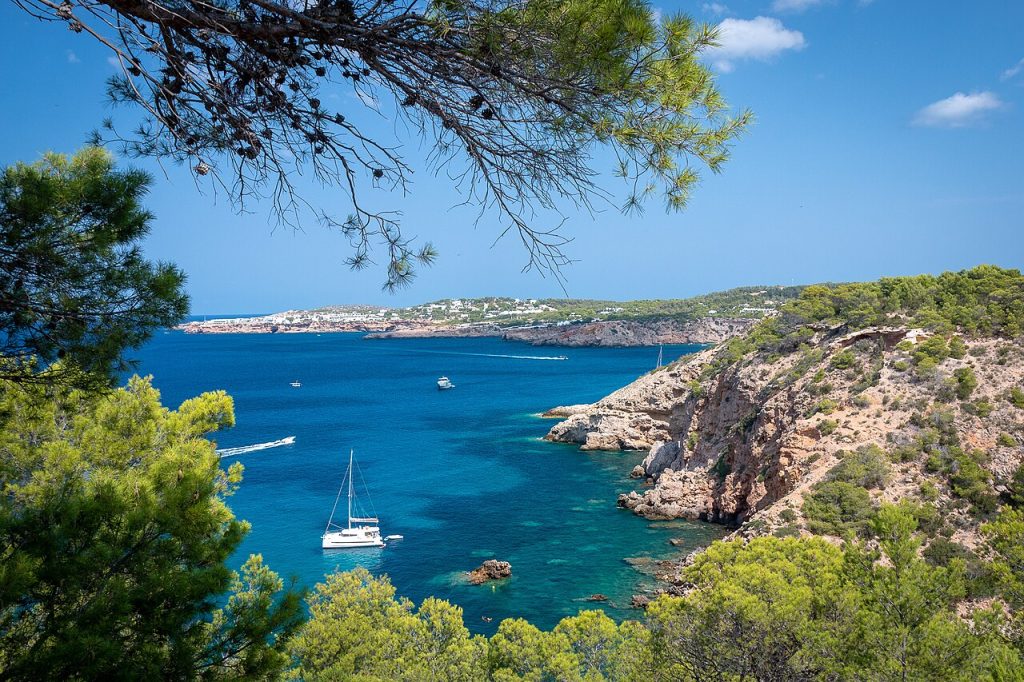
The northwest coast road is the finest drive on the island and the one most visitors never take. The PM-811 north from Sant Antoni climbs immediately out of the resort and onto the cliff edge, where limestone drops straight to the Mediterranean and pine forest lines the inland side of the road. There are no barriers on many sections and the drop to the sea is significant. Drive slowly and the scenery rewards it entirely.
The road passes through Cala Salada and Cala Gracio, two of the quietest and most beautiful coves on the island, before continuing north to the clifftop above Cala d’en Serra. The views here extend to the coast of mainland Spain on clear days. At the northern end of the PM-811 the road joins the PM-803 east to Sant Miquel de Balansat (san mee-KEL de ba-la-na-SAT), a whitewashed village with the oldest church on the island, built into the hillside above a wide agricultural valley.
The combination of cliff road, hidden coves and ancient village makes this the drive that best captures the contrast between Ibiza’s dramatic coastline and its genuinely rural interior. It is the anti-nightlife drive and the one that changes people’s understanding of the island most completely.
Insider Tip: Drive the northwest coast road at golden hour, ideally in the last two hours before sunset. The light on the limestone cliffs turns amber and the sea below takes on extraordinary colour. The road is also at its quietest in the early morning before 8am, when the only traffic is local farmers heading to Sant Antoni market. Both times give a completely different experience to driving it at midday in July.
Food and Pit Stops: Drive 1
Bar Costa, Santa Gertrudis – although slightly off the PM-811 route, the main square of Santa Gertrudis is the best coffee stop on the island. Bar Costa has been on the square since 1880. The tapas and bocadillos served at the outdoor tables are excellent.
Cala Salada beach bar – the small chiringuito at Cala Salada serves fresh seafood and cold drinks. The beach is one of the quietest on the island and the anchovies are locally caught.
Can Pou, Sant Miquel – traditional Ibizan restaurant in the village square beneath the church. The bullit de peix, a traditional Ibizan fish stew, is the signature dish and worth timing the drive around.
Total distance: approximately 35 kilometres from Sant Antoni to Sant Miquel. Allow a half day with cliff stops and lunch in Sant Miquel.
Drive 2: The Es Vedra West Coast Drive
Ibiza Town to Cala d’Hort via Sant Josep and Es Cubells | C-731
| Start | Ibiza Town (Eivissa) |
| End | Cala d’Hort |
| Distance | Approx 30 km |
| Driving time | 45 minutes without stops. Allow a half day |
| Road | C-731 south-west from Ibiza Town via Sant Josep de sa Talaia |
| Difficulty | Easy to moderate. Good road to Sant Josep, narrow descent to Cala d’Hort |
The road south-west from Ibiza Town on the C-731 climbs through olive groves and pine forest toward Sant Josep de sa Talaia (san ho-SEP de sa ta-LY-ah), the village at the foot of Sa Talaia, the highest point on the island at 475 metres.
The village is unhurried and genuinely local, with a whitewashed church, a handful of good restaurants and the agricultural pace that the resort coast entirely lacks.
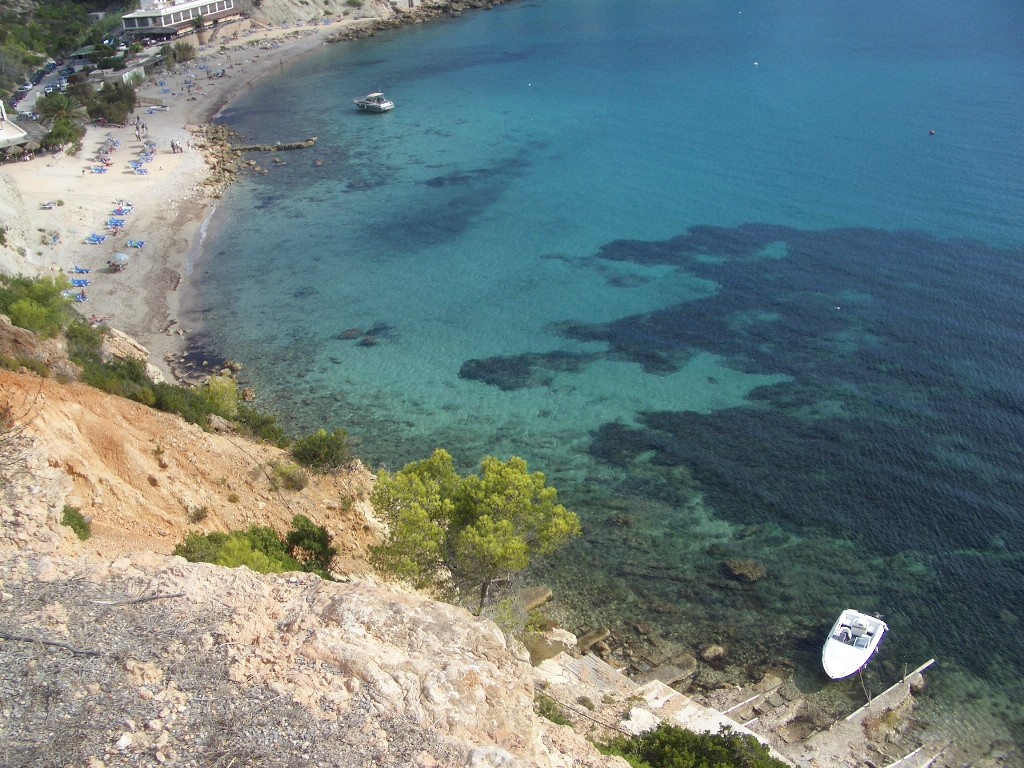
From Sant Josep continue south on the smaller road to Es Cubells (es KOO-bels), a tiny clifftop hamlet above the sea with a church terrace that looks directly south to Formentera across the water. The silence here in the morning is complete.
Continue down to Cala d’Hort where Es Vedra (es VED-ra), a 382-metre volcanic rock rising vertically from the sea, dominates the entire bay. Es Vedra is the island’s most iconic natural feature and one of the most photographed spots in the Mediterranean.
Time the arrival at Cala d’Hort for the last hour before sunset. The rock faces west and catches the final light of the day in extraordinary colour, turning from grey to orange to deep red as the sun drops toward Formentera. The restaurant at Cala d’Hort serves fresh fish with Es Vedra filling the entire window.
Insider Tip: Es Vedra is best seen from the water rather than the shore for the full sense of scale. Several boat tours depart from Sant Antoni and Cala d’Hort in the late afternoon specifically for the sunset view of the rock. If time allows, combining the C-731 drive with an evening boat tour and dinner at the Cala d’Hort restaurant makes the most complete version of this drive. Book the restaurant ahead in July and August as it fills by mid-afternoon.
Food and Pit Stops: Drive 2
Bar Anita, Sant Josep – the oldest bar in the village, open since the 1930s. Serves coffee, cold beer and excellent pa amb oli, the traditional Ibizan bread with olive oil, tomato and local cheese. The terrace faces the church square.
Es Boldado, Cala d’Hort – perched on the cliff directly above the beach with an uninterrupted view of Es Vedra. One of the finest restaurant settings in the Balearics. The fresh fish and paella are excellent. Book ahead for summer evenings.
Sa Capella, Sant Antoni road – a converted 17th-century chapel turned restaurant on the road between Sant Antoni and Sant Josep. Dramatic setting, good wine list and traditional Ibizan cuisine.
Total distance: approximately 30 kilometres from Ibiza Town to Cala d’Hort. Allow a half day with the village stops and sunset timing.
Drive 3: The Northern Villages Loop
Ibiza Town to Sant Joan and Benirras Beach via Santa Gertrudis | C-733
| Start | Ibiza Town (Eivissa) |
| End | Benirras Beach or Portinatx |
| Distance | Approx 45 km |
| Driving time | 1.5 hours without stops. Allow a full day |
| Road | C-733 north from Ibiza Town through Santa Gertrudis and Sant Joan de Labritja |
| Difficulty | Easy. Good road throughout with some narrow village sections |
The C-733 north from Ibiza Town is the island’s main artery and the road that connects the bohemian interior villages to the capital. The first stop is Santa Gertrudis de Fruitera (san-ta her-TROO-dis), a village square lined with art galleries, independent restaurants and the legendary Bar Costa. This is where the island’s creative community gathers and has done since the 1960s. The atmosphere is sophisticated and relaxed in equal measure.
Continue north on the C-733 to Sant Joan de Labritja (san HWAHN de la-BRIT-ha), the most northerly village on the island and one of the most beautiful. The Sunday market here is the best on the island: local organic produce, handmade crafts and the kind of genuinely bohemian atmosphere that Ibiza’s reputation was built on before the mega-clubs arrived.
From Sant Joan take the small road west to Benirras Beach (BEH-nee-ras), a circular bay framed by basalt rock columns with a distinctive large rock formation at the southern end.
Benirras is famous for its Sunday sunset drum circles, a tradition that has been running since the 1970s and draws locals and visitors in equal numbers. Arrive at least an hour before sunset to find parking and a good spot on the beach.
Insider Tip: The Sunday drum circles at Benirras begin organically around two hours before sunset and build throughout the evening. The tradition started with a small group of hippies in the 1970s and now draws hundreds of people. Parking fills completely by mid-afternoon on Sunday. Arrive before 5pm in summer and find a spot on the rocks above the bay rather than the sand, where the view of the whole circle and the sunset is better.
Food and Pit Stops: Drive 3
Bar Costa, Santa Gertrudis – the starting point for understanding rural Ibiza. The terrace on the main square is the social centre of the village. Outstanding coffee, tapas and bocadillos. The jambon iberico served with good bread is a benchmark.
Sant Joan Sunday market – local organic produce, handmade jewellery and live music. If visiting on a Sunday this is the best food and craft market on the island. The honey, goat’s cheese and almond products are excellent food souvenirs.
Restaurant El Ayoun, Benirras – Moroccan-Ibizan fusion restaurant above the beach. The tagines and mezze platters served on the terrace above the bay at sunset are one of the more distinctive dining experiences on the island.
Total distance: approximately 45 kilometres from Ibiza Town to Benirras and back. Allow a full day with Santa Gertrudis, Sant Joan and Benirras stops
Drive 4: The Eastern Coast Road
Santa Eularia to Cala de Sant Vicent via Sant Carles de Peralta | C-732
| Start | Santa Eularia des Riu |
| End | Cala de Sant Vicent |
| Distance | Approx 40 km |
| Driving time | 1 hour without stops. Allow a half day |
| Road | C-732 north from Santa Eularia via Sant Carles de Peralta to Cala de Sant Vicent |
| Difficulty | Easy. Good roads throughout. Some narrow sections in the final descent to Cala de Sant Vicent |
The eastern coast of Ibiza is the quietest and most remote part of the island. The C-732 north from Santa Eularia des Riu (san-ta e-u-LAR-ya des REEU), Ibiza’s third town and the most family-oriented on the island, runs through thick forest and agricultural land to Sant Carles de Peralta (san KAR-les de per-AL-ta), a small village with a legendary connection to the island’s bohemian history.
Sant Carles is home to Las Dalias, the most famous hippy market in the Balearics, running every Saturday since 1954. The market sells handmade jewellery, textiles, ceramics and local food products in a garden setting under pine trees. Dozens of stalls, live music and the scent of incense make it a genuine cultural experience rather than a tourist trap.
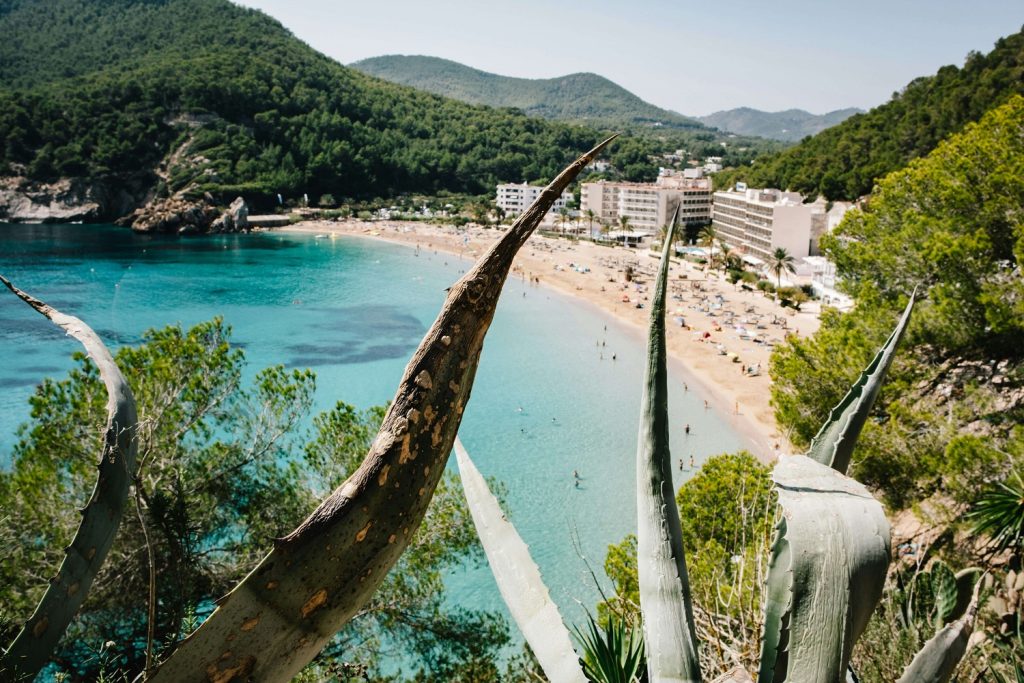
Continue north on the C-732 through forest and down to Cala de Sant Vicent (KA-la de san bee-SENT), a wide, sheltered bay in the northeast of the island framed by forested cliffs. The beach here is one of the most peaceful on the island and the crystal clarity of the water makes it outstanding for swimming.
Food and Pit Stops: Drive 4
Las Dalias market, Sant Carles – the Saturday market is the cultural highlight of the eastern drive. The food stalls serve fresh fruit, local cheese, organic bread and the best freshly squeezed juice on the island.
Bar Anita, Sant Carles – the village bar at Sant Carles has been the meeting point of the eastern interior since the 1960s. Simple food, good coffee and the genuine bohemian atmosphere that the bigger markets can only approximate.
Restaurante Cala de Sant Vicent – at the beach itself. Simple fresh seafood and salads served at tables overlooking the bay. The calamares a la plancha and the mixed fish grill are the dishes to order.
Total distance: approximately 40 kilometres from Santa Eularia to Cala de Sant Vicent. Allow a half day, or a full day if visiting Las Dalias on a Saturday.
Drive 5: The Ses Salines Salt Flats Drive
Ibiza Town South to Ses Salines Natural Park and the Southern Beaches | PM-830
| Start | Ibiza Town (Eivissa) |
| End | Ses Salines Natural Park and Es Cavallet beach |
| Distance | Approx 25 km |
| Driving time | 40 minutes without stops. Allow a half day |
| Road | PM-830 south from Ibiza Town to Ses Salines |
| Difficulty | Easy. Good road throughout |
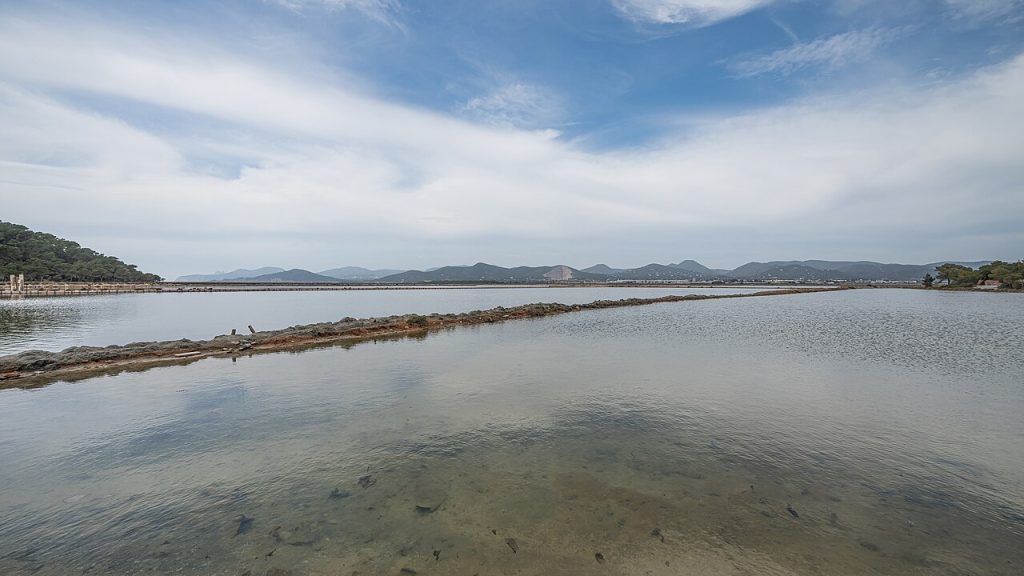
The southern tip of Ibiza is a protected natural park dominated by the ancient salt flats that gave the island its original name. Ses Salines Natural Park covers the salt pans, dunes and coastal wetlands at the island’s southern end and extends south to include the northern tip of Formentera across the strait.
The PM-830 from Ibiza Town south passes through the salt pan landscape, a surreal and beautiful environment of pink and white crystalline water, flamingos in the shallower sections during migration season and almost no human infrastructure of any kind.
The Ses Salines salt pans have been harvested continuously since Phoenician times and are among the oldest commercial operations in the western Mediterranean.
Beyond the salt pans the road reaches Ses Salines beach and the adjacent Es Cavallet, two long, straight beaches of fine white sand with the best water clarity on the island. Both are protected within the natural park and have strict limits on beach infrastructure. The atmosphere is notably quieter and more local than the resort beaches.
Insider Tip: The salt pans are best visited at dawn or dusk when the light is low and the pink colouring of the water is most intense. Flamingos are present in the shallower sections from October to March during migration. In July and August the pans are at their most visually striking due to the high salt concentration increasing the pink colour of the water. A short walk on the raised paths between the pans is permitted and gives the best view.
Food and Pit Stops: Drive 5
Jockey Club, Ses Salines beach – beach club on the sand at Ses Salines. Good food, relaxed atmosphere and excellent fresh fish. One of the more genuinely local beach eating experiences in Ibiza.
Sa Trinxa, Es Cavallet – legendary beach bar at the southern end of Es Cavallet. Has been serving food and drinks on the beach since 1972. The atmosphere is relaxed and the grilled fish and salads are outstanding.
La Escollera, Es Cavallet – upmarket beach restaurant on Es Cavallet. The rice dishes and fresh fish are the specialities. Good wine list and outstanding setting looking south toward Formentera.
Total distance: approximately 25 kilometres from Ibiza Town to Es Cavallet. Allow a half day with the salt pan walk and beach stop.
Ibiza UNESCO World Heritage Site
Ibiza holds UNESCO World Heritage status for two distinct elements: the Dalt Vila fortified old town of Ibiza Town and the Posidonia oceanica seagrass meadows that cover the seabed around the island. The Posidonia meadows are among the oldest living organisms on earth, some sections estimated at 100,000 years old, and are one of the reasons for the extraordinary water clarity in Ibiza’s coves. Responsible driving and parking around the coastal areas protects the land ecosystem that supports them.
Get Car Hire recommends comparing and booking your car hire in Ibiza below.
Frequently Asked Questions
Is Ibiza worth visiting if you do not go to the clubs?
Absolutely. The five drives in this guide cover only a fraction of what the island offers beyond the resort coast. The rural north, the dramatic northwest cliffs, the ancient salt flats, the bohemian village culture and the water clarity of the eastern coves are all world-class on their own terms. Many regular visitors to Ibiza have never been inside a club.
What is the best food to try in Ibiza?
Bullit de peix is the traditional Ibizan fish stew, slow-cooked with saffron rice and the day’s catch. Pa amb oli, bread with olive oil, tomato and local cheese, is the standard Ibizan snack and is excellent everywhere. Flaons are sweet pastries made with cheese and anise found at local bakeries. The local olive oil, honey and goat’s cheese are the best food souvenirs.
Are the roads in Ibiza suitable for all hire cars?
The main roads and the routes in Drives 3, 4 and 5 are suitable for any standard hire car. The northwest coast PM-811 (Drive 1) is narrow in sections and better suited to a smaller compact car. The descent to Cala d’Hort (Drive 2) is steep and narrow. A standard compact handles all five drives comfortably.
When is the best time to visit Ibiza by car?
May, June and September are ideal. The roads are quieter than July and August, the weather is excellent and hire car prices are significantly lower. Note that the island’s vehicle cap applies from 1 June to 30 September, making early hire car booking essential for any summer visit.
How long does it take to drive around Ibiza?
The island is approximately 45 kilometres long and 25 kilometres wide. A full circuit of the island including the main coastal roads takes about two hours without stops. A proper exploration of the five drives above takes three to four full days at a relaxed pace or can be condensed into two days by combining the shorter drives.
Plan Your Ibiza Road Trip
The five drives above show an island that most visitors never see. Together they cover the northwest cliffs, the west coast sunset, the bohemian northern villages, the quiet eastern coast and the ancient salt flats that give the island its name. Each one can be completed as a standalone day out from any base on the island.
For everything you need before setting off, our car hire in Ibiza guide covers all pickup locations, pricing and booking. Transparent pricing, no hidden fees and five drives genuinely worth making.
For a wilder, less-visited Balearic experience, explore our scenic drives guide for Menorca.
About the Author
Darryl Antonio is CEO of Digitalhound, a London-based digital marketing agency with over two decades of experience in SEO and content strategy. Darryl oversees digital strategy across all sectors the agency represents and manages content production and digital strategy for Getcarhire.com.