

Table of Contents
Why Car Hire in Fuerteventura Changes Everything
Fuerteventura has a reputation built almost entirely on beaches. That reputation is accurate but profoundly incomplete. The second largest island in the Canary Islands covers 1,660 square kilometres of volcanic landscape that stretches far beyond the resort perimeter, and almost none of it is accessible without your own transport.
Public transport on the island connects the main resorts and the capital Puerto del Rosario with a limited network of buses. It does not reach Betancuria, the ancient capital hidden in the volcanic interior.
It does not serve Tindaya, the sacred mountain of the island’s Guanche people. It does not go to the Jandia peninsula lighthouse, the fishing villages of the North coast or the dune systems of the Corralejo Natural Park.
At £7 a day, your car hire in Fuerteventura puts a UNESCO Biosphere Reserve within reach of every resort on the island. It is not a luxury on this island. It is the only practical way to see what lies beyond the hotel pool.
Search prices from more than 1,000 car rental suppliers in seconds – Cicar and AutoReisen, the trusted local Canary Islands specialists, sit alongside Hertz, Avis and Europcar in a single search. Pickup available at Fuerteventura Airport terminal, Caleta de Fuste, Corralejo and Morro Jable. Prices update in real time for your exact dates
Fuerteventura was designated a UNESCO Biosphere Reserve in 2009, recognising the exceptional volcanic landscape and ancient dune systems that cover the Northern and Southern extremities of the island. Exploring that landscape properly takes time, good road numbers and your own wheels.
Picking Up Your Hire Car in Fuerteventura
Fuerteventura Airport (IATA: FUE) sits on the Eastern coast of the island approximately five kilometres South of Puerto del Rosario, the island capital, and around 15 minutes by road from the main central resort of Caleta de Fuste.
The airport handles year-round charter and scheduled traffic from across the UK and northern Europe, with the summer season running from approximately April through to October.
All major hire companies including Hertz, Avis, Europcar, Sixt and Goldcar have desks in the arrivals terminal. Local operators Cicar and AutoReisen are both worth comparing, particularly for longer rentals.
Cicar in particular has a strong reputation across the Canary Islands for transparent pricing and no-excess policies on most vehicle categories. Collecting at the airport puts you directly onto the FV-1 heading North to Corralejo or the FV-2 heading South toward the resorts and the Jandia peninsula.
Summer availability on Fuerteventura tightens considerably from late June onwards. The island is also a year-round destination for windsurfers and kitesurfers, which means hire car demand outside the traditional summer season is higher than on most comparable islands.
Booking your car hire in Fuerteventura four to six weeks ahead delivers both better availability and a noticeably lower price than last-minute or desk rates.
Insider Tip: Book the smallest car that comfortably fits your group. Fuerteventura’s main roads are wide and well-maintained but the FV-30 mountain road through the Betancuria Natural Park is narrow with hairpin bends in sections, and access tracks to some remote beaches are unpaved. A compact car is more practical than a large SUV on this island. Standard hire car insurance does not cover damage on unpaved roads regardless of vehicle size.
The Fuerteventura That Only a Hire Car Unlocks
The resort belt between Caleta de Fuste, Costa Calma and the Southern beaches of Morro Jable is the Fuerteventura that package holidays sell. It is pleasant, reliable and limited. Your car hire in Fuerteventura opens the other island.
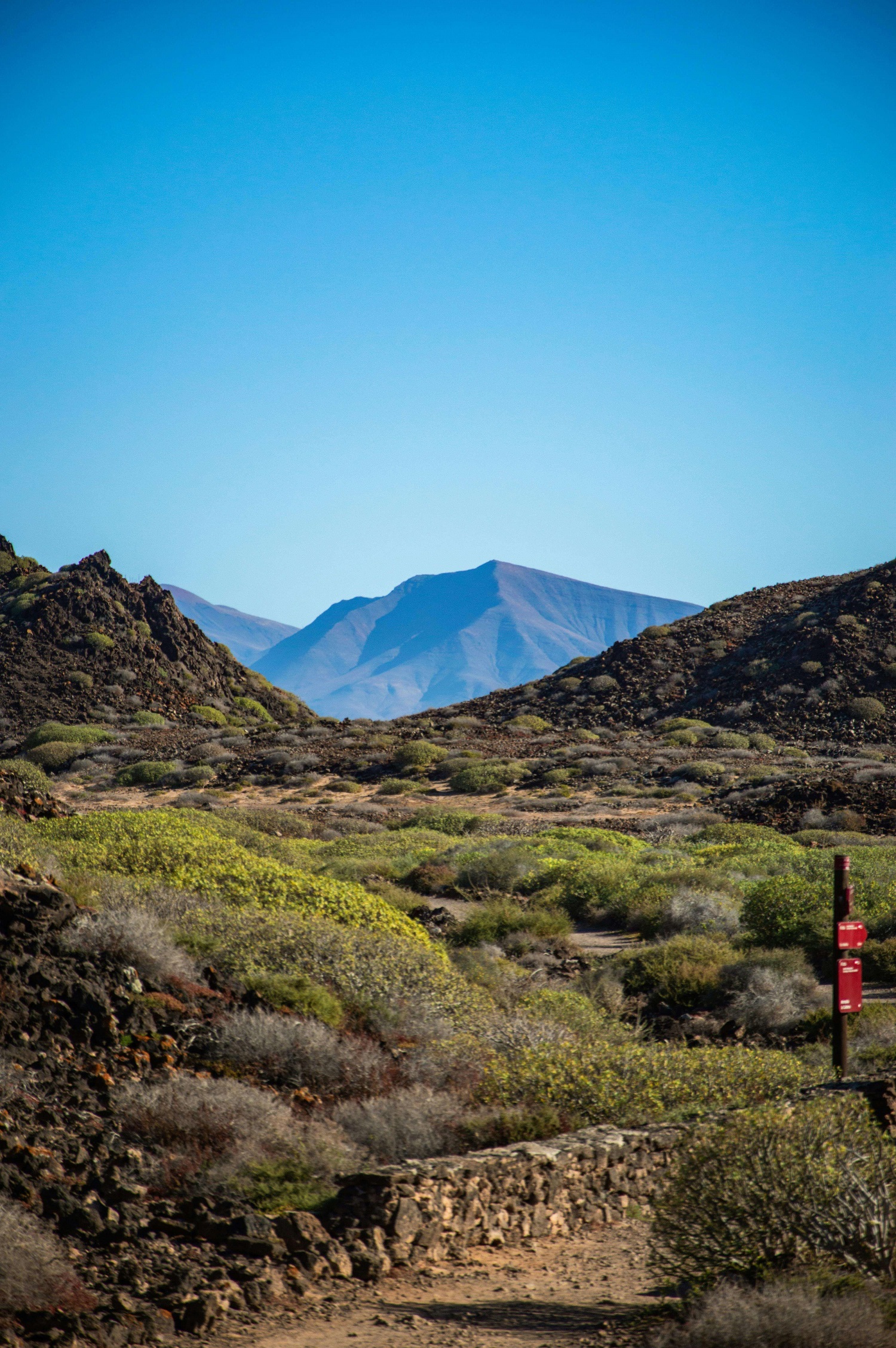
The FV-30 mountain road through the Betancuria Natural Park is one of the most dramatic drives in the Canary Islands, climbing through eroded volcanic ridges to the ancient capital of Betancuria itself, founded in 1404 and one of the oldest European settlements in the Atlantic islands.
The town was deliberately built inland to protect it from pirate raids and still has the character of a place that kept the world at a deliberate distance.
The Corralejo Natural Park in the North is an extraordinary landscape of rolling sand dunes reaching 30 metres in height that drift directly onto white Atlantic beaches. Early morning, before the day trip coaches arrive, the dune beaches are empty regardless of the season.

El Cotillo on the Northwest coast is the sunset spot that locals have been using for decades: a former fishing village with natural tidal pools, a watchtower and views West across the open Atlantic.
The Jandia peninsula in the far South is the most remote part of the island. The paved coastal road south from Morro Jable toward the lighthouse at Faro de Punta Jandia passes through a landscape of volcanic cliffs and surf beaches with almost no human presence.
The lighthouse itself marks the Southernmost tip of the island. On clear days, Africa is visible on the horizon across the water.
One important Fuerteventura rule before you book: standard hire car insurance does not cover damage on unpaved roads, regardless of vehicle size. Every supplier listed here shows their exact insurance terms upfront. Unlimited mileage options available. Free cancellation on most vehicles.
Get full value from your car hire in Fuerteventura
Fuerteventura rewards those who plan routes rather than simply driving toward a single destination. These are the three circuits that make car hire in Fuerteventura worth every penny of the outlay.
The Northern Dunes and El Cotillo Circuit
Drive south from Corralejo on the FV-1 through the Corralejo Natural Park. Stop at any of the authorised car parks and walk 10 minutes across the dunes to the beach. Return to the FV-1 and turn west on the FV-101 through Lajares to reach El Cotillo on the northwest coast. Total distance approximately 45 kilometres. Allow a half day with stops.
The FV-30 Betancuria Mountain Road
Start at Pajara on the west coast and drive north on the FV-30 through Vega de Rio Palmas and the Betancuria Natural Park to Betancuria village. Continue north to the Mirador de Morro Velosa, a viewpoint designed by Cesar Manrique with panoramic views across the entire northern half of the island.
Descend east on the FV-416 to Antigua. Total distance approximately 55 kilometres. Allow a full day.
Drive direction: always south to north, Pajara to Betancuria. The hairpin bends on the FV-30 are significantly easier ascending than descending. Locals always drive this road northbound.
The Jandia Peninsula Lighthouse Drive
Drive southwest from Morro Jable along the paved coastal road of the Jandia peninsula toward Faro de Punta Jandia. The paved road ends approximately 8 kilometres before the lighthouse. Do not continue beyond the paved section in a standard hire car. Standard insurance is void on unpaved tracks.
The viewpoint from the top of the paved road offers a clear view of the lighthouse and the cliffs of the southern tip with Africa visible on clear days. Total distance approximately 40 kilometres return. Allow a half day.
Insider Tip: Fuerteventura is one of the windiest places in Europe. The Atlantic trade winds can be strong enough to affect steering on exposed roads, particularly on the Jandia peninsula and the northwest coast near El Cotillo. Drive with both hands on the wheel on these sections and allow extra stopping distance. The wind also means the island’s light is exceptional for photography: the clarity of the air on a windy day makes the colour contrast between volcanic rock and Atlantic water extraordinary.
Driving in Fuerteventura: What You Need to Know
EU and UK licence holders need only their national licence for car hire in Fuerteventura. Drive on the right. Fuerteventura has two main arterial roads: the FV-1 running North from Puerto del Rosario to Corralejo, and the FV-2 running South all the way to Morro Jable.
Both are dual carriageway in sections and carry fast-moving traffic. Speed limits follow the standard Spanish framework: 50 km/h in towns and villages, 90 km/h on rural roads and 100 km/h on the dual carriageway sections of the FV-1 and FV-2.
IMPORTANT: Unpaved roads and hire car insurance. Standard hire car insurance in Fuerteventura does NOT cover damage incurred on unpaved roads. The road to Cofete Beach beyond the Jandia lighthouse and several tracks leading to remote beaches are unpaved. Driving a standard hire car on these tracks and sustaining damage leaves you personally liable for all repair costs. The scenic drives covered in this guide use paved roads only.
The drink-drive limit in Spain is 0.5mg of alcohol per millilitre of blood, lower than the current UK limit. A standard UK driving licence is accepted by all major hire companies in Fuerteventura. International Driving Permits are not required for UK or EU licence holders.
Parking: free parking is available throughout the resort areas and at all natural park viewpoints. Puerto del Rosario has blue-zone paid parking in the town centre. There are no toll roads on Fuerteventura. Fuel stations are available in all the main towns including Corralejo, Puerto del Rosario, Caleta de Fuste, Gran Tarajal and Morro Jable.
There are no fuel stations on the Jandia peninsula beyond Morro Jable, so fill up before heading South.
For the full picture on the most rewarding driving routes on the island, our guide to the 5 best scenic drives in Fuerteventura covers five circuits in detail with road numbers, distance information, food stops and driving tips throughout.
Frequently Asked Questions About Car Hire in Fuerteventura
Do I need a hire car in Fuerteventura?
If you plan to stay within the resort areas of Caleta de Fuste, Costa Calma or Morro Jable, you can manage without one.
If you want to see the Corralejo dunes, the Betancuria mountain interior, the Jandia peninsula lighthouse road, the Northwest coast villages or any of the island’s most rewarding landscapes, cheap car hire in Fuerteventura is essential for everything beyond the resort belt. The bus network does not serve these areas.
Is it easy to drive in Fuerteventura?
Yes, with one qualification. The FV-1 and FV-2 main roads are dual carriageway and straightforward. Secondary roads are well-maintained and clearly signposted. The FV-30 mountain road through the Betancuria Natural Park requires more concentration due to narrow sections and hairpin bends but is manageable in a standard compact hire car at an appropriate speed. Unpaved tracks to some remote beaches should not be driven in a standard hire car.
What is the minimum age to hire a car in Fuerteventura?
Most hire companies set the minimum age at 21, with a young driver surcharge applying to drivers aged 21 to 24. Some vehicle categories require the driver to be at least 25. Check the specific terms of your chosen company at the time of booking.
Where do I pick up my hire car in Fuerteventura?
Fuerteventura Airport (FUE), approximately five kilometres south of Puerto del Rosario, is the main collection point. All major hire companies have desks in the arrivals terminal. Some operators also have offices in Caleta de Fuste, Corralejo and Morro Jable for mid-stay collection. Airport collection is the most straightforward option as you drive directly from the terminal onto the main island roads.
When is the best time to hire a car in Fuerteventura?
Fuerteventura has excellent driving conditions year-round. The summer months of July and August bring the strongest trade winds and occasional calima dust haze from the Sahara that reduces visibility.
Spring from March to May and autumn from September to November offer the best combination of good light, manageable wind, quieter roads and more affordable car hire in Fuerteventura rates. Book well in advance for summer travel as availability tightens significantly in peak weeks.
Explore Fuerteventura on Your Own Terms
Fuerteventura is an island that keeps its most extraordinary places well away from the resort perimeter. The ancient mountain capital, the sacred volcano of the Guanche people, the lighthouse at the edge of Africa, the dunes that drift across a national park and the fishing villages that the package holiday industry never reached: all of them are within a comfortable drive of any resort on the island.
Car hire in Fuerteventura puts both the ancient mountain capital and the UNESCO coastline within reach. Compare all operators with Get Car Hire and book before you fly at Fuerteventura Airport. The volcanic roads are waiting expectantly for your arrival.
Pingback: Car Hire Scams in Spain: 8 Scams Common at Spanish and Canary Islands Airports